



SEOULFACE21 Jaw Surgery in Korea: From Recovery Care to Continued Orthodontic Treatment in Thailand
SEOULFACE21 Oral and Maxillofacial (OMFS) Hospital
Before traveling for jaw surgery in Korea, many people carefully prepare for the surgeon, hospital, treatment costs, and surgery date. However, there is another important part that should be planned even before booking the flight: the post-surgery recovery period.
For those considering Korean jaw surgery, orthognathic surgery, double jaw surgery, or corrective jaw surgery, recovery planning is an essential part of the overall treatment journey. It may include the expected length of stay in Korea, post-operative checkups, swelling management, bite monitoring, and coordination with any orthodontic treatment after jaw surgery.
Planning these steps in advance can help create a more seamless transition from jaw surgery and recovery in Korea to continued follow-up care and orthodontic treatment after returning to Thailand.After leaving the operating room, the body continues to change gradually over the following weeks and months. During jaw surgery recovery, several processes take place over time, including the reduction of swelling, bone healing and stabilization, changes in dental occlusion and bite alignment, and the adaptation of the skin and facial muscles to the new jaw position.
For those undergoing orthognathic surgery or corrective jaw surgery in Korea, these changes are an important part of the post-operative recovery process and need to be monitored as the facial structure, bite, and surrounding soft tissues gradually adjust.This naturally leads to many questions during the jaw surgery recovery process, such as: How long do you need to stay in Korea after jaw surgery? What kind of recovery care does the hospital provide? If orthodontic treatment is needed afterward, can it be continued in Thailand? And after returning home, how can follow-up with the Korean medical team be arranged if further evaluation is needed?
These are important questions for anyone planning jaw surgery in Korea, especially when the treatment journey includes post-operative recovery, bite monitoring, orthodontic follow-up, and continued care after returning to Thailand.At SEOULFACE21, post-operative care is not treated as a short period that ends once you leave the operating room. Instead, jaw surgery recovery is viewed as a continuous journey that connects each stage of treatment—from recovery in Korea and returning to Thailand, to continuing orthodontic treatment in Thailand and ongoing follow-up care.
Let’s look at each stage step by step to understand what kind of care and monitoring may be needed as the body gradually recovers and adjusts after orthognathic surgery in Korea.
Jaw Surgery Recovery Timeline: How the Body Heals After Surgery
When people think about jaw surgery recovery, they often focus mainly on one question: “Has the facial swelling gone down yet?” However, swelling is only one part of the overall healing process.
After orthognathic surgery, the jawbones that have been repositioned need time to heal and stabilize in their new positions. At the same time, dental occlusion, facial muscles, and sensation in the face are also gradually recovering and adapting.
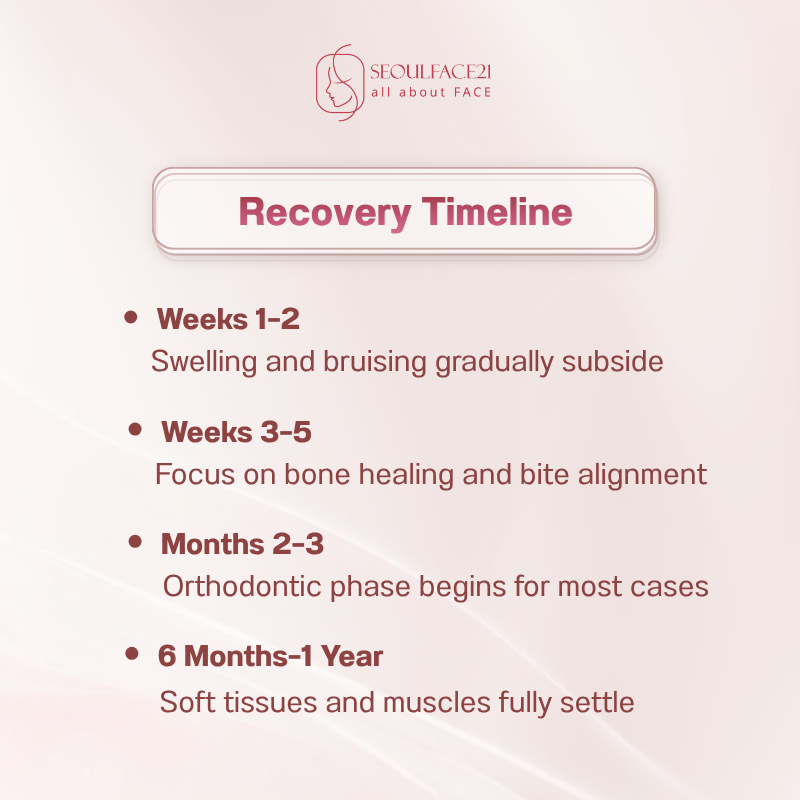
Looking at recovery as a timeline can make it easier to understand what is happening at each stage and how the body continues to heal after jaw surgery in Korea.Weeks 1–2: Swelling and Bruising Gradually Begin to Subside
After jaw surgery, swelling is often most noticeable around days 2–3 before gradually beginning to decrease. By around the second week, much of the initial swelling and bruising may start to improve, and light daily activities can sometimes be resumed depending on individual recovery and the medical team’s guidance.
During this early stage of jaw surgery recovery, the main focus is on rest and proper post-operative care, including maintaining the recommended sleeping position, using cold or warm compresses as instructed, and choosing foods that are appropriate for the healing stage after orthognathic surgery.Weeks 3–5: The Focus Shifts from Swelling Reduction to Jawbone Stabilization and Bite Alignment
After the initial recovery period, the focus is no longer only on whether facial swelling has gone down. The medical team begins to pay closer attention to how the upper and lower teeth are meeting and whether the jawbones remain in the position planned during surgery.
At this stage of jaw surgery recovery, a wafer or splint may be used to help guide the bite and support dental positioning while the jaw structure is still gaining stability.
Diet may also be adjusted gradually according to the healing process, progressing only as appropriate based on recovery and the medical team’s recommendations.Months 2–3: Jawbone Healing Becomes More Stable, and Many Cases Begin Post-Surgical Orthodontic Treatment
By around 2 months after jaw surgery, the repositioned jawbones typically begin to show greater healing and stability. In many cases, this is an important stage for starting post-surgical orthodontic treatment to refine tooth alignment and help the bite adapt to the new jaw position.
Follow-up care remains important during this phase. The medical team is not only evaluating changes in facial appearance, but also checking whether the jawbones remain in the planned position and whether dental occlusion and bite alignment are progressing appropriately.
This stage is therefore an important part of the long-term recovery process after orthognathic surgery in Korea, especially for those who need continued orthodontic treatment after surgery.6 Months–1 Year: Soft Tissues and Facial Muscles Gradually Adapt to the New Jaw Position
The jawbone position changes immediately during surgery, but the skin, muscles, and other soft tissues do not adapt to the new structure right away.
After jaw surgery, soft tissues may take approximately 6 months to 1 year to gradually adjust to the new jaw position and facial structure.
So, if your face does not yet look exactly as expected during the first 1–2 months after orthognathic surgery, it does not necessarily reflect the final result. The face may still be going through the natural healing and adaptation process as swelling continues to decrease and the surrounding soft tissues gradually settle into their new position.
SEOULFACE21 Post-Surgery Recovery Care Program
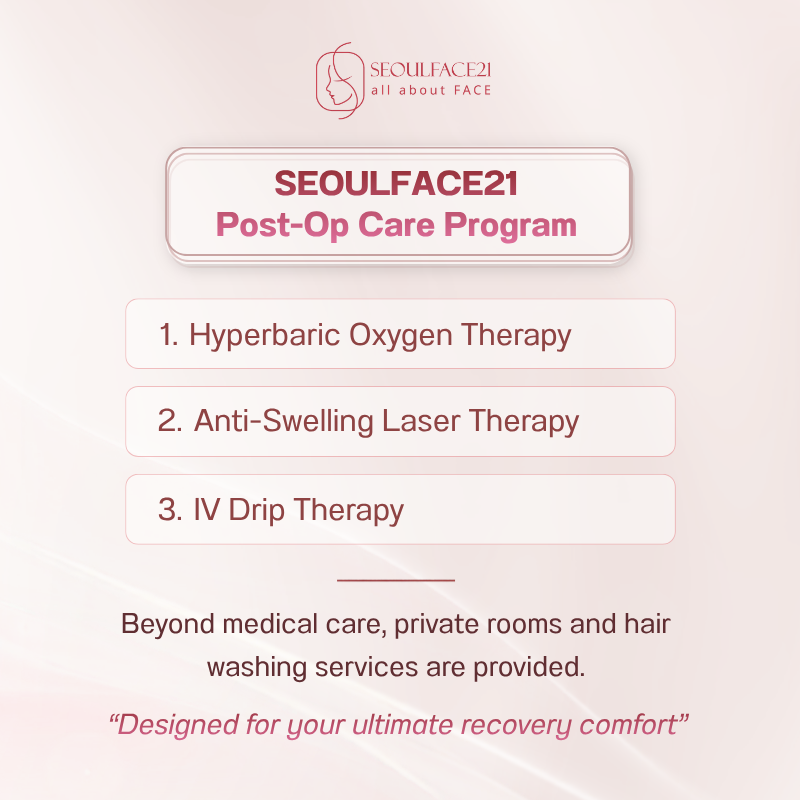
SEOULFACE21 offers several types of post-surgery recovery care, which may be combined depending on each individual’s condition and stage of recovery after jaw surgery in Korea.
1. Hyperbaric Oxygen Therapy (HBOT)
Hyperbaric Oxygen Therapy (HBOT) involves breathing oxygen in a controlled high-pressure environment.
The increased oxygen availability may help support wound healing, tissue recovery, and post-operative swelling management. It may also be used as part of recovery care to support tissues with reduced oxygen supply and to help manage certain post-surgical complications when considered appropriate by the medical team.
At SEOULFACE21, HBOT may be incorporated into the recovery program depending on the individual’s condition after jaw surgery in Korea.2. Laser Care for Post-Surgery Swelling
Laser care may help reduce post-operative swelling and inflammation, while supporting the tissue recovery process after jaw surgery.
It may also help relieve feelings of tightness and discomfort, making the recovery period feel more comfortable and manageable as the tissues gradually heal.3. Intravenous (IV) Therapy
IV therapy helps replenish fluids and maintain the body’s hydration and electrolyte balance, especially during the early recovery period after jaw surgery, when eating and drinking may still be difficult.
It can also be used to administer medications, pain relief, or supportive vitamins and nutrients as considered appropriate by the medical team, helping support recovery during the initial post-operative stage.
Beyond medical treatments and recovery equipment, good post-operative aftercare should also consider comfort in everyday life. During the early stage of jaw surgery recovery, even simple activities—such as bending down to wash your hair or getting proper rest—can become more difficult than usual.
For this reason, SEOULFACE21 provides private recovery rooms and a shampoo service to help make the post-surgery period more comfortable and relaxing while the body gradually recovers.This reflects the intention behind SEOULFACE21’s comprehensive Aftercare system—to support recovery from multiple perspectives at the same time, including surgical wound care, overall physical recovery, and comfort in everyday life.
The goal is to provide a more complete recovery experience after jaw surgery in Korea, with care extending beyond the surgical procedure itself to the practical needs that arise throughout the healing period.
Timeline for Staying in Korea: Planning Your Return Date Based on the Jaw Surgery Recovery Period
When planning time off for jaw surgery in Korea, many people count only the surgery date and forget to allow enough time both before and after the procedure.
For international visitors, the suggested schedule is to arrive in Korea approximately 7 days before jaw surgery to allow time for pre-operative consultations, examinations, and preparation. After surgery, a hospital stay of around 3 days may be recommended for initial recovery and medical observation.
Planning around the full jaw surgery timeline in Korea, rather than the surgery date alone, can help make the treatment and recovery process more manageable.After the initial hospital stay, there are two options for the length of stay in Korea and follow-up care, depending on the individual treatment plan and recovery progress:
Option 1 — Stay in Korea for About 2 Weeks After Jaw Surgery, Then Return to Thailand
Suitable for those with limited time in Korea.
After completing the first 2 weeks of jaw surgery recovery in Korea, you may be able to return to Thailand first, depending on your recovery and the medical team’s assessment.
You would then return to Korea for another follow-up examination around the 5th week after surgery to review healing progress, jaw position, and bite alignment.Option 2 — Stay in Korea for About 4 Weeks After Jaw Surgery
Suitable for those who prefer to complete more of the recovery and follow-up process during a single stay in Korea.
Another option is to remain in Korea for approximately 4 weeks after jaw surgery so that recovery progress and post-operative follow-up can be monitored in Korea before returning to Thailand.
This approach allows more time for the medical team to assess healing, jaw stability, and bite alignment during the early recovery period before departure.
You can choose the recovery schedule that best fits your lifestyle, available time, and follow-up needs, based on the medical team’s recommendations.
Looking at the full jaw surgery recovery timeline in Korea before traveling can make it easier to plan your leave from work, coordinate family responsibilities, arrange accommodation, and manage daily life more smoothly.
Having a clear plan in advance can also reduce unnecessary stress during recovery, allowing you to focus more fully on healing and follow-up care after jaw surgery in Korea.
Seamless Treatment and Follow-Up Care from Korea to Thailand
Once the jaw surgery timeline in Korea has been planned, another common concern arises for cases that require continued orthodontic treatment:
Who will take over the follow-up care after returning to Thailand?
Will continuing orthodontic treatment in Bangkok mean having to start the entire process all over again?
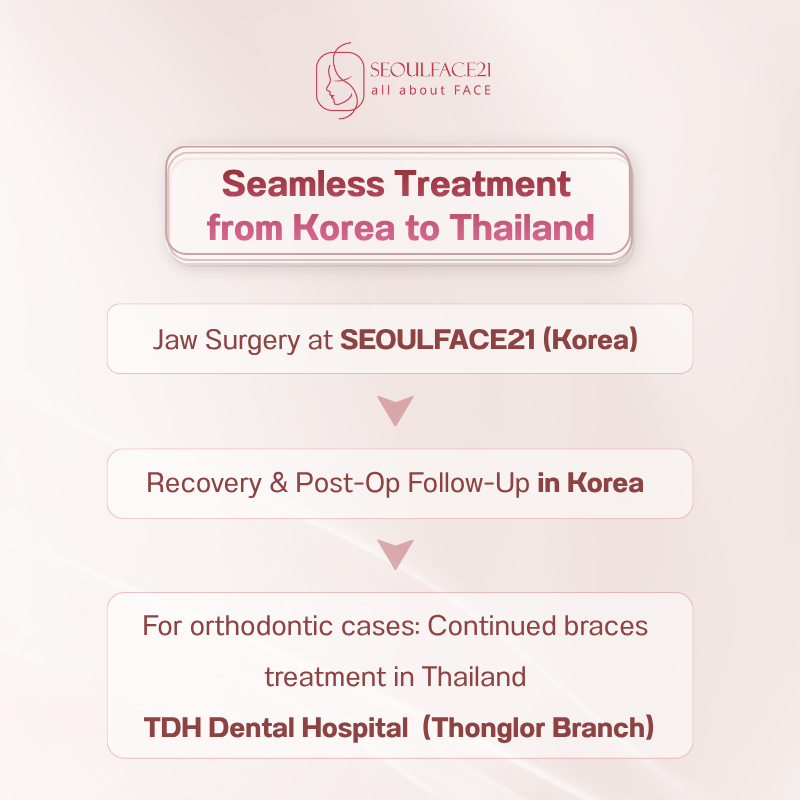
For those undergoing jaw surgery in Korea with orthodontic follow-up in Thailand, continuity of care is an important part of the overall treatment plan.For cases that require continued orthodontic treatment, SEOULFACE21 partners with TDH Dental Hospital (Thonglor Branch) in Thailand to support orthodontic follow-up after returning home.
The key goal is to ensure that information from jaw surgery in Korea is properly connected with orthodontic treatment in Thailand, so that both stages of care follow the same overall treatment direction.
This continuity is supported through a Memorandum of Understanding (MOU) between the two hospitals, along with professional collaboration and exchange between the medical teams in Korea and Thailand. This coordinated system is designed to support consistent standards of care throughout the transition from jaw surgery at SEOULFACE21 to orthodontic follow-up in Bangkok.To help ensure that recovery and orthodontic treatment continue toward the same treatment goals, the overall care pathway is organized into three coordinated stages:
1. Jaw Surgery at SEOULFACE21 in Korea
The surgery is performed according to the planned treatment strategy, followed by early post-operative care focused on managing swelling and bruising, supporting wound healing, and monitoring the initial recovery process.2. Recovery and Post-Surgery Follow-Up in Korea
Complete the post-operative Aftercare program and undergo follow-up evaluations to check jaw alignment, structural stability, bite condition, and overall healing progress before returning to Thailand.3. Continue Orthodontic Treatment at TDH Dental Hospital, Thonglor (Bangkok)
For cases that require orthodontic treatment after jaw surgery, follow-up care can continue at TDH Dental Hospital, Thonglor in Bangkok.
The orthodontic team can gradually refine tooth position, bite alignment, and dental occlusion so that they remain coordinated with the new jaw structure created through treatment at SEOULFACE21.This coordinated system helps ensure that follow-up care in Thailand continues from the same overall treatment plan, rather than starting from the beginning.
Your care is supported by medical and orthodontic teams who can communicate across both countries and understand the details of your case, helping maintain continuity from jaw surgery in Korea to orthodontic follow-up in Thailand.
STM Match — Find the Right Doctor for You

When searching for a plastic surgeon, many people begin by looking through reviews and choosing a doctor whose results and approach appeal to them. That can be a useful starting point.
However, if you want greater confidence that your case is being evaluated by a specialist whose experience and area of expertise truly match your needs, STMStyle can help support you through the doctor-matching process.
Rather than focusing on reviews alone, STMStyle helps connect you with Korean specialists based on the type of procedure, facial structure, treatment goals, and the specific concerns involved in your case.STMStyle begins by gathering essential background information, such as the number of previous surgeries, the concerns you would like to address, medication allergies, underlying medical conditions, and the length of your planned stay in Korea.
This information is then used to match your case with Korean surgeons in the STMStyle network whose specialized expertise aligns with your specific concerns and treatment needs.
The goal is to help connect you with an appropriate specialist who can review your case in detail and provide a more targeted medical assessment based on your individual circumstances.When it comes to determining which areas of the jaw require surgical correction, what type of jaw surgery may be appropriate, or which technical approach should be used, STMStyle does not make these medical decisions on behalf of the surgeon.
These clinical decisions are made directly by a qualified Korean oral and maxillofacial surgeon whose expertise is appropriate for the individual case. The surgeon is responsible for examining the jaw structure, reviewing the necessary diagnostic information, assessing dental occlusion and facial balance, and developing a personalized jaw surgery treatment plan based on the person’s specific condition and treatment needs.
FAQ: Frequently Asked Questions About Jaw Surgery in Korea
Q. Do the Plates and Screws Used to Fix the Jaw Need to Be Removed in Korea?
Not always. Plates and screws are used to stabilize the jawbones while they heal, and the titanium materials commonly used today can often remain in place if they do not cause any problems.
Whether removal is necessary depends on individual factors, such as persistent discomfort around the hardware, a suspected reaction related to the metal, or a plate or screw position that could interfere with future dental treatment.
The decision should therefore be made by the surgeon after evaluating the healing status, symptoms, and future treatment needs of each case.Q. Is It Normal for My Face to Still Be Changing Several Months After Jaw Surgery?
Yes, this can be a normal part of jaw surgery recovery. Although the facial bones are repositioned during surgery, the surrounding soft tissues, facial muscles, and skin need additional time to adapt to the new structure.
Swelling may continue to decrease gradually, while the soft tissues settle and contour around the new jaw position over approximately 6 months to 1 year. For this reason, the facial appearance may continue to change for several months after orthognathic surgery before becoming more stable.Q. Why Is Orthodontic Treatment in Thailand Still Needed After Jaw Surgery?
Jaw surgery is used to correct and reposition the underlying jawbone structure, while post-surgical orthodontic treatment—which often begins around 2–3 months after surgery, depending on the individual recovery plan—helps refine the position of each tooth.
This stage focuses on improving tooth alignment, dental occlusion, and bite function so that the teeth work appropriately with the new jaw position over the long term.
Transform Your Facial Structure with Confidence at SEOULFACE21
Jaw surgery is a major decision, but having a medical team that provides continuous care in both Korea and Thailand can help make each stage of the treatment journey more organized, coordinated, and safe.
If you would like to assess your facial structure, discuss a jaw surgery treatment plan, or ask about the travel and recovery timeline for jaw surgery in Korea, STMStyle can help collect the necessary information and connect you with a Korean specialist whose expertise matches your case.
STMStyle can also coordinate a preliminary case review with the surgeon before you travel, helping you understand the next steps and prepare more clearly for your treatment journey.