


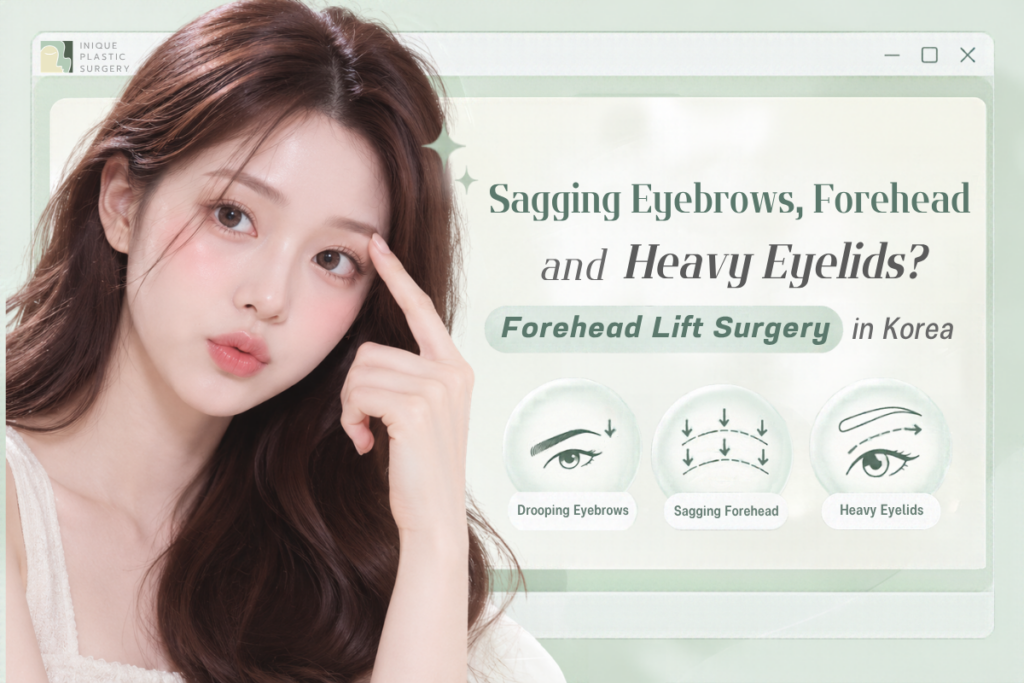
Forehead Lift Surgery for Drooping Brows, Sagging Forehead Skin, and Heavy Upper Eyelids
INIQUE Plastic Surgery, South Korea
You may notice that your eyes appear smaller, your upper eyelids feel heavy, or you need to raise your eyebrows to make your eyes look more open. Over time, this repeated movement can gradually contribute to forehead lines and wrinkles without you even realizing it.
These changes are not caused by drooping upper eyelids alone. A lowered brow position, drooping eyebrows (brow ptosis), and sagging forehead skin can also make the eyes look tired and the upper face appear older.
For those concerned about these changes, forehead lift and brow lift surgery in Korea may be a suitable option, especially when the primary concerns are sagging forehead tissue, reduced skin elasticity, and drooping eyebrows that have shifted below their natural position. This upper-face lifting procedure is designed to address the underlying forehead and brow area for a more refreshed and youthful appearance.
In this guide, INIQUE Plastic Surgery explains the difference between drooping eyebrows (brow ptosis) and drooping upper eyelids, what Korean forehead lift and brow lift surgery can improve, and how to prepare before deciding whether this upper-face rejuvenation procedure is right for you.
How Drooping Eyebrows and a Sagging Forehead Can Cause Tired-Looking Eyes
When the eyes begin to look smaller, heavier, or less refreshed, many people first consider double eyelid surgery or drooping upper eyelid correction. However, the underlying cause of heavy-looking eyelids may actually begin with the eyebrows gradually shifting downward, a condition often referred to as drooping eyebrows or brow ptosis.
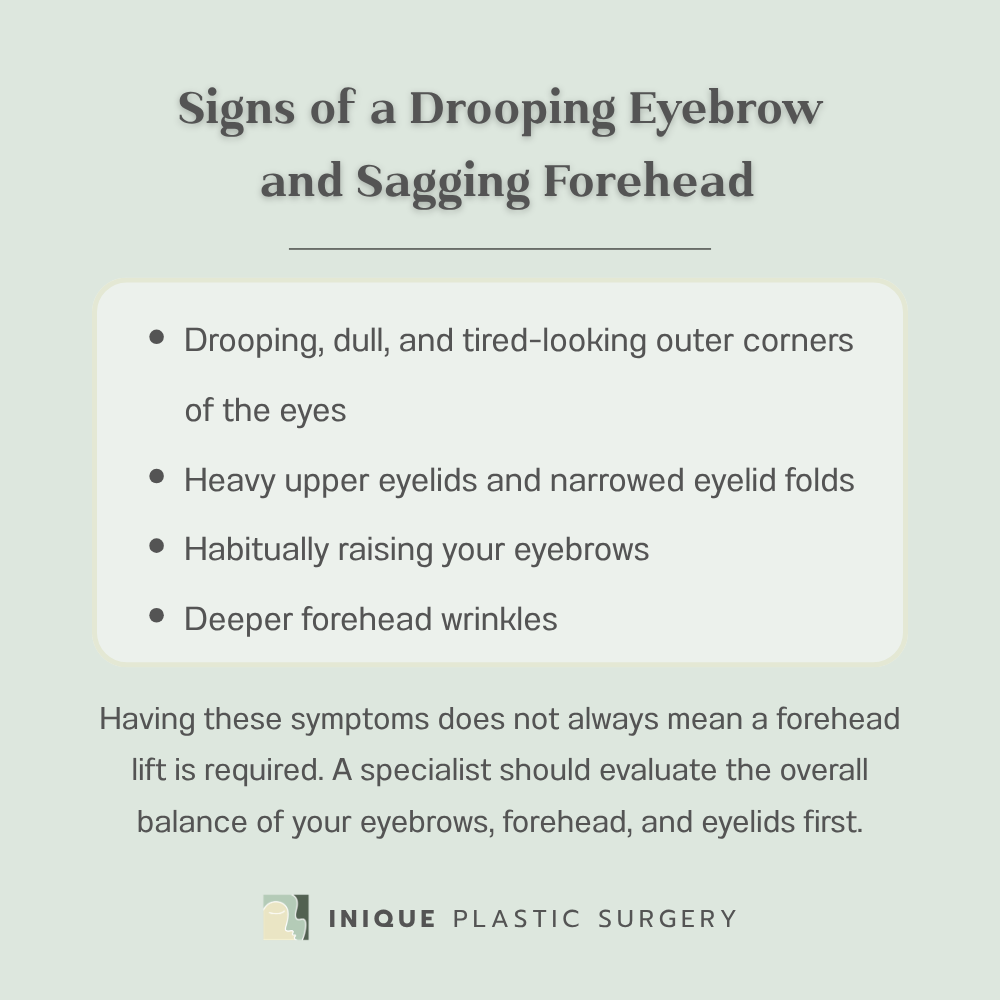
As age-related forehead skin laxity develops, the eyebrows may gradually descend, causing excess skin to gather above the upper eyelids. This can make a previously defined double eyelid crease appear narrower or less visible, particularly around the outer corners of the eyes. You can look for drooping brows, forehead sagging, and upper eyelid hooding by checking for the following signs:
- Drooping Outer Brows (Lateral Brow Ptosis)
The outer corners of the eyes may appear downturned, dull, or tired, creating a sad or fatigued expression even when the face is completely relaxed.- Heavy Upper Eyelids and Eyelid Hooding
Sagging skin beneath the eyebrows may gather above the upper eyelids, making the double eyelid crease appear narrower, heavier, or less defined.- Frequent Eyebrow Raising (Compensatory Brow Elevation)
The forehead muscles may be repeatedly contracted to lift the eyebrows and make the eyes appear wider and more open, often without conscious awareness.- Deepening Forehead Lines and Wrinkles
Repeated contraction of the forehead muscles can gradually create more visible horizontal forehead lines and deeper wrinkles.However, these signs do not automatically mean that forehead lift surgery is necessary. Age-related upper eyelid skin laxity or weakened eyelid-lifting muscles, often associated with eyelid ptosis, can create a similar drooping or tired appearance. For an accurate diagnosis, a plastic surgeon should evaluate the brow position, forehead skin laxity, upper eyelid condition, and eyelid muscle function before recommending the most suitable treatment.
Identifying whether the true cause of drooping or tired-looking eyes comes from brow descent or the upper eyelids is essential for choosing the most appropriate treatment. A clear diagnosis helps determine whether forehead lift surgery, brow lift surgery, upper eyelid surgery, or eyelid ptosis correction will address the underlying concern most effectively.
What Causes Drooping Eyebrows and Forehead Sagging? How to Identify the Underlying Cause
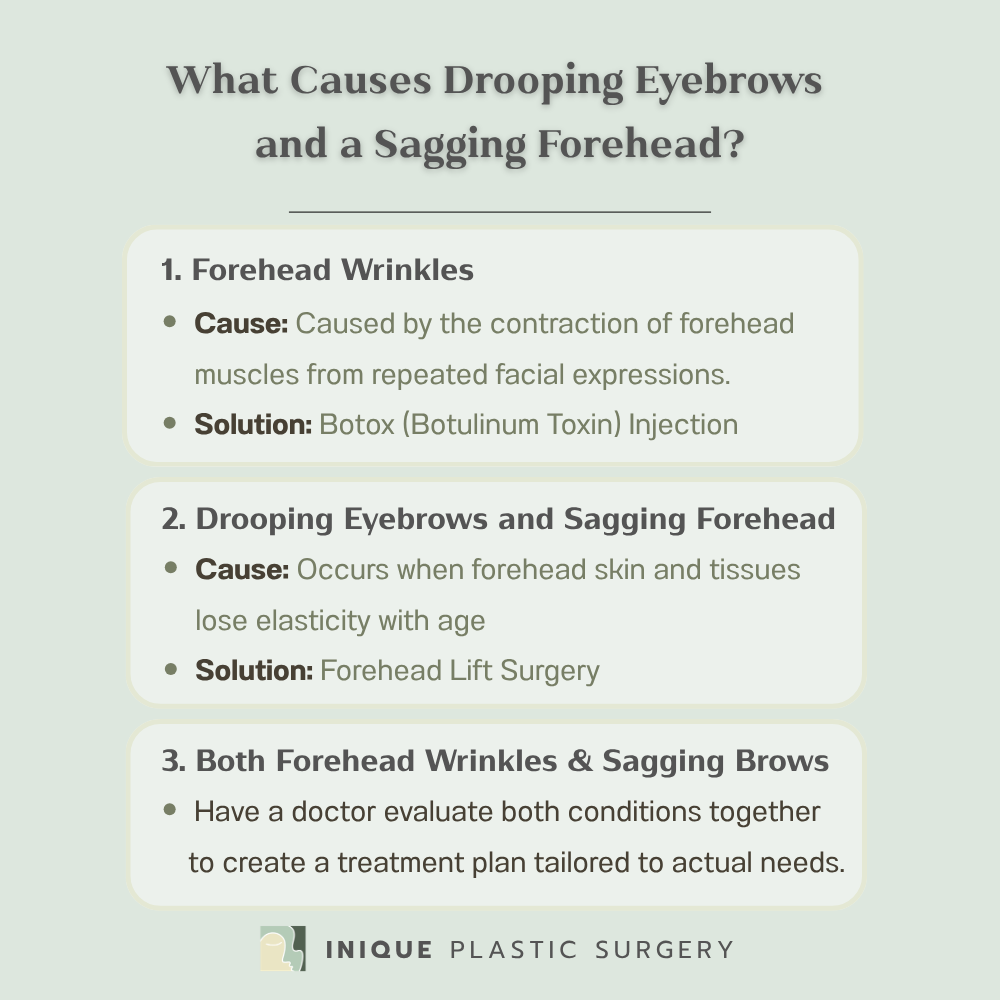
Although forehead wrinkles and drooping eyebrows (brow ptosis) develop in nearby areas of the upper face—and may occur at the same time—their underlying causes and most suitable treatment approaches can be different. Accurately distinguishing between forehead lines, forehead skin laxity, and brow descent is important for selecting the right facial rejuvenation treatment.
1. Forehead Wrinkles — Associated with Repeated Forehead Muscle Movement
- Cause: Forehead wrinkles develop from repeated contraction of the frontalis muscle when raising the eyebrows or making facial expressions. Over time, these dynamic forehead lines may gradually become static wrinkles that remain visible even when the face is relaxed.
- Treatment Approach: Botulinum toxin injections (Botox for forehead wrinkles) can temporarily reduce the activity of the muscles responsible for expression lines. This may help soften dynamic forehead wrinkles and make forehead lines appear less noticeable when raising the eyebrows or making facial expressions.
2. Drooping Brows and Forehead Sagging — Associated with Changes in Tissue Position and Structural Support
- Cause: As the forehead skin and underlying soft tissues lose firmness and elasticity with age, the eyebrows may gradually shift downward, resulting in brow descent or brow ptosis. This can contribute to heavy upper eyelids, upper eyelid hooding, and tired-looking eyes.
- Important Consideration: Botox injections for forehead wrinkles do not fully correct structural tissue laxity, forehead sagging, or brow ptosis. If botulinum toxin is injected in an unsuitable location or dosage, it may overly weaken the forehead muscles and cause the eyebrows to appear lower or more drooped. Treatment should therefore be carefully planned according to brow position, forehead muscle activity, and overall upper-face anatomy.
- Treatment Approach: Forehead lift surgery, also known as brow lift surgery, can help reposition sagging forehead and eyebrow tissues to a naturally elevated and balanced position. This procedure may be particularly suitable for individuals with drooping eyebrows caused by age-related tissue laxity, forehead sagging, or brow descent.
3. Combined Forehead Wrinkles and Drooping Eyebrows
A doctor should evaluate both concerns together to determine whether the forehead wrinkles are caused by repeated muscle activity or by compensatory eyebrow raising due to drooping brows. This comprehensive upper-face assessment allows for a more accurate, personalized treatment plan that addresses the true cause while avoiding unnecessary or excessive procedures.
Will Forehead Lift Surgery Make the Eyebrows Look Too High or the Face Appear Too Tight?
One of the most common concerns about forehead lift and brow lift surgery is: “Will my eyebrows look too high or overly arched?” or “Will my upper face appear unnaturally tight, stiff, or permanently surprised?”
This concern is understandable because eyebrow shape and brow position play an important role in facial expression and emotional appearance. If the eyebrows are lifted too high or reshaped without considering the natural eye shape and upper-face proportions, the result may appear unnatural, overly surprised, or noticeably different from the person’s original expression. Therefore, careful brow lift planning and forehead lift design are essential for achieving a balanced, natural-looking result.
Therefore, during forehead lift and brow lift surgery planning, the plastic surgeon must carefully design the ideal eyebrow position by considering three key factors simultaneously:
- Balanced Eyebrow Proportions from Every Angle
The surgeon evaluates the height of the inner brow, the position and angle of the eyebrow arch, and the placement of the outer brow tail to create a balanced, natural-looking brow lift result.
- Left-to-Right Eyebrow Balance and Symmetry
The surgeon carefully adjusts natural differences in eyebrow height to improve balance between the left and right sides while maintaining a natural-looking appearance.
- Individual Facial Anatomy and Natural Brow Position
For individuals with naturally high eyebrows, only a subtle lift may be needed. When lateral brow ptosis or significant outer brow drooping is the main concern, the surgeon may focus on lifting the outer brow tail rather than raising the entire eyebrow. This customized brow lift approach can create a brighter, more refreshed appearance without making the inner brows look overly elevated or tight.A well-planned forehead lift and brow lift surgery is not about pulling the skin as tightly as possible. The goal is to restore the eyebrows to a natural, balanced position that complements the existing facial structure. This approach can create a brighter, more youthful upper face while preserving natural facial expressions, emotional movement, and individual appearance.
Can You Have Forehead Lift or Brow Lift Surgery After Botox Injections?
The answer is yes—forehead lift or brow lift surgery can generally be performed after Botox injections. During the consultation, it is important to provide the surgeon with a detailed botulinum toxin treatment history, especially the areas previously injected and the date of the most recent Botox session. This information helps the surgeon accurately assess forehead muscle activity, eyebrow position, and the appropriate surgical lifting plan.
This is because Botox directly relaxes the forehead and glabellar muscles between the eyebrows, which can temporarily alter the natural resting position of the brows. The surgeon must consider the remaining effects of botulinum toxin when evaluating the true eyebrow level, forehead muscle activity, and degree of brow ptosis before planning forehead lift or brow lift surgery.
If you have previously undergone other cosmetic treatments, such as forehead filler, temple filler, eyelid surgery, brow surgery, or other procedures around the eyes, be sure to share your complete treatment and surgical history during the consultation. This information helps the surgeon evaluate the tissue layers, existing filler, scar tissue, and upper-face anatomy more accurately, allowing for safer and more personalized forehead lift or brow lift surgery planning.
If you have a preferred eyebrow shape or brow lift style, you may bring reference photos to the consultation. Visual references can help communicate your aesthetic preferences and desired appearance more clearly. The surgeon can then adapt the eyebrow design to suit your facial bone structure, eye shape, natural brow position, and upper-face proportions, aiming for a soft, balanced, and natural-looking forehead lift result that complements your face.
Comprehensive Facial Assessment Before Forehead Lift Surgery at INIQUE Plastic Surgery
Forehead lift surgery does more than tighten sagging forehead skin. Repositioning the eyebrows can also change the appearance of the eyes, improve upper eyelid openness, and influence the overall balance and proportions of the upper face. For this reason, careful brow-position planning is essential for achieving natural-looking upper-face rejuvenation.
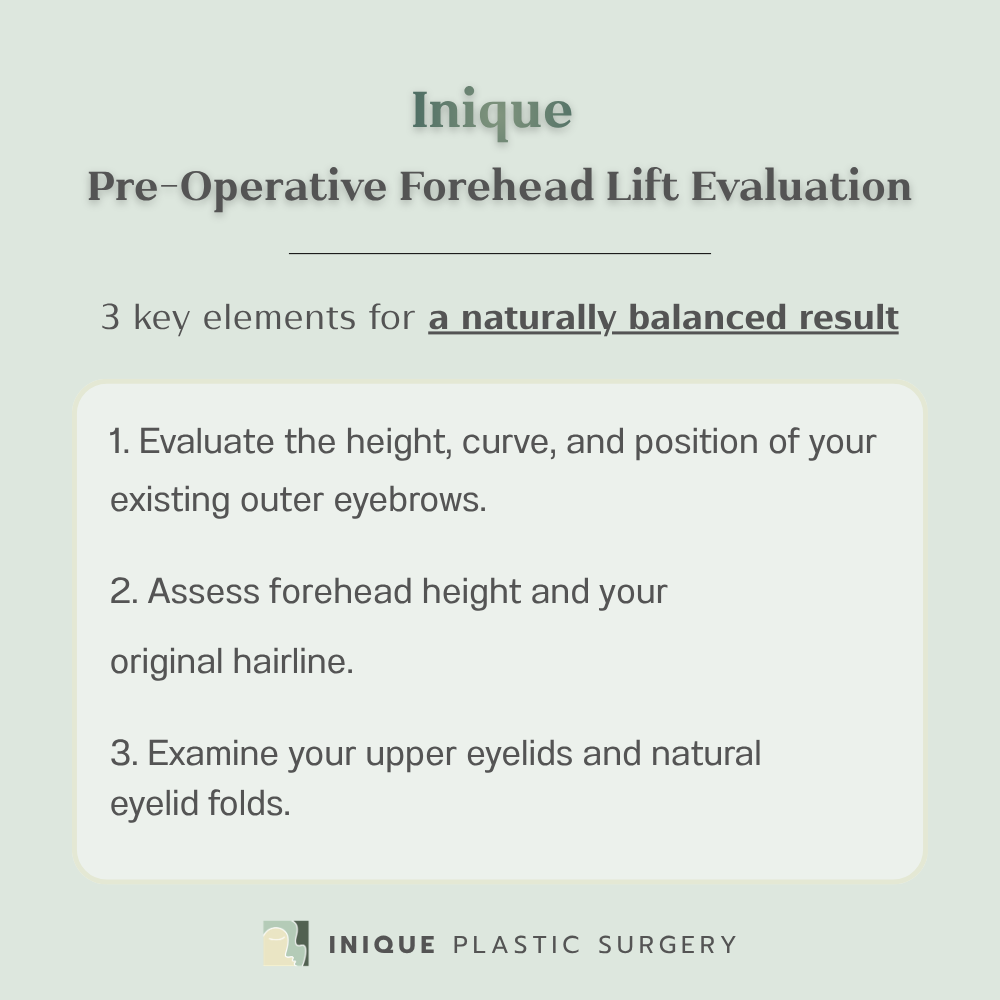
At INIQUE Plastic Surgery, forehead lift and brow lift surgery planning considers three key elements together to create a natural-looking result that remains balanced with the individual’s original facial features and upper-face proportions.
1. Eyebrow Position and Brow Shape
The surgeon evaluates the eyebrow height, brow arch, and outer brow tail position in relation to the natural eye shape. The brows should be lifted only to an appropriate level to avoid an overly elevated, surprised, or unnatural facial expression.
2. Hairline Position and Forehead Proportions
The surgeon assesses the natural forehead height and existing hairline position before planning forehead lift surgery. This evaluation helps anticipate potential changes to the hairline and forehead proportions, allowing the surgical approach to be designed for a balanced and natural-looking upper face.
3. Upper Eyelid Skin and Natural Eyelid Crease
When the eyebrows are lifted, the sagging skin that previously weighed down the upper eyelids may be reduced, allowing the natural double eyelid crease to appear clearer and more defined. However, if excess upper eyelid skin or weakened eyelid-lifting muscles (eyelid ptosis) are also present, the surgeon must assess whether additional treatment—such as upper eyelid surgery or ptosis correction—may be necessary.
The goal of forehead lift and brow lift surgery is not to raise the eyebrows as high as possible. It is to reposition them in harmony with the eye shape, natural hairline, forehead height, and overall upper-face proportions, creating a brighter and more refreshed appearance while preserving natural facial balance and expression.
STM Match — Find the Right Doctor for You

When searching for a surgeon, many people begin by looking through reviews and choosing a doctor whose results and approach appeal to them. That can be a useful starting point.
However, if you want greater confidence that your case is being evaluated by a specialist whose experience and area of expertise truly match your needs, STMStyle can help support you through the doctor-matching process.
Rather than focusing on reviews alone, STMStyle helps connect you with Korean specialists based on the type of procedure, facial structure, treatment goals, and the specific concerns involved in your case.STMStyle begins by gathering essential background information, such as the number of previous surgeries, the concerns you would like to address, medication allergies, underlying medical conditions, and the length of your planned stay in Korea.
This information is then used to match your case with Korean surgeons in the STMStyle network whose specialized expertise aligns with your specific concerns and treatment needs.
The goal is to help connect you with an appropriate specialist who can review your case in detail and provide a more targeted medical assessment based on your individual circumstances.When it comes to deciding which areas should be treated, whether surgery is necessary, and which surgical techniques may be appropriate, STMStyle does not make medical decisions on behalf of the surgeon.
These clinical decisions are made directly by a qualified Korean surgeon whose expertise is appropriate for the individual case. The surgeon is responsible for conducting the medical assessment, reviewing the relevant structural and clinical information, and developing the most suitable treatment plan based on the person’s specific needs and condition.
FAQ: Frequently Asked Questions About Forehead Lift and Brow Lift Surgery
Q. Will My Double Eyelid Crease Change After Forehead Lift Surgery?
Yes, forehead lift or brow lift surgery can change the appearance of the double eyelid crease. As the eyebrows are repositioned upward, the sagging skin that previously weighed down the upper eyelids may be reduced, allowing the existing eyelid crease to appear clearer and more defined. However, a forehead lift does not create a new eyelid crease in the same way as double eyelid surgery.
Q. Can Forehead Lift or Brow Lift Surgery Improve Uneven or Asymmetrical Eyebrows?
If the asymmetry is related to uneven eyebrow position, the surgeon can evaluate a customized lifting plan to improve left-to-right brow balance. However, perfectly symmetrical eyebrows cannot be guaranteed because the facial structure, brow anatomy, and muscle activity may naturally differ between the two sides.
Q. Will Forehead Lift Surgery Make the Forehead Look Higher or Change the Hairline?
It depends on the forehead lift technique and incision placement. Certain surgical approaches may affect the hairline position or make the forehead appear higher. A surgeon should therefore evaluate the existing hairline, forehead height, and facial proportions before selecting the most appropriate forehead lift method.
Choose Treatments Based on Your Actual Facial Concerns
If you are planning forehead lift or brow lift surgery in Korea, you can send STM Style your facial photos, preferred procedure, previous cosmetic treatment or surgery history, and planned travel dates. Our team can organize the information and coordinate a preliminary assessment with a Korean plastic surgeon before your trip.