Dorsal Hump Correctionin Korea: Does a Bump on the Nose Bridge Always Require Shaving? Urban Plastic Surgery Hospital
Your nose may look well-proportioned from the front, but when you turn sideways or take a profile photo, a raised bump on the nasal bridge known as a dorsal hump can make the bridge appear less smooth than you would like.
This feature is known as a dorsal hump, often described as a bump on the nose bridge. It is a common concern among people considering rhinoplasty or nose reshaping surgery.
Many people assume that simply shaving down the bump will create a smoother nasal bridge. However, dorsal hump reduction involves assessing several factors together, including the nasal bones, cartilage, bridge width, and nasal tip shape when planning rhinoplasty.
In this article, we explain what causes a dorsal hump, why some people may need adjustments to more than one area of the nose, and how to prepare for a rhinoplasty consultation in Korea.
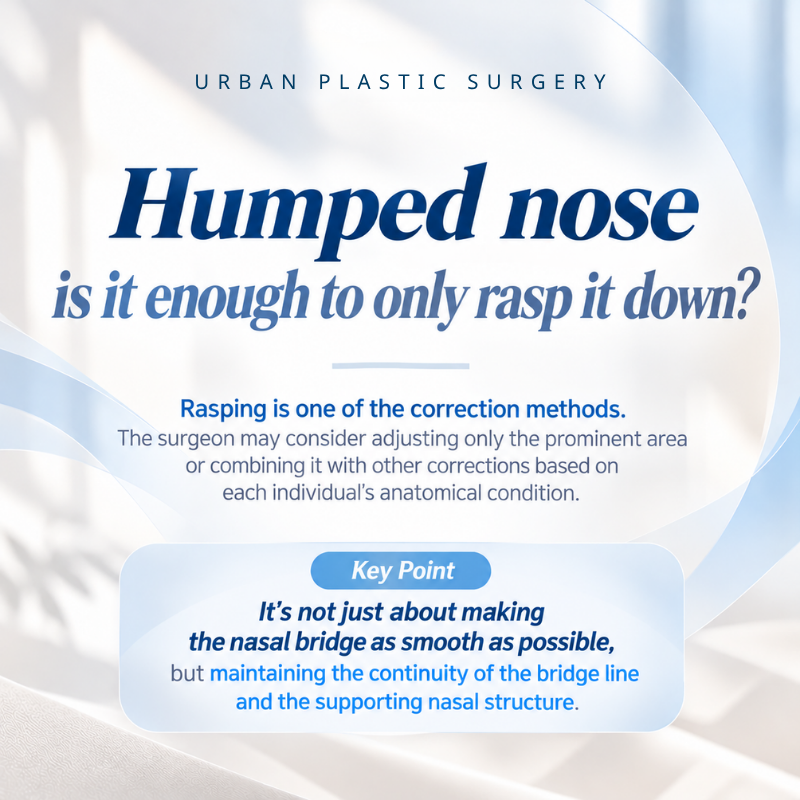
Is Shaving Down a Dorsal Hump Enough to Smooth the Nasal Bridge?
Viewed from the side, a dorsal hump appears as a raised curve or bump along the nasal bridge. This prominence may involve the nasal bones, cartilage, or the junction between these two structures.
Shaving or reducing the raised area is one approach to dorsal hump correction, but the same technique may not suit everyone. The approach depends on how pronounced the nasal hump is.
Small Dorsal Hump (Mild Prominence) The surgeon may consider reshaping only the raised area, for example, by carefully rasping or shaving down the bump on the nasal bridge.
Large Dorsal Hump (Pronounced Prominence) A larger nasal hump often involves more prominent bone and cartilage. Shaving alone may not be sufficient, and dorsal hump reduction may need to be combined with adjustments to other nasal structures.
The main goal of dorsal hump correction is to maintain a smooth, continuous nasal bridge contour while preserving the strength of the nose’s supporting structures, rather than simply shaving the bridge as flat as possible.
Why Does the Nasal Tip Look Low Even When the Nose Bridge Is High?
Have you noticed that some people have a relatively high nasal bridge, yet their side profile shows a drooping nasal tip, limited tip projection, or a downward-pointing tip? This appearance can result from two main causes.
1. The Nasal Tip Looks Low Compared with a Prominent Dorsal Hump A raised hump in the middle of the nasal bridge can interrupt the profile contour, making the nasal tip appear more drooped than it actually is when viewed from the side. Correction approach: Reducing the dorsal hump alone can create a smoother, more continuous slope from the nasal root between the eyes to the nasal tip.
2. The Nasal Tip Also Has Structural Drooping In some cases, a dorsal hump is accompanied by weak nasal tip cartilage or a downward-pointing tip. Together, these features can make the nose appear more hooked and less proportionate. Correction approach: Dorsal hump reduction alone may not be enough. The surgeon may also consider lifting the nasal tip or strengthening its support to create a balanced relationship between the nasal bridge and tip.
However, nasal tip refinement is not necessary for everyone. The surgeon will assess the strength of the existing nasal tip cartilage to choose an approach suited to the individual’s nasal structure, with safety in mind.
Which Nasal Structures Are Assessed Before Dorsal Hump Correction?
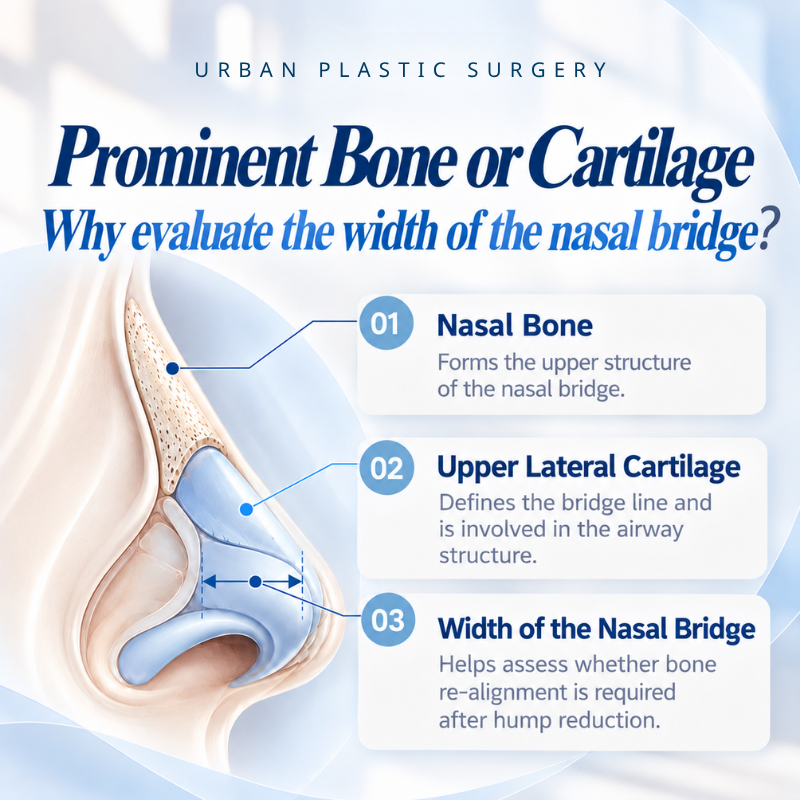
You may wonder, “If a dorsal hump involves protruding bone or cartilage, why does nasal bridge width matter?” Assessing a nasal hump involves more than examining the side profile. From the front, the surgeon also evaluates the width and symmetry of the nasal bridge. Because a dorsal hump may involve both bone and cartilage that form the bridge itself, these features need to be assessed together, including:
Nasal Bones The nasal bones form the rigid structure of the upper nasal bridge. If the dorsal hump includes a prominent bony component, reducing it may alter nasal bone alignment and bridge width.
Midvault Cartilage The cartilage in the middle portion of the nasal bridge connects to the nasal septum. It helps support the bridge’s shape and maintain an open nasal airway.
Nasal Bridge Width Assessing the distance between the nasal bones on both sides helps the surgeon determine whether additional nasal bone repositioning may be needed after dorsal hump reduction.
In some cases, dorsal hump reduction can change the shape of the upper nasal bridge, so nasal bridge width and nasal bone alignment must also be considered during surgical planning.
At Urban Plastic Surgery, rhinoplasty may combine dorsal hump reduction, bulbous tip refinement, and nasal bone reshaping. Creating a well-proportioned nose often requires assessing several structural features together, rather than addressing the raised bump alone.
Why Should the Nasal Bridge Structure Be Reassessed After Dorsal Hump Reduction?
Dorsal hump reduction does not end once the nasal bridge looks smoother. After reducing the prominent bone or cartilage, the surgeon must also assess whether the remaining nasal bridge has an appropriate shape and adequate structural support.
In cases involving a large dorsal hump, removing a substantial portion of the upper nasal bridge may result in an open roof deformity. This occurs when a gap remains between the nasal bones at the top of the bridge, potentially making the bridge appear flatter or wider from the front.
When indicated, the surgeon may consider nasal osteotomy (surgical repositioning of the nasal bones) to align the bones with the newly shaped nasal bridge. However, not every case of dorsal hump reduction requires this procedure.
Another important consideration is the internal nasal valve, an airway region associated with the upper lateral cartilage and nasal septum. If dorsal hump reduction weakens support in this area, the nasal airway may become narrower.
After dorsal hump reduction, the surgeon must assess the continuity of the nasal bridge contour, the stability of the nasal midvault, and support for the nasal airway to preserve nasal function while reshaping the nose.
Aftercare and Recovery Following Dorsal Hump Reduction Surgery
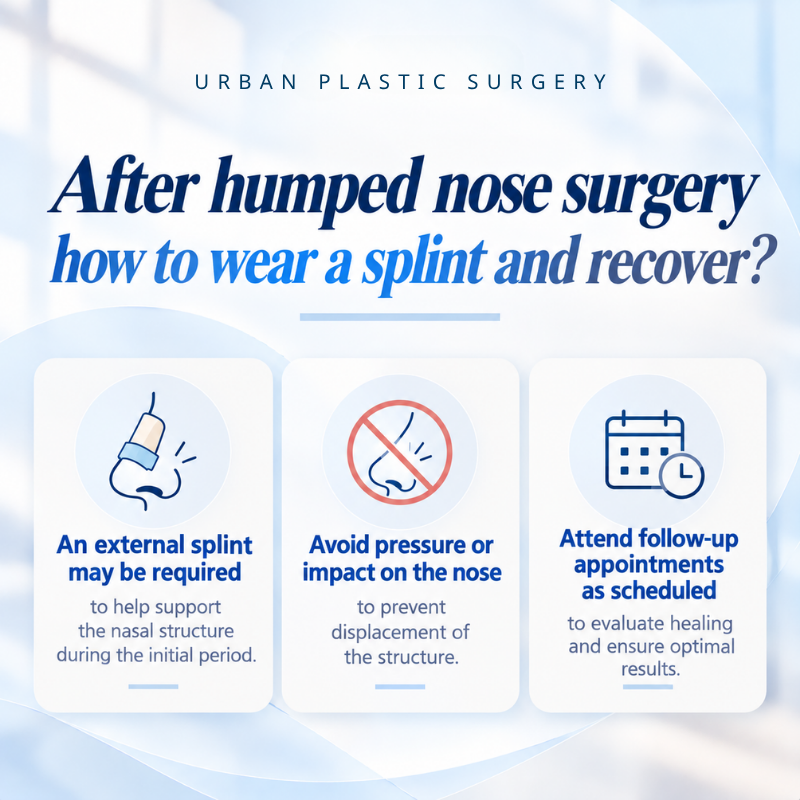
After dorsal hump reduction surgery, especially when nasal bone repositioning is also performed, the surgeon may use an external nasal splint to support the nasal structures during the early stages of recovery.
During recovery from dorsal hump reduction surgery, swelling, bruising, or tightness may occur around the nose and eyes. The extent of these symptoms varies depending on the scope of the surgery.
During the early stages of rhinoplasty recovery, avoid pressure or impact on the nose and attend all scheduled follow-up appointments as instructed.
If you are traveling to Korea for rhinoplasty, inform the hospital of your planned return date before surgery. This allows the medical team to assess how much time is needed for wound checks, nasal splint removal, and follow-up assessments before you travel home.
STM Match — Find the Right Surgeon for You
If you are concerned about a bump on your nasal bridge and unsure whether you need dorsal hump reduction alone or additional nasal tip refinement, STM Style can help gather your information and coordinate with a Korean rhinoplasty surgeon whose expertise matches your concerns.
Prepare front-view photos, side-profile photos from both sides, and three-quarter views, along with reference images of your preferred nasal bridge shape. These can help the surgeon better understand your goals during the initial rhinoplasty consultation.
STM Style will compile these photos along with your previous surgery history, concerns, medical history, and travel schedule to help match you with a surgeon in its database whose expertise suits your rhinoplasty needs.
The surgeon is responsible for directly assessing your nasal structure and developing a surgical plan to determine whether dorsal hump reduction, nasal bone reshaping, or additional nasal tip refinement is appropriate.
FAQ: Frequently Asked Questions About Dorsal Hump Correction
Q. Does Dorsal Hump Correction Require a Silicone Implant or Other Nasal Augmentation Materials?
Not always. If the existing nasal bridge has sufficient height, the surgeon may consider dorsal hump reduction alone. If the bridge contour needs further adjustment or certain nasal structures need additional support, an implant or graft material may be considered as appropriate.
Q. Does Every Dorsal Hump Correction Require a Nasal Osteotomy?
Not every case requires a nasal osteotomy. The need to cut and reposition the nasal bones depends on the original nasal structure, the amount of dorsal hump removed, and the nasal bridge width after reduction. The surgeon assesses this individually for each case.
Q. Can a Dorsal Hump and a Drooping Nasal Tip Be Corrected in the Same Rhinoplasty Procedure?
Dorsal hump reduction and drooping nasal tip correction may be performed together. However, the surgeon must first assess whether the tip truly droops or simply appears low compared with the hump, and evaluate the strength of the nasal tip structures before selecting a surgical approach.
Dorsal hump correction involves more than smoothing a bump on the nasal bridge. It considers the relationship between the nasal bridge, nasal tip, and internal nasal structures to create a shape that suits the face while preserving nasal function.
If you are considering dorsal hump correction in Korea, send your photos and details of your concerns to STM Style.The team can help coordinate a preliminary assessment with a Korean rhinoplasty surgeon whose expertise suits your case before you plan your trip.