Sub-Brow Lift Surgery for Sagging Upper Eyelids Without Redoing Double Eyelid Surgery Urban Plastic Surgery, South Korea
As we age, many people notice that a once-defined double eyelid crease gradually becomes smaller or less visible, even without changing their eye shape or undergoing additional eyelid surgery. Eye makeup and eyeliner may become hidden beneath sagging upper eyelid skin, while the outer corners of the eyes may begin to look more drooped or tired than before.
But what if you already like your natural double eyelid crease and want to preserve its original shape? Do You Need Revision Double Eyelid Surgery to Correct Sagging Upper Eyelids?
Another option to consider is a Sub-Brow Lift, also known as sub-brow excision or infrabrow blepharoplasty. This procedure removes excess skin through an incision hidden beneath the eyebrow to correct sagging upper eyelids and eyelid hooding, often without creating a new double eyelid crease or changing the existing eyelid shape.
In this guide, we explain how a Sub-Brow Lift differs from traditional upper blepharoplasty, who may be a suitable candidate, and the key benefits, limitations, recovery details, and considerations to understand before deciding on sagging upper eyelid surgery.
Why Does the Natural Double Eyelid Crease Gradually Disappear with Age?
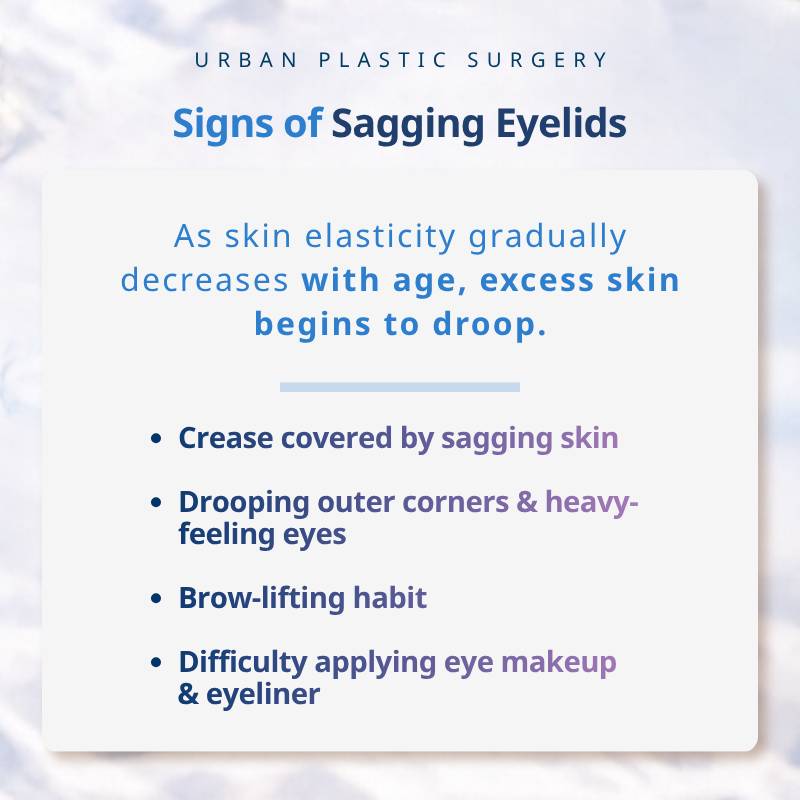
Have you noticed that a once-defined double eyelid crease can gradually appear smaller with age, especially around the outer corners of the eyes? One of the main causes is age-related loss of upper eyelid skin elasticity, also known as upper eyelid laxity or dermatochalasis. As excess skin begins to sag and fold over the natural eyelid crease, it can hide the original double eyelid line and lead to several related concerns:
Double Eyelid Crease Hidden by Sagging Skin The natural double eyelid crease is still present but appears less defined than before because excess upper eyelid skin has sagged downward and begun to cover the original eyelid fold.
Drooping Outer Eye Corners and Heavy-Looking Eyes Sagging skin around the outer corners of the eyes may become more noticeable than near the inner corners, making the eyes appear downturned, tired, or less refreshed—particularly around the outer eye area.
Habitually Raising the Eyebrows When opening the eyes or applying eye makeup, you may unconsciously tense the forehead muscles and raise the eyebrows to lift sagging upper eyelid skin away from the eyes and reveal the hidden double eyelid crease.
Eye Makeup and Eyeliner Become More Difficult to Apply As sagging upper eyelid skin reduces the visible space between the lash line and the double eyelid crease, applying eyeshadow and eyeliner can become more difficult and may interfere with your everyday eye makeup routine.
However, drooping or heavy-looking upper eyelids may be caused by excess sagging eyelid skin or accompanied by weak eyelid-lifting muscles, known as ptosis. Because upper eyelid skin laxity and eyelid ptosis require different treatment approaches, an in-depth evaluation by an experienced eyelid surgeon is essential for an accurate diagnosis and a personalized treatment plan.
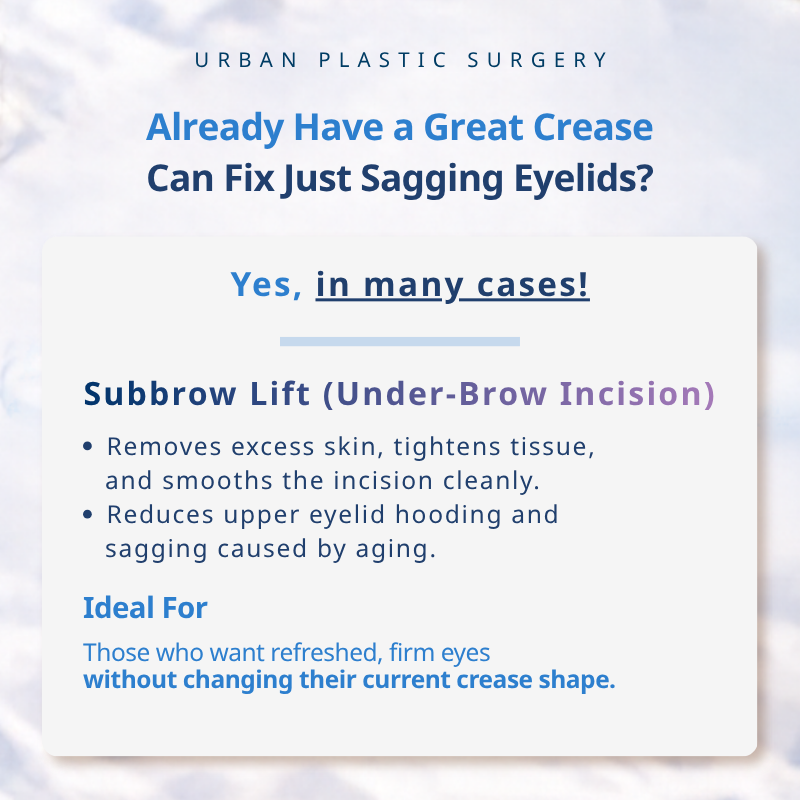
Already Have a Beautiful Double Eyelid Crease? Can You Correct Only the Sagging Upper Eyelid Skin?
The answer is “Yes, in many cases.” A Sub-Brow Lift may be suitable for those who are happy with the height and shape of their existing double eyelid crease but have developed excess sagging upper eyelid skin that begins to cover or hide the natural eyelid fold.
A Sub-Brow Lift with an incision hidden beneath the eyebrow differs from revision double eyelid surgery because the excess skin is removed from the sub-brow area rather than creating a new eyelid crease. The eyelid surgeon carefully removes an appropriate amount of excess skin beneath the eyebrow, repositions the remaining tissue, and closes the incision to reduce upper eyelid sagging and hooding over the natural double eyelid fold.
A Sub-Brow Lift may be an ideal option for those who want brighter, firmer, and more refreshed-looking eyes while preserving their natural eye shape and existing double eyelid crease—without changing a low, subtle eyelid fold into a high or wide double eyelid line. However, preserving the original double eyelid crease does not mean the eyes will look exactly the same. Once excess sagging skin and upper eyelid hooding are reduced, the existing eyelid crease may appear clearer and more defined.
Urban Plastic Surgery’s Approach to Evaluating Sagging Upper Eyelids
When planning sagging upper eyelid surgery for middle-aged individuals, Urban Plastic Surgery carefully evaluates the degree of upper eyelid skin laxity, natural eye shape, eyelid fat volume, and the appropriate amount of excess skin to remove. This customized upper eyelid assessment helps create a natural-looking, balanced result that complements the existing eye shape and double eyelid crease.
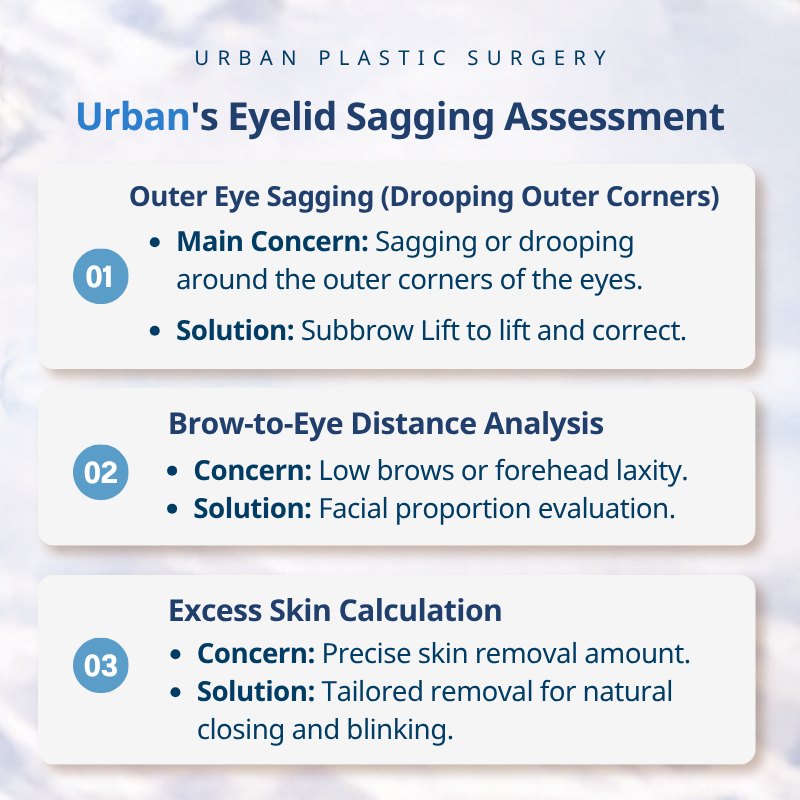
The surgeon performs an in-depth sagging upper eyelid assessment based on the following three key factors:
1. Assess the Location of Upper Eyelid Skin Laxity
If the Main Concern Is Outer Upper Eyelid Sagging or Drooping Outer Eye Corners A Sub-Brow Lift may be a particularly suitable option because it can lift excess skin around the outer upper eyelid while keeping the surgical incision discreetly hidden beneath the eyebrow.
If the Main Concern Is Near the Lash Line or Existing Double Eyelid Crease An upper blepharoplasty performed through the natural eyelid crease may address the concern more directly, allowing the surgeon to refine the eye shape and eyelid fold for a balanced, natural-looking result.
2. Measure the Distance Between the Eyebrows and Eyes
Brow position directly affects the visible upper eyelid space and the surgical incision design. If the eyebrows sit relatively low or forehead sagging and brow ptosis are also present, the eyelid surgeon will carefully determine whether a Sub-Brow Lift alone can provide a balanced, natural-looking result or whether additional brow-lifting or upper-face rejuvenation techniques should be considered.
3. Calculate the Appropriate Amount of Excess Upper Eyelid Skin to Remove
Removing too much excess eyelid skin may create excessive tension and interfere with fully closing the eyes. For this reason, careful Sub-Brow Lift surgical planning is essential to determine how much skin can be safely removed while preserving natural eyelid movement, eye closure, and overall eye function.
If bulging upper eyelid fat or eyelid ptosis caused by weak eyelid-lifting muscles is also present, the surgeon will create a personalized treatment plan to address these concerns alongside the Sub-Brow Lift. At Urban Plastic Surgery, the priority is selecting the most appropriate eyelid surgery technique for your unique eye anatomy, eyelid condition, and desired result.
Will the Sub-Brow Lift Scar Be Visible After Surgery?
One of the most common concerns about Sub-Brow Lift surgery is the visibility of the scar. Unlike incisional double eyelid surgery, where the incision can be placed within the natural eyelid crease, a Sub-Brow Lift incision is positioned along the lower border of the eyebrow.
For this reason, the eyelid surgeon must carefully design the incision by evaluating the eyebrow shape, brow-hair density, and location of the excess upper eyelid skin. This helps position the Sub-Brow Lift incision as discreetly as possible beneath the eyebrow. Key points to understand about Sub-Brow Lift scars include:
Incision Placement: The Sub-Brow Lift incision is carefully designed along the lower edge of the eyebrow to keep the scar as discreet as possible. How naturally the incision blends into the brow also depends on the original eyebrow shape, hair pattern, and brow-hair density.
Surgical Closure: Precise alignment of the incision edges and careful reduction of wound tension are essential for smooth healing and can help the Sub-Brow Lift scar become less noticeable over time.
Scar Changes During Recovery: In the early stages of Sub-Brow Lift recovery, the incision may appear red or feel slightly tight and firm as part of the normal healing process. Over time, the scar tissue typically softens and becomes less noticeable as the incision continues to heal.
Individual Skin and Scar Characteristics: Anyone with a history of hypertrophic scars or keloids should inform the eyelid surgeon before Sub-Brow Lift surgery so that appropriate incision planning, postoperative scar care, and close follow-up can be arranged.
The visibility and fading of a Sub-Brow Lift scar can vary depending on the incision placement, surgical technique, individual healing response, skin condition, and proper postoperative wound and scar care.
Postoperative Skin and Scar Care After Sub-Brow Lift Surgery
During the first few weeks after Sub-Brow Lift surgery, swelling, bruising, or mild tightness may occur around the eyes and along the incision as part of the natural healing process. Allow sufficient time for gentle postoperative wound and scar care, and attend all scheduled follow-up appointments with the hospital so the surgeon can monitor your Sub-Brow Lift recovery.
An important precaution during the early Sub-Brow Lift recovery period is to avoid touching, rubbing, or creating friction along the sutured incision. Do not apply makeup, skincare products, or cosmetics directly over the surgical wound until the eyelid surgeon has examined the area and confirmed that it is safe to do so.
For proper Sub-Brow Lift aftercare, keep the incision clean, apply compresses as instructed by the medical team, and avoid activities that may place tension on the healing wound. Once the incision has fully closed, consistent sun protection is also important to help prevent scar discoloration and support smoother scar healing.
STM MATCH — Find a Doctor Matched to Your Needs and Treatment Goals
When searching for a plastic surgeon, many people begin by looking through reviews and choosing a doctor whose aesthetic style matches the results they like. That can be a good starting point. However, if you want greater confidence that your case is being handled by a doctor with expertise that closely matches your specific concerns and surgical needs, STMStyle can help with the matching process. Through STM MATCH, we help connect each case with a Korean plastic surgeon whose experience and specialty are more closely aligned with the actual problem that needs correction, rather than choosing based on visual preference alone.
STMStyle begins by gathering essential background information, such as the number of previous surgeries, the concerns you would like to address, medication allergies, underlying medical conditions, and the length of your planned stay in Korea. This information is then used to match your case with Korean surgeons in the STMStyle network whose specialized expertise aligns with your specific concerns and treatment needs. The goal is to help connect you with an appropriate specialist who can review your case in detail and provide a more targeted medical assessment based on your individual circumstances.
STM Style does not determine which sagging upper eyelid treatment or surgical technique is most suitable, nor does it provide a medical diagnosis. A qualified Korean plastic surgeon with experience relevant to your case will personally evaluate your eyelid condition, identify the underlying cause, and create an appropriate surgical and postoperative care plan.
FAQ: Frequently Asked Questions About Sub-Brow Lift Surgery
Q. Will a Sub-Brow Lift Change the Shape of My Eyebrows?
The position or shape of the eyebrows may change slightly after a Sub-Brow Lift, depending on the incision placement, the amount of excess skin removed, and tissue tension. Therefore, the eyelid surgeon should carefully evaluate your natural eyebrow shape, brow position, and upper eyelid condition before surgery.
Q. Can I Have a Sub-Brow Lift If I Have Previously Undergone Double Eyelid Surgery?
A Sub-Brow Lift after double eyelid surgery may be considered in some cases, especially when the existing eyelid crease remains satisfactory but excess upper eyelid skin has begun to sag and cover it. However, the surgeon must also review your previous eyelid surgery history and assess the condition of the eyelid tissue and any existing scar tissue before recommending the procedure.
Q. Will My Existing Double Eyelid Crease Look Higher or Change Shape After a Sub-Brow Lift?
Although a Sub-Brow Lift does not create a new double eyelid crease, reducing the excess skin that previously covered the eyelid fold may make the existing crease appear clearer, wider, or slightly higher. Before surgery, discuss with the eyelid surgeon how closely you want to preserve your original eye shape and double eyelid line.
Q. If I Have Severe Upper Eyelid Sagging, Do I Need a Sub-Brow Lift Combined with Double Eyelid Surgery?
Not everyone requires a Sub-Brow Lift combined with double eyelid surgery. If the main concern is excess sagging upper eyelid skin, one appropriately selected procedure may be sufficient. However, if there are additional concerns involving the double eyelid crease or weak eyelid-opening muscles, such as ptosis, the surgeon may recommend further treatment based on a detailed eyelid assessment.
For those who are satisfied with their existing double eyelid crease and want to preserve their natural eye shape, a Sub-Brow Lift may be an effective option for correcting sagging upper eyelid skin without creating a new eyelid fold.
The key is to determine whether the drooping upper eyelids are caused by excess eyelid skin, a low eyebrow position or brow ptosis, or weakened eyelid-opening muscles. Each underlying cause requires a different treatment approach, which may include a Sub-Brow Lift, brow lift, upper blepharoplasty, or ptosis correction.
If you are planning sagging upper eyelid surgery or a Sub-Brow Lift in Korea, you can send your photos and previous treatment or surgery history toSTM Style. Our team can organize your information, help match you with a suitable Korean eyelid surgeon, and coordinate a preliminary medical assessment before you travel to South Korea.