Alar Reduction in Korea: Wide Nose from the Front—Should You Choose Nostril Reduction or Tip Rhinoplasty? Urban Plastic Surgery Hospital
Have you ever looked in the mirror and felt happy with your nose bridge from the side, only to notice that your nose looks wider than expected in front-facing photos? When you smile, your nostrils may flare and make your nose appear even wider, leaving you feeling less confident.
This leads many people to consider alar reduction surgery (nostril reduction) for a slimmer nose that complements their facial features. But did you know that a nose that looks wide from the front isn’t always caused by the width of the nostrils alone?
Some people have a wide alar base, while others have a bulbous nasal tip or flared nostrils. Each feature requires a different approach to nose reshaping.
In this article, we’ll explore who is a suitable candidate for alar reduction surgery, what to know before nostril reduction, and how to care for your nose after surgery.
Who Is a Good Candidate for Alar Reduction?
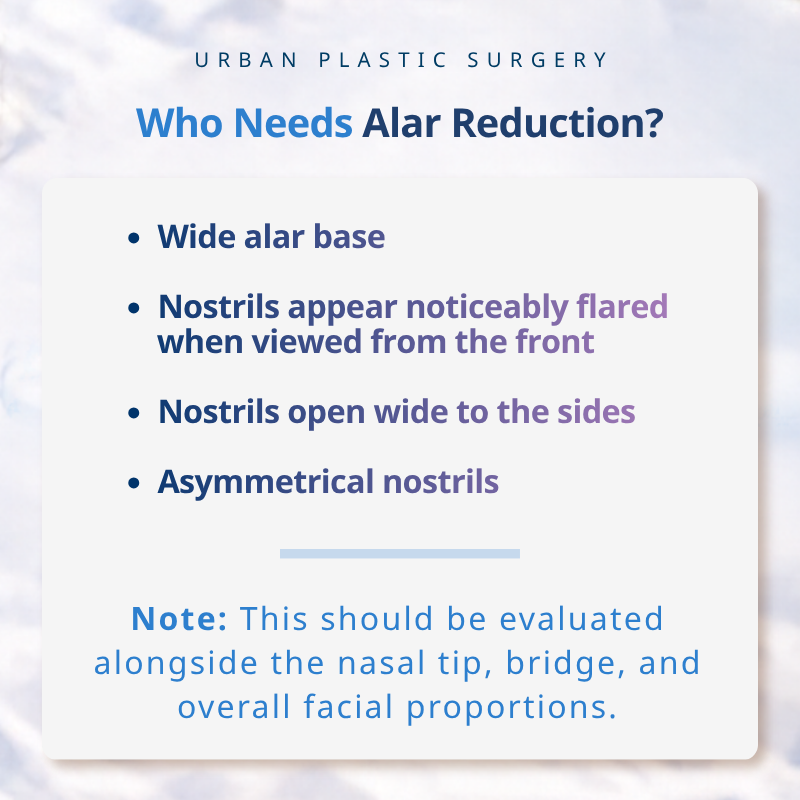
When people describe a wide nose or flared nostrils, alar reduction surgery (nostril reduction) is often the first procedure that comes to mind. Before choosing a surgical approach, however, it helps to identify which part of the nose creates that width. The following nasal features may be suitable for consideration for alar reduction:
Wide Alar Base: The areas where the nostrils meet the face extend outward, making the lower part of the nose appear wider.
Prominent Alar Flaring from the Front: The nostril wings appear broad and thick, standing out more than other parts of the nose.
Laterally Flared Nostrils: The nostril openings appear wide horizontally.
Asymmetric Nostrils: Differences in the position of the alar base or the tissue of the nostril wings create an imbalance between the two sides.
However, having a wide alar base does not always mean you need alar reduction surgery. The most suitable approach also depends on the proportions of your nasal tip, nose bridge, and overall facial features.
Wide Alar Base vs. Bulbous Nasal Tip: What’s the Difference?
This is a common source of confusion for people researching rhinoplasty, as both a wide alar base and a bulbous nasal tip can make the nose look larger from the front. However, they involve different parts of the nose.
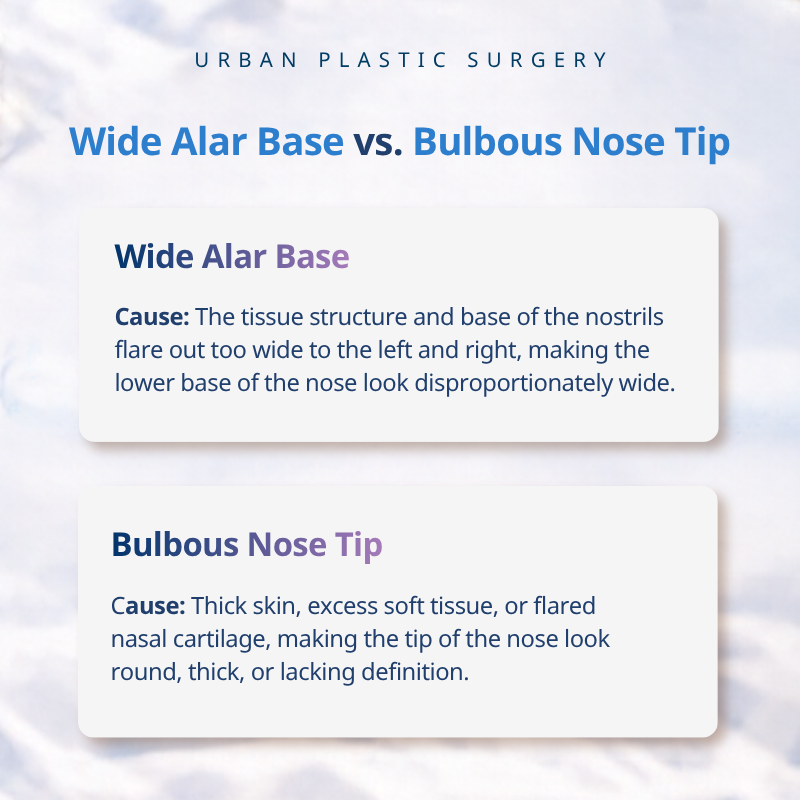
Wide Alar Base
Cause: The tissue and alar base beside the nostrils extend outward on both sides, making the lower nasal base appear disproportionately wide.
Bulbous Nasal Tip
Cause: Thick skin, excess soft tissue, or broad nasal tip cartilage can create a bulbous nasal tip, making the tip look rounded, bulky, or less defined.
For example, one person may have a fairly narrow nasal tip but a wide alar base, while another may have a relatively narrow alar base but a bulbous nasal tip. Although both may feel they have a “wide nose,” alar reduction (nostril reduction) may be more suitable for the first person, while the second may benefit from nasal tip refinement (tip rhinoplasty).
Alar Reduction Assessment at URBAN Plastic Surgery
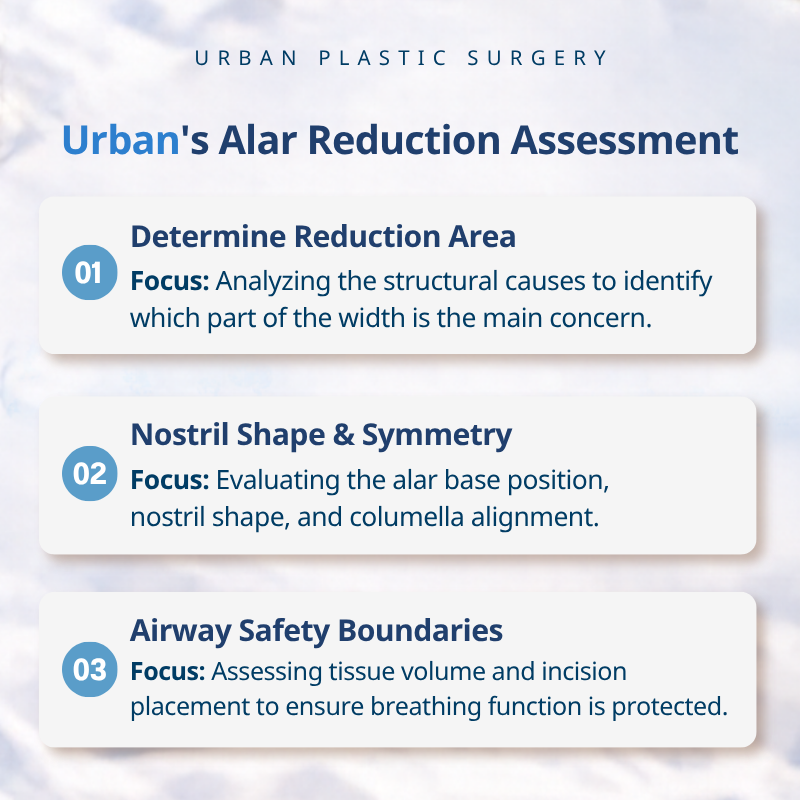
When planning alar reduction surgery in Korea, URBAN Plastic Surgery considers the overall shape of the nose, rather than focusing solely on reducing nostril width. A nose that looks wide from the front may involve several features, including the alar base, nasal tip, and nostril shape. The assessment therefore focuses on three key components before developing a nostril reduction plan:
1. Identify the Area for Alar Reduction
Alar base reduction and nostril rim reshaping involve different surgical techniques and goals. The surgeon carefully assesses the nasal anatomy to identify the main source of width and determine which area to reduce, aiming for a nose shape that complements the nasal tip and overall facial proportions.
2. Assess Nostril Shape and Symmetry
When the nostrils differ in size or curvature, the surgeon assesses the alar base position, nostril shape, and columella—the tissue separating the nostrils—together to evaluate nostril asymmetry.
3. Plan the Extent of Alar Reduction to Preserve Nasal Breathing
Removing too much tissue during alar reduction surgery may cause overly narrow or distorted nostrils, tissue tightness, or breathing difficulties in some cases. Surgical planning therefore considers how much tissue can be removed, incision placement, and the potential effects on the nostril openings, taking both appearance and nasal function into account.
When planning rhinoplasty in Korea, surgeons at URBAN Plastic Surgery carefully assess the nose as a whole. For example, a bulbous nasal tip may occur alongside a short or upturned nose, requiring a coordinated approach to reshaping the nasal structures. A single nose shape may involve several concerns, so each area needs careful, individual assessment before surgery.
Aftercare Following Alar Reduction Surgery
Because the nostril wings move with facial expressions, wound care after alar reduction surgery requires extra care to minimize pulling and friction around the incision sites.
During the early stages of alar reduction recovery, you may experience swelling, redness, or tightness along the incision sites. Healing time varies depending on the surgical technique and individual skin characteristics. Here are some key aftercare tips following nostril reduction surgery:
Avoid Touching or Irritating the Incisions: Do not rub your nose or pull on the nostril wings, and avoid unnecessary contact with the incision sites after alar reduction surgery.
Take Care When Cleansing and Applying Makeup: Gently cleanse your face and avoid applying skincare products or makeup directly to the alar reduction incision sites until the wounds are fully dry or your surgeon gives approval.
Everyday Facial Expressions: You do not need to keep your face rigid or completely avoid smiling, laughing, or talking during alar reduction recovery. Simply avoid exaggerated, wide-open smiles or movements that strongly pull on the incision sites during the early healing period.
Follow Your Surgeon’s Aftercare Instructions Closely: Clean the incision sites, apply prescribed medication, and use compresses consistently as directed by your hospital after alar reduction surgery.
If you notice any unusual symptoms after alar reduction surgery, such as a severe increase in pain or swelling, wound separation, pus discharge, or persistent fresh bleeding, contact the hospital immediately for prompt assessment.
STM MATCH — Find a Doctor Matched to Your Needs and Treatment Goals
When searching for a plastic surgeon, many people begin by looking through reviews and choosing a doctor whose aesthetic style matches the results they like. That can be a good starting point. However, if you want greater confidence that your case is being handled by a doctor with expertise that closely matches your specific concerns and surgical needs, STMStyle can help with the matching process. Through STM MATCH, we help connect each case with a Korean plastic surgeon whose experience and specialty are more closely aligned with the actual problem that needs correction, rather than choosing based on visual preference alone.
STM Style gathers key details, including front-facing photos, photos taken from below to show the nostrils, previous surgeries, the concerns you would like to address, medication allergies, existing medical conditions, and your planned stay in Korea. This information helps us match you with a Korean plastic surgeon in our database whose expertise aligns with your concerns, allowing for a focused assessment of your rhinoplasty or alar reduction needs.
STM Style does not make surgical or technical decisions on your behalf. A certified Korean plastic surgeon with expertise suited to your case is responsible for the clinical assessment, diagnosis, and personalized rhinoplasty or alar reduction treatment plan.
Alar Reduction FAQ: Frequently Asked Questions About Nostril Reduction
Q. Why Might My Nostrils Look Uneven During Early Recovery After Alar Reduction?
During early alar reduction recovery, swelling may differ between the two sides, temporarily making the nostrils look uneven in width or shape. However, nostril asymmetry is not always caused by swelling. If the difference becomes more noticeable or occurs alongside other unusual symptoms, contact your surgeon promptly.
Q. Can I Have Alar Reduction After Rhinoplasty Without Replacing My Nasal Implant?
Alar reduction without replacing the nasal implant may be considered in some cases, provided the existing nasal bridge and tip do not require correction and the wide alar base is the main concern. If the nasal tip or other structures are also out of proportion, your surgeon will need to assess whether nostril reduction alone can achieve the desired shape.
Q. How Much Can Alar Reduction Improve Pre-Existing Nostril Asymmetry?
The degree of improvement depends on the source of the nostril asymmetry. If the difference involves the alar base, your surgeon may adjust different amounts of tissue on each side. However, if the asymmetry involves the nasal tip or central nasal structures, alar reduction alone may not fully correct it. Perfect symmetry cannot be guaranteed.
Alar reduction surgery aims to do more than make the nose smaller. It should bring the nasal base width, nostril shape, and nasal tip into balance with the overall facial proportions, while preserving nasal function.
If you’re considering alar reduction in Korea, send your photos and details of any previous procedures toSTM Style. We can help organize your information, find a Korean plastic surgeon with expertise suited to your needs, and coordinate a preliminary assessment before you travel.