


How Often to Change Your Toothbrush & Proper Care Guide
By SEOULFACE21 Oral and Maxillofacial(OMFS) HOSPITAL
We brush our teeth every day, at least twice a day, making the toothbrush one of the most frequently used items in our daily oral care routine. Choosing the right toothbrush for your individual needs is therefore an important part of maintaining good oral health.
A suitable toothbrush can help minimize unnecessary irritation or damage to the gums and teeth, while allowing you to remove plaque more effectively and maintain proper dental and oral hygiene every day.If possible, choose a soft-bristled toothbrush with a relatively small brush head. Soft bristles help minimize irritation to the gums and tooth enamel, while a smaller head makes it easier to reach difficult areas of the mouth and clean around the teeth more thoroughly.
This can help support effective plaque removal, gum care, and overall oral hygiene without putting unnecessary pressure on the teeth and gums.Recently, many toothbrush brands have introduced larger brush heads for faster and more convenient brushing. However, a brush head that is too large may make it more difficult to reach tight spaces and hard-to-clean areas, especially around the back teeth.
For more effective toothbrush cleaning and oral hygiene, choose a toothbrush with a moderately sized or compact brush head that can move easily around the mouth. It is also helpful to select a toothbrush with a sturdy handle and a non-slip grip, which provides better control and makes it easier to guide the brush accurately while brushing.
Extra Tips Before Brushing for Better Oral Hygiene
Before brushing your teeth, it is recommended to floss first to remove food particles and plaque trapped between the teeth. After flossing, you may rinse with mouthwash as part of your oral care routine, then proceed with brushing.
This step-by-step approach can help improve plaque removal, interdental cleaning, and overall oral hygiene, leaving the mouth feeling cleaner and more thoroughly cared for.Choosing the right oral care products and brushing thoroughly are certainly important, but one thing that should never be overlooked is proper toothbrush storage and care.
How you store and maintain your toothbrush can affect its cleanliness and overall hygiene, making it an important part of a healthy oral care routine.Because a toothbrush goes directly into your mouth, proper toothbrush hygiene is closely linked to oral health. In general, replacing your toothbrush regularly can help maintain better cleanliness, although changing it every day is obviously impractical.
For this reason, while using the same toothbrush, keeping it clean and properly maintained is especially important for supporting good oral hygiene.
Proper Toothbrush Storage and Care: How to Keep Your Toothbrush Clean and Hygienic
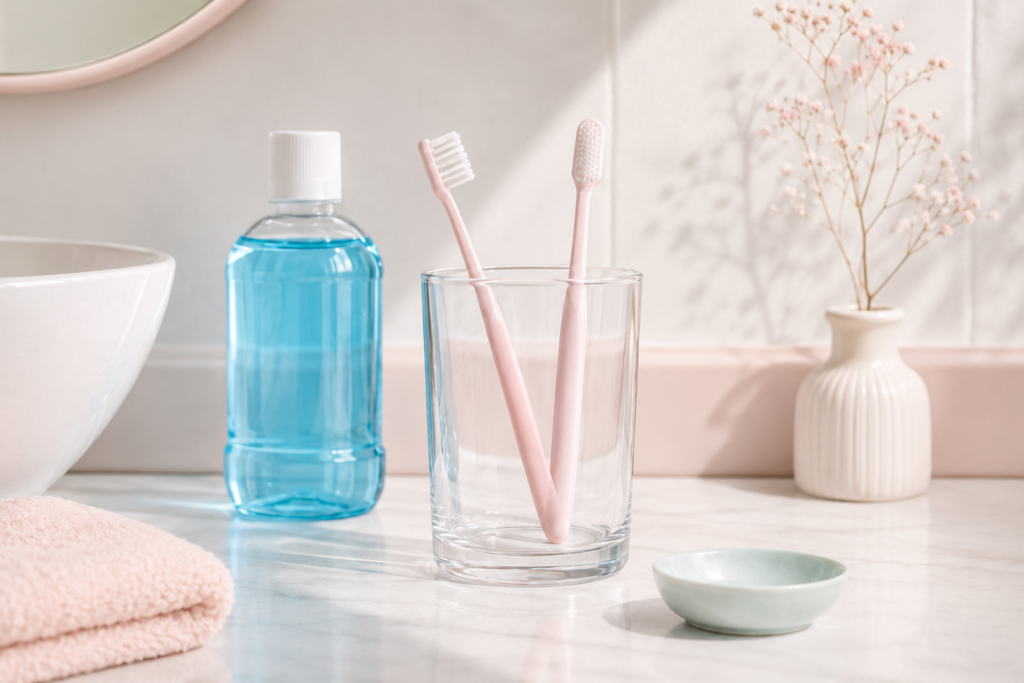
After brushing, rinse your toothbrush thoroughly under clean running water, then shake off as much excess water as possible. Store it in a well-ventilated area where it can air-dry properly.
Allowing the toothbrush to dry between uses helps maintain better toothbrush hygiene and reduces moisture buildup that can encourage the growth of microorganisms.For proper toothbrush storage, avoid covering or enclosing the bristles while they are still wet, as trapped moisture can encourage bacterial growth.
It is best to store the toothbrush with the brush head facing upward in a well-ventilated holder. If possible, position the handle at a slight angle—around 45 degrees—to help excess water drain away from the brush head and allow the bristles to dry more effectively.In hot and humid weather, bacteria can grow more easily and rapidly, so it is especially important to keep your toothbrush as dry as possible between uses.
If you are already storing it properly but still want extra reassurance, learning the correct methods for cleaning and disinfecting a toothbrush can be another helpful way to maintain good toothbrush hygiene and oral health.
How to Clean and Disinfect Your Toothbrush Properly?
Everyone may have their own method for cleaning and disinfecting a toothbrush. Let’s take a closer look at which methods are practical and effective, and which ones should be used with caution to avoid damaging the toothbrush or affecting oral hygiene.
1. Rinsing the Toothbrush with Hot Water
Many people soak their toothbrush in hot water for about one minute and then rinse it with cold water. However, this method is not recommended.
High temperatures can cause the toothbrush bristles to lose their shape, soften, or wear out more quickly, which may reduce the toothbrush’s cleaning effectiveness and shorten its lifespan.2. Soaking the Toothbrush in Vinegar or Baking Soda Solution
Some people soak their toothbrush in a 1:1 mixture of vinegar or baking soda and water as a way to clean or disinfect it. These methods may help reduce some microorganisms on the toothbrush.
However, soaking the toothbrush for too long may weaken, soften, or deform the bristles, which can reduce its cleaning effectiveness and shorten the lifespan of the toothbrush.3. Soaking the Toothbrush in a Diluted Bleach Solution
A highly diluted bleach solution may be used as a disinfectant in some contexts, but using household bleach to disinfect a toothbrush is not generally recommended for routine oral care. Any chemical residue left on the bristles could be accidentally introduced into the mouth, and bleach may also damage the toothbrush material. The American Dental Association notes that routine toothbrush care should focus on thorough rinsing and proper storage, and there is limited evidence supporting special toothbrush-sanitizing methods.
For everyday use, it is safer to rinse the toothbrush thoroughly after brushing, allow it to air-dry, and replace it regularly when the bristles become frayed or worn rather than relying on strong chemical disinfectants.4. Soaking the Toothbrush in Mouthwash
One simple option for cleaning and sanitizing a toothbrush is to pour a small amount of antimicrobial mouthwash into a clean cup and soak the toothbrush head for a few minutes, then rinse it thoroughly with clean water. Research cited by the American Dental Association indicates that soaking a toothbrush in certain antimicrobial mouthwashes can significantly reduce bacterial levels on the bristles.
However, do not leave the toothbrush soaking for long periods or overnight. Prolonged exposure to mouthwash, especially alcohol-containing formulas, may affect the bristles or other toothbrush materials. For routine care, thorough rinsing after use and allowing the toothbrush to air-dry completely remain the most important steps.5. Using a UV Toothbrush Sanitizer
If you have a little more budget, a UV toothbrush sanitizer can be another convenient option. Today, many UV toothbrush sterilizers for home use are affordable, compact, and easy to operate.
They can help reduce microbial contamination on toothbrush bristles and provide an additional layer of hygiene as part of your daily toothbrush care and oral hygiene routine.
When Should You Replace Your Toothbrush? Signs It’s Time for a New One
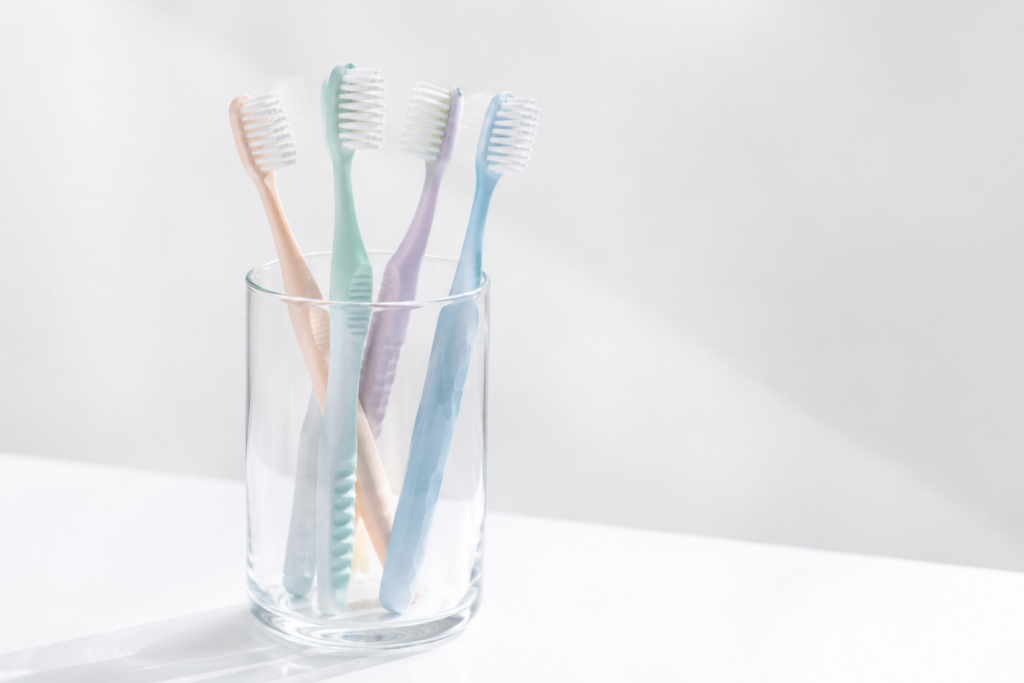
No matter how well you clean and care for your toothbrush, dentists generally recommend replacing it every three to four months. The American Dental Association also advises replacing it sooner if the bristles become frayed, worn, or matted, as a worn toothbrush becomes less effective at cleaning the teeth.
After about three months of use, a toothbrush may become less effective even with proper cleaning and care. The bristles can begin to fray, spread out, and wear down, reducing their ability to remove plaque and food debris effectively.
For this reason, even if your toothbrush still looks relatively clean, a good general guideline is to replace your toothbrush every three months, or sooner if the bristles become visibly worn or damaged.In addition, disposable toothbrushes are not ideal for regular everyday use, especially if they are chosen simply to avoid replacing a standard toothbrush regularly. Some inexpensive disposable or travel toothbrushes may have stiffer, lower-quality bristles that can feel rough on the gums and tooth surfaces if used frequently or with too much pressure.
They are generally better kept for short-term use while traveling or in emergencies, while a properly selected soft-bristled toothbrush is a better choice for daily oral care.Once dental and oral health problems become serious, treatment can require significant time and expense. That is why paying attention to small daily habits—such as choosing the right toothbrush, storing it properly, and replacing it on schedule—can make a real difference.
These simple oral hygiene and preventive dental care habits can help reduce avoidable dental problems, lower long-term treatment costs, and support the health of your natural teeth for as long as possible.
Source: Column by SEOULFACE21 ORAL AND MAXILLOFACIAL(OMFS) Hospital