


Foods for Strong Teeth vs. Foods That Damage Teeth: What Should You Eat and Avoid for Better Dental Health?
By SEOULFACE21 Oral and Maxillofacial(OMFS) HOSPITAL
Every day, we eat a wide variety of foods—but have you ever wondered how the foods you chew and consume each day can affect your teeth, gums, and overall oral health?
Some foods can help support strong teeth and healthy gums, while others may increase the risk of tooth decay, cavities, enamel erosion, and other dental problems. Knowing which foods are good or bad for your teeth is an important step toward maintaining better dental health and preventing tooth decay.Some foods act like a protective shield, helping to keep your teeth strong and healthy, while others can gradually wear down tooth enamel and increase the risk of tooth decay, cavities, and premature dental damage.
In this article, we’ll take a closer look at the best foods for strong teeth and healthy gums, as well as the foods that are bad for your teeth and should be limited or avoided. Knowing what to eat—and what to stay away from—can help you protect tooth enamel, prevent cavities, maintain good oral health, and keep your smile healthy for longer.
Best Foods for Strong Teeth and Healthy Gums: What to Eat for Better Dental and Oral Health
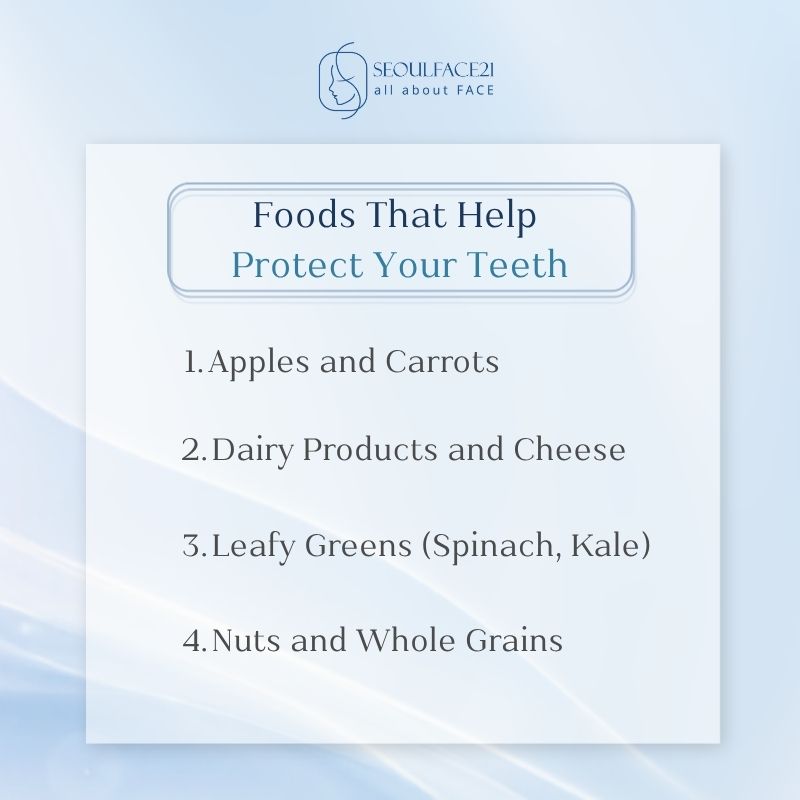
Let’s start with foods that are good for your teeth and gums. In addition to being delicious, these foods are packed with essential nutrients that can help strengthen teeth, support healthy gums, protect tooth enamel, and promote better overall oral and dental health.
1. Apples and Carrots
Many people may not realize that everyday foods like apples and carrots can be beneficial for dental health. Their crisp, high-fiber texture encourages chewing and can help mechanically clean the tooth surface by reducing food debris and some plaque buildup.
Carrots are also a good source of vitamin A, an essential nutrient that helps support healthy gums, oral tissues, and overall oral health.2. Dairy Products and Cheese
Milk, yogurt, and cheese are often considered some of the best foods for strong teeth and healthy gums because they are rich in calcium and vitamin D, nutrients that help support strong teeth and bones.
Cheese, in particular, may help neutralize acids in the mouth and support a balanced oral pH, while also stimulating saliva production. This can help reduce acid exposure and protect tooth enamel from erosion and tooth decay, making dairy products a valuable part of a tooth-friendly diet for better oral health.3. Leafy Green Vegetables (Spinach and Kale)
Dark leafy greens such as spinach and kale are rich in vitamin C, vitamin K, and essential minerals that support healthy teeth and gums. These nutrients help maintain healthy oral tissues and create a favorable environment for overall dental and oral health.
Vitamin C, in particular, plays an important role in gum health and may help reduce the risk of bleeding gums, especially when gum problems are related to inadequate vitamin C intake. Regularly eating leafy green vegetables can therefore support stronger gums, healthier teeth, and better oral health.4. Nuts and Whole Grains
Chewing nuts and seeds can help stimulate saliva production and may assist in naturally clearing away food debris from the teeth. Many varieties are also rich in essential minerals such as calcium, magnesium, and phosphorus, which play an important role in maintaining strong teeth and healthy bones.
These minerals help support tooth enamel, bone density, and overall dental health, making nuts and whole grains a nutritious addition to a tooth-friendly diet.
- Precautions
Even if you choose foods that are good for your teeth, proper oral hygiene after eating is still essential. Food particles left behind in the mouth can contribute to plaque buildup and bacterial growth, which may eventually increase the risk of tooth decay and cavities.
That’s why it’s important to keep your teeth and gums clean by brushing regularly, flossing, and maintaining good oral hygiene habits. A tooth-friendly diet works best when combined with consistent dental care and cavity prevention.
5 Worst Foods for Your Teeth: Foods That Cause Cavities, Tooth Decay, Enamel Damage, and Yellow Teeth
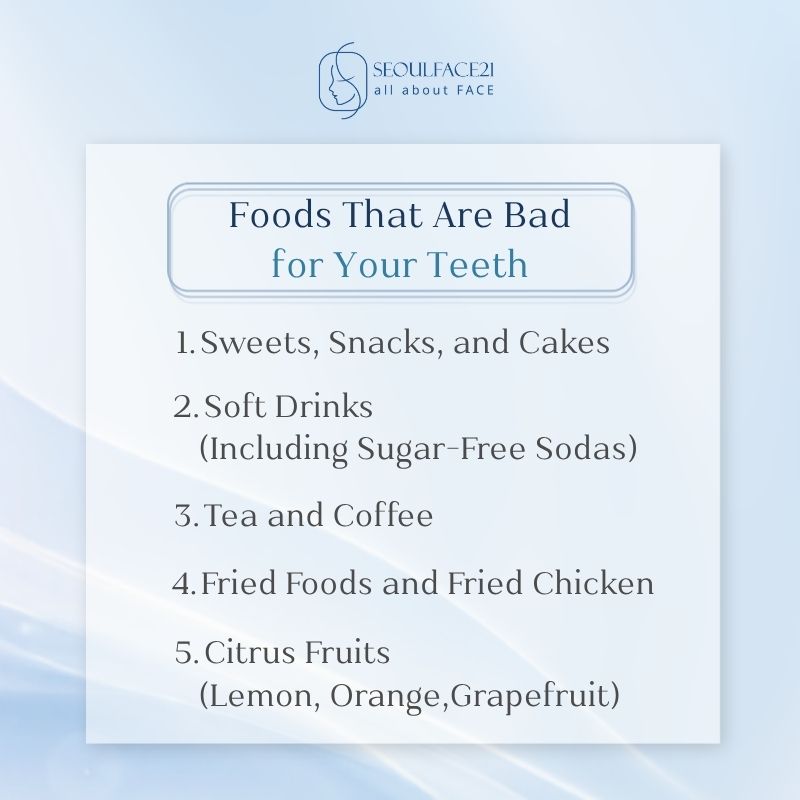
After looking at the best foods for strong teeth and healthy gums, let’s move on to the other side—foods that are bad for your teeth and should be consumed with caution to help prevent tooth decay, cavities, enamel erosion, and other dental problems.
1. Sweets, Snacks, and Cakes
Sugar is often considered “fuel for harmful oral bacteria.” When bacteria in the mouth break down sugar, they produce acids that can attack and weaken tooth enamel, increasing the risk of tooth decay and cavities.
Sticky and chewy sweets can be especially harmful because they tend to cling to the teeth for longer periods, giving bacteria more time to produce acid. Frequent consumption of sugary snacks, candy, and desserts can therefore raise the risk of enamel damage, cavities, and other dental problems.2. Soft Drinks and Soda (Including Sugar-Free and Diet Soda)
Soft drinks are not only often high in sugar, but they are also highly acidic. Many people switch to zero-sugar or diet soda believing it is better for their teeth. However, even without sugar, the acids in carbonated drinks can still weaken and erode tooth enamel over time.
As tooth enamel becomes thinner, teeth may become more sensitive and more vulnerable to enamel erosion, cavities, and tooth decay. Frequent exposure to acidic beverages may also contribute to oral discomfort and gum irritation, especially in people with sensitive gums.
For better dental and oral health, it is best to limit soft drinks—including sugar-free, zero-sugar, and diet soda—and choose water more often to help protect tooth enamel, healthy teeth, and gums.3. Tea and Coffee
Tea and coffee are among the most popular everyday beverages, but they are also common answers to the question, “What causes yellow teeth?” Both drinks contain tannins and dark pigments that can contribute to surface stains and tooth discoloration, especially when consumed frequently.
In addition to causing yellow or stained teeth, some types of coffee can also be acidic. Repeated exposure to acidic drinks may gradually contribute to tooth enamel erosion, making the teeth more vulnerable to sensitivity, discoloration, and other dental problems.
For those concerned about coffee stains on teeth, tea stains, yellow teeth, enamel erosion, and overall oral health, limiting frequent exposure and maintaining good oral hygiene can help reduce staining and protect tooth enamel.4. Fried Foods and Fried Chicken
Many people may be surprised to see fried chicken and fried foods on the list of foods that can be bad for your teeth. The crispy coating often contains refined carbohydrates and sometimes added sugar, which can stick to the teeth and provide a food source for cavity-causing bacteria in the mouth.
In addition, very hard or crunchy fried foods may put extra pressure on the teeth. Biting down carelessly on overly crisp pieces can increase the risk of chipped or cracked teeth, especially if the teeth are already weak or have existing dental restorations.
To help prevent tooth decay, plaque buildup, and dental damage, it is best to enjoy fried foods in moderation and maintain good oral hygiene after eating.5. Highly Acidic Fruits (Lemons, Oranges, and Grapefruit)
Although citrus fruits are rich in vitamin C, their high citric acid content can gradually weaken and erode tooth enamel, especially when consumed frequently or in large amounts.
After eating highly acidic fruits such as lemons, oranges, or grapefruit, it is recommended to rinse your mouth with plain water to help wash away residual acid and reduce the risk of enamel erosion, tooth sensitivity, and dental damage.
For better oral and dental health, avoid brushing your teeth immediately after consuming acidic foods, as softened enamel may be more vulnerable to wear.
- Precautions
After eating acidic foods, avoid brushing your teeth immediately. Acidic foods can temporarily soften tooth enamel, and brushing too soon may increase enamel wear and erosion.
Instead, rinse your mouth with plain water and wait about 30 minutes before brushing your teeth. This gives your saliva time to help neutralize acids and allows the enamel surface to recover, helping protect against tooth sensitivity, enamel erosion, and long-term dental damage.
Best Tips for Strong Teeth and Healthy Gums: How to Maintain Good Oral Health and Prevent Tooth Decay
Choosing foods that are good for your teeth and limiting foods that may harm your teeth is an excellent first step toward maintaining better oral and dental health. However, one of the most important habits you should never overlook is having regular dental checkups with a dentist.
Routine dental examinations can help detect tooth decay, gum disease, enamel problems, and other dental issues at an early stage, making it easier to maintain strong teeth, healthy gums, and a healthy smile for the long term.It is generally recommended to visit your dentist for professional teeth cleaning, tartar removal, and routine oral health checkups about every six months, or as often as your dentist recommends based on your individual needs.
Regular dental checkups can help detect early tooth decay, cavities, gum disease, and other oral health problems before they become more serious, allowing for timely treatment.
Preventing dental problems and taking good care of your natural teeth is usually easier, more comfortable, and more cost-effective than treating advanced dental damage later. Consistent preventive dental care, professional teeth cleaning, and regular dental examinations can help keep your teeth and gums healthy for many years.
Source: Column by SEOULFACE21 ORAL AND MAXILLOFACIAL(OMFS) Hospital