



Facial Contouring for a Short Chin and Deep Nasolabial Folds: When Facial Structure, Not Just Skin, May Be the Underlying Cause
By NJH Plastic Surgery (Noh Jong Hoon Plastic Surgery)
When people notice deep nasolabial folds or feel that their chin looks short or underprojected, making the lower face appear less balanced, they often think first about treatments such as dermal filler or thread lifting.
However, the underlying cause is not always limited to changes in the outer skin or soft tissues. In some cases, concerns such as a short chin, receding chin, or deep nasolabial folds may also be influenced by the underlying facial bone structure, chin projection, and overall facial proportions.
This is why a detailed structural assessment is important before deciding whether the concern should be addressed with a non-surgical treatment or through Korean facial contouring and chin correction.Because the face is supported by an underlying bony framework, changes or deficiencies in that structure can directly affect the way the soft tissues appear on the surface.
If the bone beside the nose is relatively recessed or underdeveloped, or if the chin does not have enough length or projection, the lower face may look shorter, flatter, or less three-dimensional. This can also create deeper shadows around the nasolabial folds, making the face appear more aged even when the skin itself is not the only issue.
For this reason, concerns such as a short chin, receding chin, and deep nasolabial folds may sometimes need to be assessed from a facial bone structure and proportion perspective, not just as a skin or soft-tissue problem.Therefore, when the underlying concern comes from the deeper facial bone structure, the most targeted solution may not be simply adding more volume to the overlying soft tissues.
Instead, the surgeon may consider facial contouring surgery or structural facial bone augmentation to reinforce and reshape areas where the bony foundation is lacking.
By correcting the underlying support in the appropriate location, the goal is to create a facial structure that looks more balanced, naturally proportioned, and harmonized with the rest of the face, while also taking long-term structural stability and safety into consideration.
Deep Nasolabial Folds May Be Related to Underlying Facial Structure, Not Just the SkinDeep Nasolabial Folds Are Not Always Caused by Skin Changes Alone
When nasolabial folds become more noticeable, many people first assume that the problem is caused by changes in the skin layer.
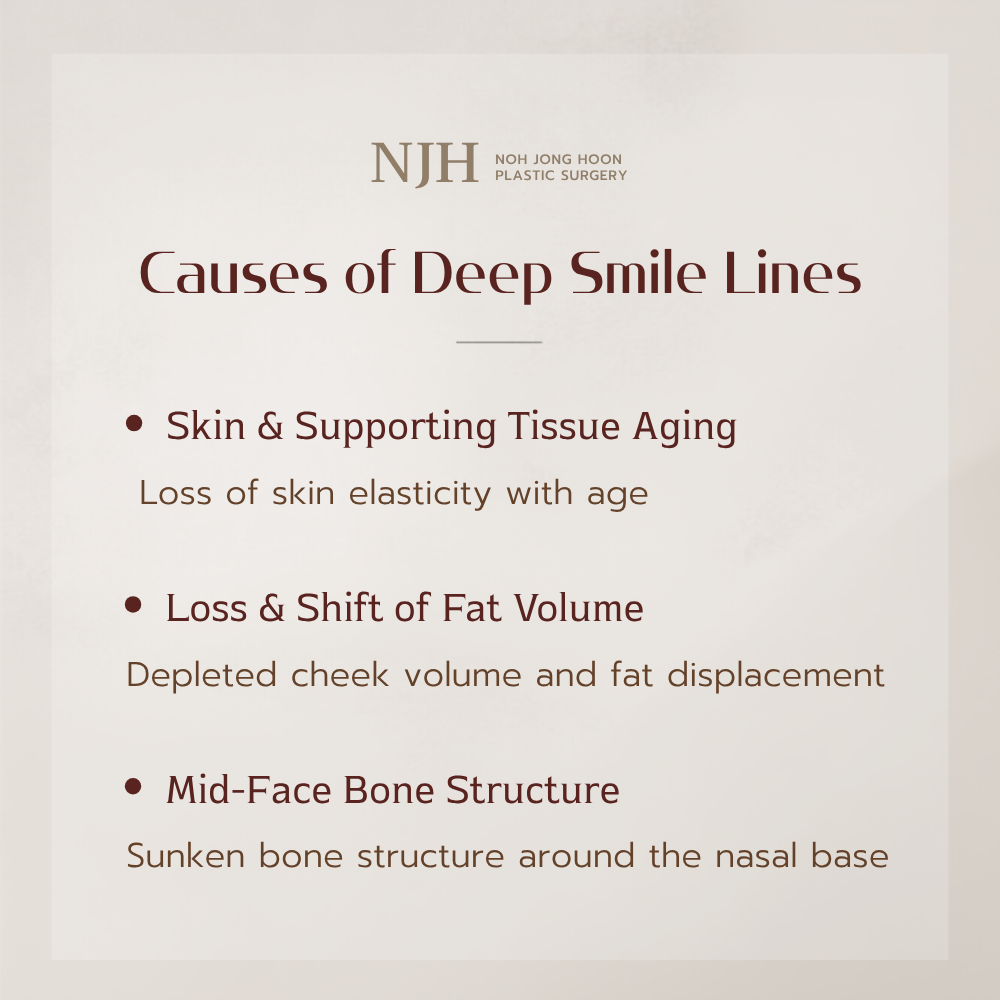
In reality, however, deep nasolabial folds can develop from several factors working together, including skin laxity, soft-tissue changes, facial fat volume, and even the underlying facial bone structure.
This means the visible fold may not always be a surface-level problem. In some cases, the depth of the nasolabial fold can also be influenced by the structural support beneath the skin and soft tissues.So before assuming that “a deep fold simply needs more filler,” it is important to identify the underlying cause first.
The key is to determine which structural layer is actually creating the nasolabial fold—whether it comes mainly from skin laxity, soft-tissue descent, volume loss, or insufficient bony support.
Once the cause is clear, the treatment can be planned more precisely and matched to the structure that truly needs correction.
- Nasolabial Folds Caused by Skin Quality and Supporting Tissue Changes
As the skin and facial support tissues begin to sag with age, the fold between the cheek and the side of the nose can become more pronounced.
In this pattern, the nasolabial fold is not necessarily caused by a deep structural hollow. Instead, it may become more visible because the upper soft tissues have descended and folded downward.
For this reason, treatment planning should also consider the overall degree of skin laxity, soft-tissue sagging, and facial support, rather than focusing only on filling the fold itself.
- Nasolabial Folds Caused by Facial Volume Loss or Fat Displacement
As the cheeks lose their previous fullness or the facial fat compartments shift position, the areas surrounding the nasolabial folds may begin to look flatter or more hollow.
This creates a greater difference in height between the cheek and the fold, making the nasolabial folds appear deeper. In reality, the fold itself may not have become significantly deeper—the surrounding cheek volume has simply decreased or shifted downward, making the crease more noticeable.
For this reason, the doctor should assess facial volume distribution, cheek fullness, and fat position before deciding whether volume restoration is needed.
- Nasolabial Folds Caused by a Recessed Midface Bone Structure
In some cases, the bony foundation beside the base of the nose may be naturally recessed or underprojected, leaving less structural support for the overlying skin and soft tissues.
This can create a deep shadow along the nasolabial fold, making the midface appear flatter and less three-dimensional. Unlike age-related sagging, this type of structural concern can also be seen in younger individuals.
When insufficient midface or paranasal bone support is the primary cause, treatment may need to focus on augmenting the underlying bony foundation, rather than simply adding volume to the superficial soft tissues.Importantly, deep nasolabial folds often have more than one underlying cause.
In some cases, the concern may involve a combination of facial volume loss, soft-tissue sagging, and a recessed or underdeveloped bony foundation at the same time.
This is why a comprehensive assessment is important before choosing a treatment. The doctor needs to determine which factors are contributing most to the fold and how each structural layer should be addressed for a more balanced and targeted result.Therefore, even when the visible concern appears to be the same “deep nasolabial fold,” the appropriate surgical or treatment plan may differ from one case to another.
The key is to identify the true underlying cause from the beginning—whether it comes primarily from the skin layer, facial fat volume, soft-tissue changes, or the underlying bone structure.
Once the main cause has been clearly identified, the doctor can select the most appropriate technique to address the specific structural layer responsible for the concern, allowing for a more precise and targeted treatment plan.
Check Your Lower-Face Proportions: Short Chin, Receding Chin, and Nasolabial Fold Shadows
Another important area that should not be overlooked is the chin, because it acts as the endpoint of the lower facial contour.
If the chin is short or recessed, the lower face can appear compressed, and the contour from the jawline down to the chin may look less smooth and harmonious. If this is combined with a recessed midface or underprojected bony foundation, the overall face may appear flatter and less three-dimensional than expected.
For this reason, assessing the chin, jawline, and midface structure together is important when planning facial contouring for a more balanced and naturally proportioned facial profile.
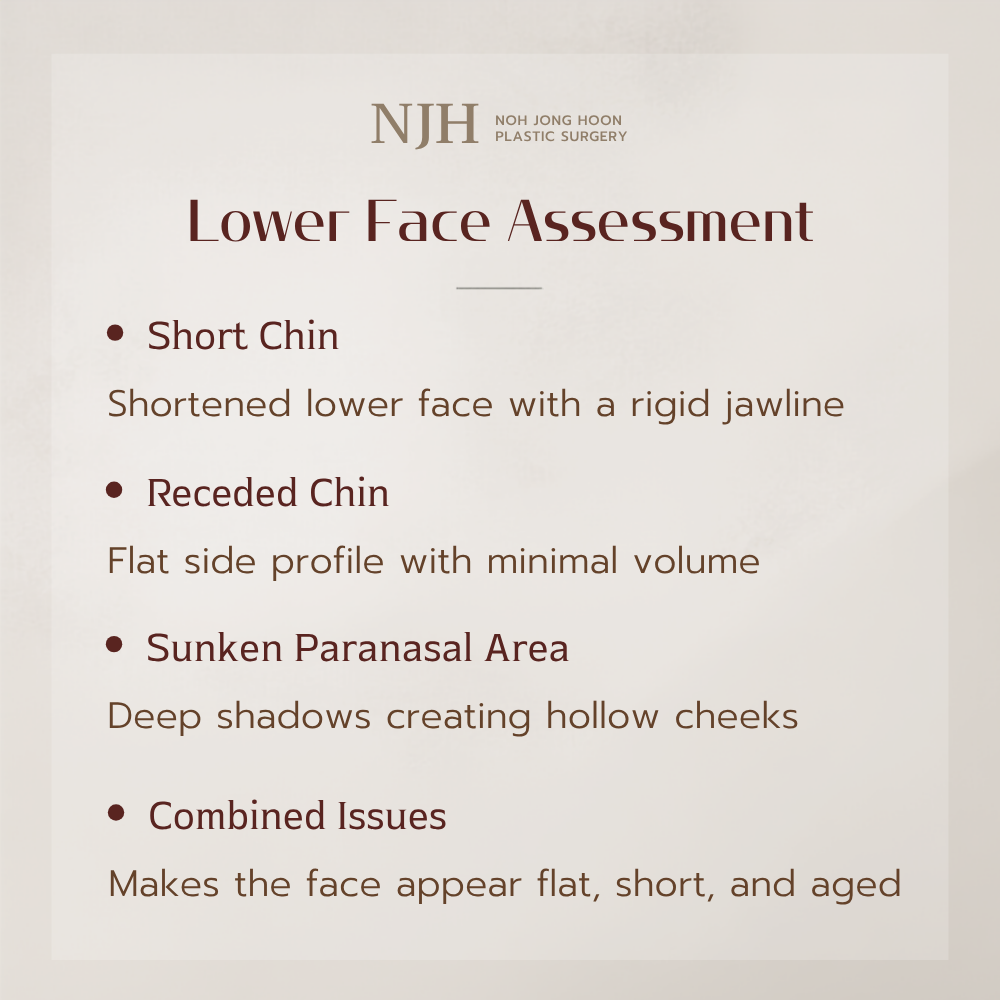
- Short Chin
A short chin can make the lower face appear compressed, causing the jawline to look more abrupt and less smoothly connected.
This can reduce the overall sense of facial balance and continuity between the jawline and chin.
- Receding Chin
From the side profile, a receding chin can make the relationship between the lips, chin, and lower facial contour appear less balanced and underprojected.
This may reduce the sense of fullness, definition, and harmony in the lower face.
- Recessed Paranasal Area
When the bony area beside the base of the nose is recessed, it can create deeper shadows along the nasolabial folds, making them appear more pronounced.
This may also cause the midface to look flatter, more hollow, or more tired, even when the concern is not caused by skin changes alone.
- Multiple Structural Concerns Occurring at the Same Time
When several structural concerns are present together, the face may appear flatter, shorter, and more aged, even if the outer skin still looks relatively firm and youthful.
This is why the overall facial bone structure, projection, and proportion should be assessed together rather than evaluating each visible concern separately.This is why facial structure should not be evaluated one area at a time.
Some people may initially seek treatment because they are concerned about deep nasolabial folds, but after a detailed assessment of the entire face, the surgeon may find that the underlying cause is related to both the chin structure and the bony foundation of the midface.
In these cases, a more comprehensive plan may need to address these structural areas together in order to improve facial balance, projection, and overall three-dimensional proportion more effectively.
NJH Plastic Surgery’s Approach to Comprehensive Facial Structure Analysis
At NJH Plastic Surgery, the surgeon begins by carefully analyzing the underlying cause of the facial structure before creating the surgical plan.
For cases involving both a short chin and deep nasolabial folds, the midface and lower face are evaluated together rather than as separate areas.
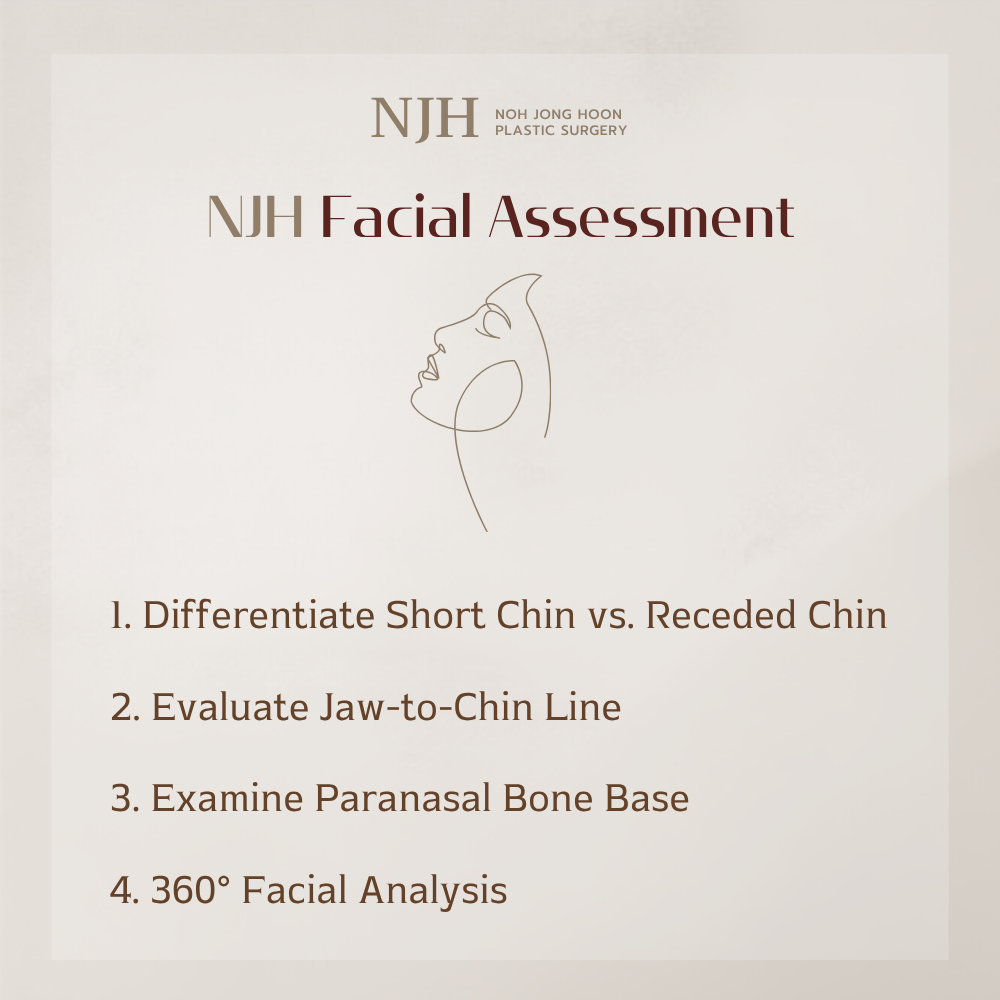
The assessment focuses on four key factors:1. Distinguishing Between a “Short Chin” and a “Receding Chin”
For some people, the chin appears short because the vertical length of the chin bone is insufficient, making the lower face look compressed. In other cases, the chin is positioned too far backward when viewed from the side, creating a receding or underprojected chin.
For this reason, the surgeon needs to assess the chin length, degree of projection, and overall chin angle separately. This helps determine the most appropriate direction and amount of structural chin correction or augmentation for a more balanced lower-face profile.2. Assessing the Facial Line from the Jaw to the Chin Tip
The chin does not exist as an isolated point at the bottom of the face. It is an important part of the lower facial contour.
For this reason, the surgeon needs to evaluate how the jaw angle, mandibular line, and chin tip connect with one another. If the chin is augmented without considering the overall jawline, the result may look less harmonious with the existing facial structure.
A balanced plan should therefore consider the entire lower-face line from the jaw to the chin, rather than focusing on chin projection alone.3. Assessing the Bony Foundation Beside the Nasal Base
If the midface bone beside the base of the nose is recessed or underprojected, the overlying soft tissues may lack sufficient structural support. This can create deeper shadows and make the nasolabial folds appear more prominent.
The surgeon therefore needs to determine whether the visible depth is caused mainly by skin and soft-tissue changes, or whether the underlying facial bone structure is also contributing to the concern.4. Evaluating the Face in 360 Degrees
The front view helps assess left-right facial balance, the 45-degree view reveals depth and projection around the paranasal and midface area, while the side profile shows the relationship between the lips, chin, and lower facial contour most clearly.
Evaluating the face from multiple angles helps the surgeon identify which areas truly need correction and which structures should be preserved, reducing the risk of unnecessary procedures and supporting a more balanced, natural-looking facial contour.After combining all of these findings, the surgeon can determine whether the case primarily needs “chin lengthening” or “additional structural support in the midface.”
A short chin does not mean that everyone needs the same type of chin augmentation, and deep nasolabial folds do not always need to be treated simply by adding filler directly into the fold.
The most important step is identifying the true structural cause first, so the treatment can be matched to the area that actually needs correction.
Autologous Bone, Implants, or Dermal Filler: Which Option Should You Choose?
All three options can be used to reshape the face and restore facial volume, but they work at different structural levels and are chosen for different treatment goals.
The key is to identify which layer is causing the concern and what type of correction is needed—whether the goal is bone-level structural augmentation, implant-based support, or soft-tissue volume restoration.
This is why autologous bone, facial implants, and dermal filler are not interchangeable, even though they can all contribute to improving facial contour and balance.
- Autologous Bone
Autologous bone is natural bone tissue taken from the individual’s own body, giving it a high level of biological compatibility.
It is particularly suitable when correction is needed at the “bony foundation” or structural level of the face. The harvested bone can be carefully shaped, contoured, repositioned, and securely fixed in the area that requires additional support or projection.
One limitation is that the amount, thickness, and shape of usable bone depend on the individual’s existing bone structure and the amount of suitable bone available for grafting.
- Facial Implants
Facial implants are medical-grade materials designed to replace or augment facial structure. One advantage is that the size, shape, and amount can be selected according to the structural needs of the face, without relying on bone harvested from the individual’s own body.
However, careful evaluation by the surgeon is essential to determine the most appropriate implant type, size, shape, and placement for each case, based on the existing facial anatomy and the area that requires structural support or augmentation.
- Dermal Filler
Dermal filler is used to add volume within the skin and soft-tissue layers, rather than directly changing the underlying facial bone structure.
Because of this, filler plays a different role from autologous bone grafting. It may be suitable for refining specific areas, softening facial folds or hollows, and restoring localized volume, especially for those who do not require or prefer not to undergo facial bone surgery.
Personalized Facial Contouring with STM MATCH

When people feel that their chin looks short or their nasolabial folds appear deep, they often begin by looking at reviews of chin augmentation, nasolabial fold filler, or doctors whose results match the facial shape they prefer. That can be a useful starting point.
However, if you want greater confidence that your case is being handled by a doctor whose expertise truly matches your underlying facial structure and specific concerns, STMStyle can help with the matching process.
Through STM MATCH, we help organize your concerns and connect your case with a Korean plastic surgeon whose specialty is more closely aligned with the structural issue involved, rather than choosing a treatment or doctor based on appearance alone.STMStyle first gathers key background information, such as how many previous surgeries you have had, which materials were used, the areas you would like to improve, medication allergies, underlying medical conditions, and your planned length of stay in Korea.
This information is then used as part of the STM MATCH process to connect your case with a Korean plastic surgeon in our network whose expertise is closely aligned with your specific nasal concerns and surgical needs.
By organizing these details in advance, the doctor can review the case more accurately and provide a more focused rhinoplasty assessment and personalized treatment plan based on your actual surgical history, nasal structure, and goals.For more detailed decisions—such as whether the concern should be addressed with chin augmentation, facial volume restoration, or correction at the underlying bone structure level—STM Style does not diagnose or make medical decisions on behalf of the doctor.
These assessments should be made directly by a qualified Korean plastic surgeon whose expertise is appropriate for the individual case. The surgeon will evaluate the facial proportions, chin projection, midface structure, soft-tissue volume, and underlying bone support before determining the most suitable treatment or surgical plan.
FAQ: Frequently Asked Questions About Short Chin, Deep Nasolabial Folds, and Facial Contouring
Q. How Can You Tell If Deep Nasolabial Folds Are Caused by the Underlying Facial Bone Structure?
You cannot determine the cause by looking at the nasolabial fold from the outside alone. A surgeon needs to assess the facial structure from multiple angles.
If the bony foundation beside the nose is recessed or underprojected, together with a flatter-looking midface, the surgeon may determine that the underlying bone structure is contributing to the deep nasolabial folds.
This helps guide treatment toward the correct structural layer rather than focusing only on the visible fold.Q. Does a Short Chin Always Require a Silicone Chin Implant?
Not necessarily. The surgeon first needs to determine whether the main concern is insufficient chin length, a receding chin, or inadequate forward projection from the side profile.
Depending on the underlying anatomy, treatment options may include repositioning the existing chin bone, using autologous bone grafting, or placing a synthetic implant.
The choice should therefore be based on a detailed assessment of the facial bone structure, chin position, projection, and overall lower-face proportions, rather than automatically choosing a silicone implant.Q. Can Bone Removed During Facial Contouring Surgery Be Used to Augment the Chin or Midface in Every Case?
Not in every case. Not every piece of bone removed during facial contouring surgery is suitable for reuse as a bone graft.
The surgeon needs to carefully evaluate the bone quality, density, shape, size, and amount available to determine whether it is appropriate for augmentation in the chin, midface, or other areas requiring additional structural support.
For this reason, autologous bone grafting should only be considered when the harvested bone is suitable for the specific grafting area and fits the overall facial contouring plan.
A short chin and deep nasolabial folds should be treated according to their specific underlying causes.
If part of the concern comes from the facial bone structure, evaluating the chin, midface, and overall facial proportions together before choosing a treatment can help create a more precise plan that directly addresses the true structural problem.If you are still unsure where to begin with your case, you can send photos, the areas you are concerned about, and your previous treatment or surgical history to STMStyle.
We can help organize the relevant information and coordinate a preliminary assessment with a Korean plastic surgeon before you travel to Korea, so you can better understand which areas may need further evaluation and what treatment direction may be appropriate.