



Cheekbone Reduction Surgery in Korea: A Guide to Different Zygoma Reduction Techniques
By NJH Plastic Surgery (Noh Jong Hoon Plastic Surgery)
Many Asians naturally have high or prominent cheekbones due to their underlying facial bone structure. Prominent zygomatic bones can make the face appear wider, more angular, or less softly contoured, which may create a stronger facial impression rather than the softer, more delicate look some people prefer.
For this reason, cheekbone reduction surgery (zygoma reduction surgery) has become a popular type of facial contouring surgery. By reducing the prominence and width of the cheekbones, the procedure can help create a slimmer, softer, and more balanced facial contour with improved overall facial proportions.
However, cheekbone structure varies from person to person, so the appropriate cheekbone reduction technique should be selected based on the specific location and degree of zygomatic bone prominence. The surgical approach may differ depending on whether the cheekbones protrude more toward the front, the sides, or both.
3 Main Types of Cheekbone Reduction Surgery (Zygoma Reduction Techniques)
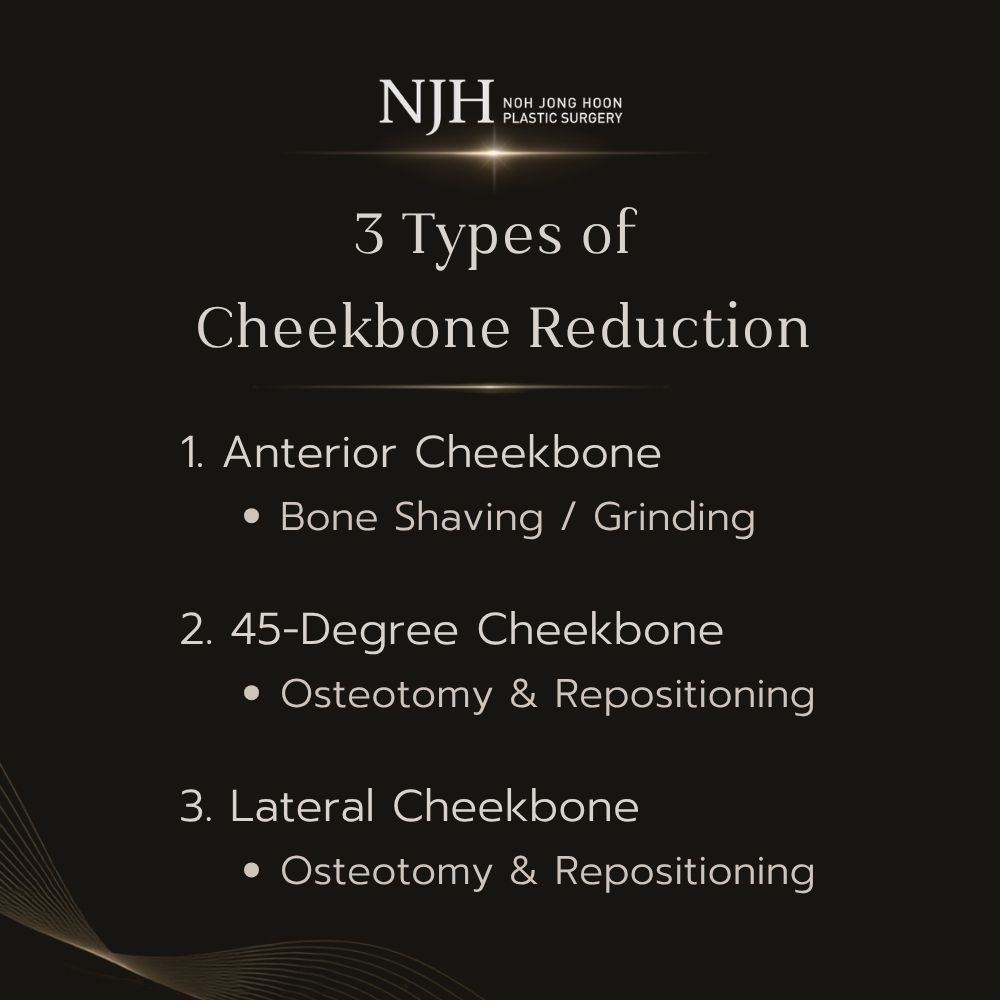
From a medical perspective, prominent cheekbones can generally be classified into three main types, depending on the location and direction of zygomatic bone protrusion. Each type requires a different cheekbone reduction surgery (zygoma reduction) technique to achieve a more balanced and natural-looking facial contour.
1. Frontal Cheekbone Prominence (Anterior Zygomatic Prominence)
Frontal cheekbone prominence refers to projection in the area near the outer corners of the eyes. When this part of the cheekbone is overly prominent, it can make the face appear wider when viewed from the front.
For patients whose concern is mainly limited to this area, the surgeon may perform cheekbone shaving or contouring (zygomatic bone reduction) to reduce the thickness and projection of the zygomatic bone. In some cases, a portion of the adjacent maxillary bone (upper jaw bone) may also be carefully contoured to create a slimmer, smoother, and more natural-looking facial shape.2. 45-Degree Cheekbone Prominence (45-Degree Zygomatic Prominence)
The 45-degree cheekbone area is the transitional region between the frontal and lateral cheekbones. When this area protrudes prominently, it can make the face appear more angular and create an unbalanced facial contour.
For this type of zygomatic prominence, bone shaving alone may not be sufficient. The surgeon may need to perform a zygomatic osteotomy (cheekbone bone-cutting technique) so the cheekbone can be repositioned inward.
After the zygomatic bone has been moved to the desired position, it is securely fixed using specialized bone fixation devices to promote stable bone healing and reduce the risk of postoperative bone displacement.3. Lateral Cheekbone Prominence (Lateral Zygomatic Prominence)
Lateral cheekbone prominence, or prominence of the zygomatic arch near the front of the ear, is one of the areas that has the greatest impact on overall facial width.
When the lateral cheekbone or zygomatic arch protrudes outward, the face can appear wider from the front, while the bony contour may also look more prominent from the side.
For this type of cheekbone prominence, the surgical approach typically involves a zygomatic osteotomy to cut and reposition the cheekbone inward. The bone is then securely fixed in its new position to create a narrower, smoother, and more balanced facial contour.
Why Are Precise Bone Cutting and Secure Fixation Important in Cheekbone Reduction Surgery?
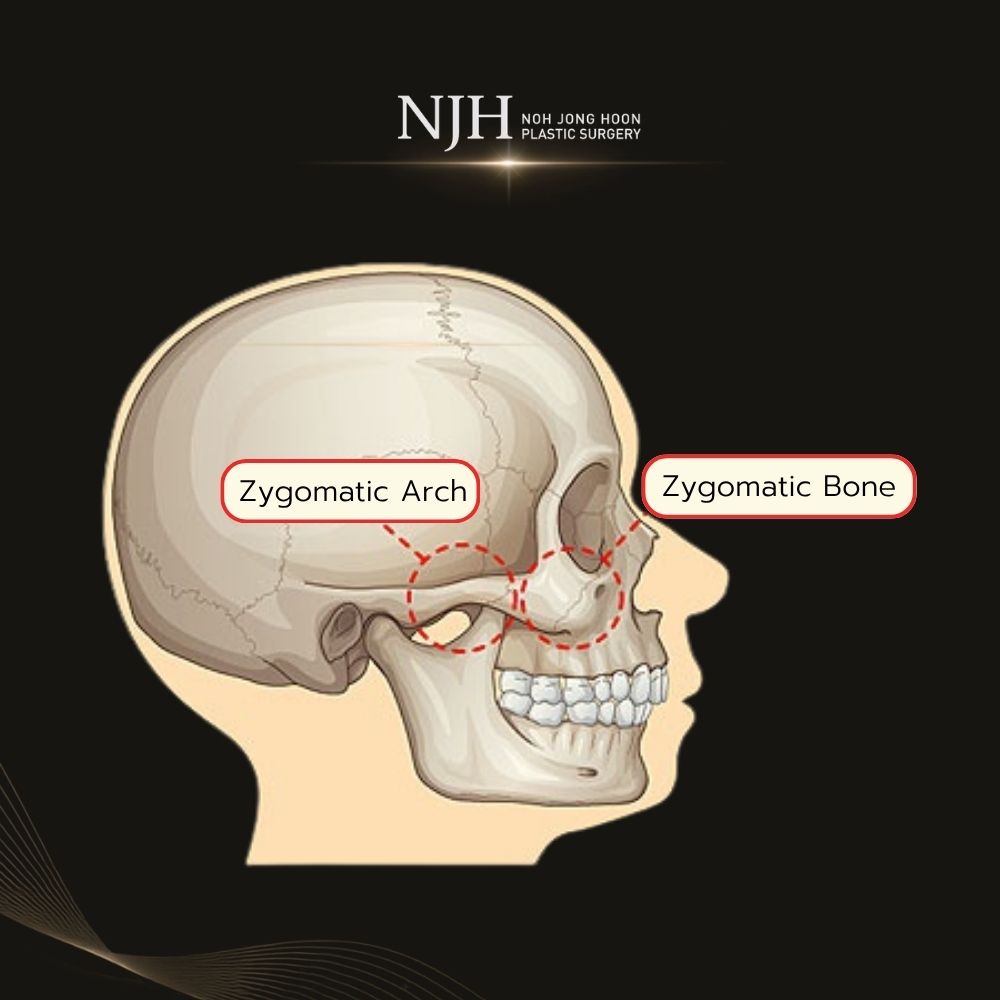
Successful cheekbone reduction surgery (zygoma reduction surgery) involves more than simply cutting the bone. To achieve a smooth and balanced facial contour, the zygomatic bone must be repositioned three-dimensionally (3D) according to each patient’s unique facial structure and proportions.
Because the cheekbone is a rigid facial bone, precise zygomatic osteotomy is required to move it safely and accurately into a new position. This typically involves carefully cutting and mobilizing both the anterior and posterior portions of the zygomatic complex, allowing the cheekbone to be repositioned inward in a controlled 3D direction.
After the desired 3D cheekbone repositioning is achieved, the bone must be securely stabilized with rigid bone fixation. Proper osteotomy and fixation help maintain the new zygomatic position, promote stable bone healing, and create a smoother, more natural-looking result after facial contouring surgery.The key steps in cheekbone reduction surgery include:
- Performing the osteotomy at the appropriate anatomical location
- Precisely repositioning the zygomatic bone
- Securely and stably fixing the repositioned zygomatic bone
When performed correctly, precise cheekbone reduction surgery can help reduce the risk of postoperative complications while supporting stable bone healing and a more natural-looking facial contour. Proper zygomatic bone repositioning and secure fixation are also important for maintaining the new cheekbone position and achieving long-lasting facial contouring results.
Key Factors for Successful Cheekbone Reduction Surgery (Zygoma Reduction Surgery)
The most important factor in cheekbone reduction surgery is that each person has a unique zygomatic bone structure and facial anatomy.
Most patients do not have cheekbone prominence in just one area. In many cases, multiple parts of the zygomatic bone and zygomatic arch protrude at the same time. For this reason, the surgeon must evaluate the entire facial bone structure and may combine several cheekbone reduction surgery techniques to achieve the most appropriate result.
A personalized facial contouring surgery plan can help create a slimmer and more refined facial shape while maintaining balanced facial proportions and facial symmetry. Careful analysis of each patient’s zygomatic anatomy, along with precise bone contouring, osteotomy, repositioning, and fixation, is also important for reducing surgical risks and achieving a more natural-looking, stable result.A thorough evaluation of the facial bone structure, precise zygomatic osteotomy and bone repositioning, and secure bone fixation are key factors in successful cheekbone reduction surgery (zygoma reduction surgery). These steps help create a slimmer, more balanced, and natural-looking facial contour while also helping to reduce the risk of postoperative complications and maintain stable, long-term results.
Source: Column by Noh Jong Hoon Plastic Surgery (NJH Plastic Surgery)