


Had Double Eyelid Surgery Twice but Still Unsatisfied? Can You Have a Third-Time Revision Eyelid Surgery?
Inique Plastic Surgery Hospital
After undergoing eyelid surgery twice, you may still look in the mirror and feel, “These are not the eyes I wanted.” The double eyelid crease may be too high, the eyes may appear asymmetrical, or a visible eyelid scar may show when the eyes are closed. These concerns can feel emotionally exhausting—especially if a previous consultation ended with the discouraging answer, “Another revision is not possible,” leaving you hesitant to consider third-time revision eyelid surgery.However, it is important to understand that the number of previous eyelid surgeries does not determine whether another revision is possible. More important factors include the current condition of the eyelid skin, eyelid-opening strength and muscle function, the amount of internal scar tissue or adhesions, and existing surgical scars. A qualified plastic surgeon must carefully assess these factors before determining whether third-time revision eyelid surgery or revision blepharoplasty is appropriate.
In this article, we will explain how third-time revision eyelid surgery differs from previous eyelid procedures, what a plastic surgeon must evaluate, what results are realistically achievable, and how to prepare before traveling to Korea for revision double eyelid surgery.
Can You Have Revision Eyelid Surgery After Two Previous Procedures?
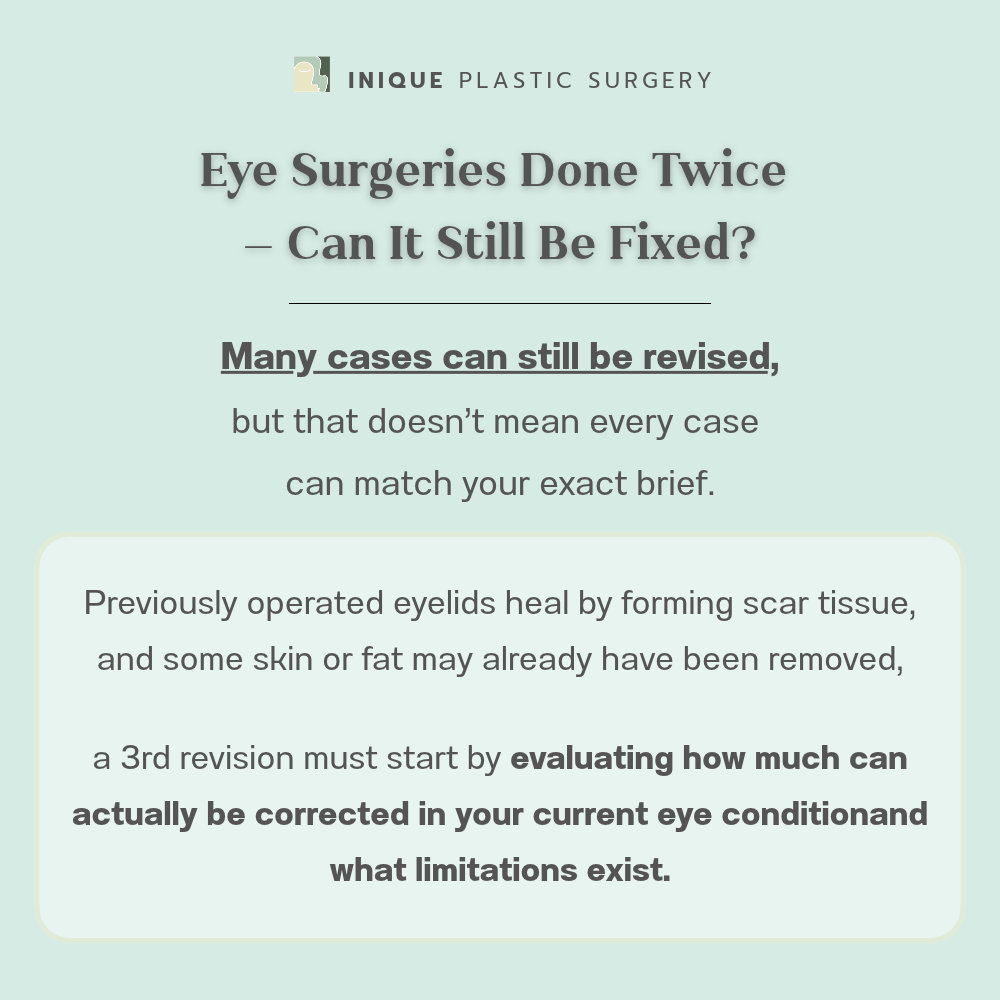
The answer is yes—revision may still be possible in many cases. However, this does not mean every requested change can be achieved exactly as envisioned, or that repeat eyelid surgery is suitable for everyone. The possibility and scope of a third revision eyelid surgery depend on the current eyelid anatomy, tissue condition, and surgical limitations.
Eyelids that have undergone two previous surgeries are structurally different from eyelids that have never been operated on. Previous procedures can alter the eyelid anatomy, skin thickness, scar tissue, adhesions, and double eyelid crease, making third-time revision eyelid surgery more complex.
After every surgery, the body heals by forming scar tissue and internal adhesions. Some eyelid skin or fat may already have been removed, and the tissue layers inside the eyelid may no longer move or connect as they originally did. Therefore, third-time revision eyelid surgery is not simply about creating a new double eyelid crease. It begins with carefully identifying how the two previous eyelid surgeries changed the skin, fat, muscles, scar tissue, and overall eyelid structure.
One of the most challenging types of revision double eyelid surgery involves an excessively high eyelid crease with limited remaining skin, which is often seen after multiple previous procedures. Rather than searching for a surgeon who claims to “correct every case,” look for an honest, detailed assessment of how much improvement is realistically possible, which concerns can be corrected, and what anatomical or surgical limitations remain.
Beyond the Number of Previous Surgeries, What Must the Surgeon Evaluate Before Revision Eyelid Surgery?
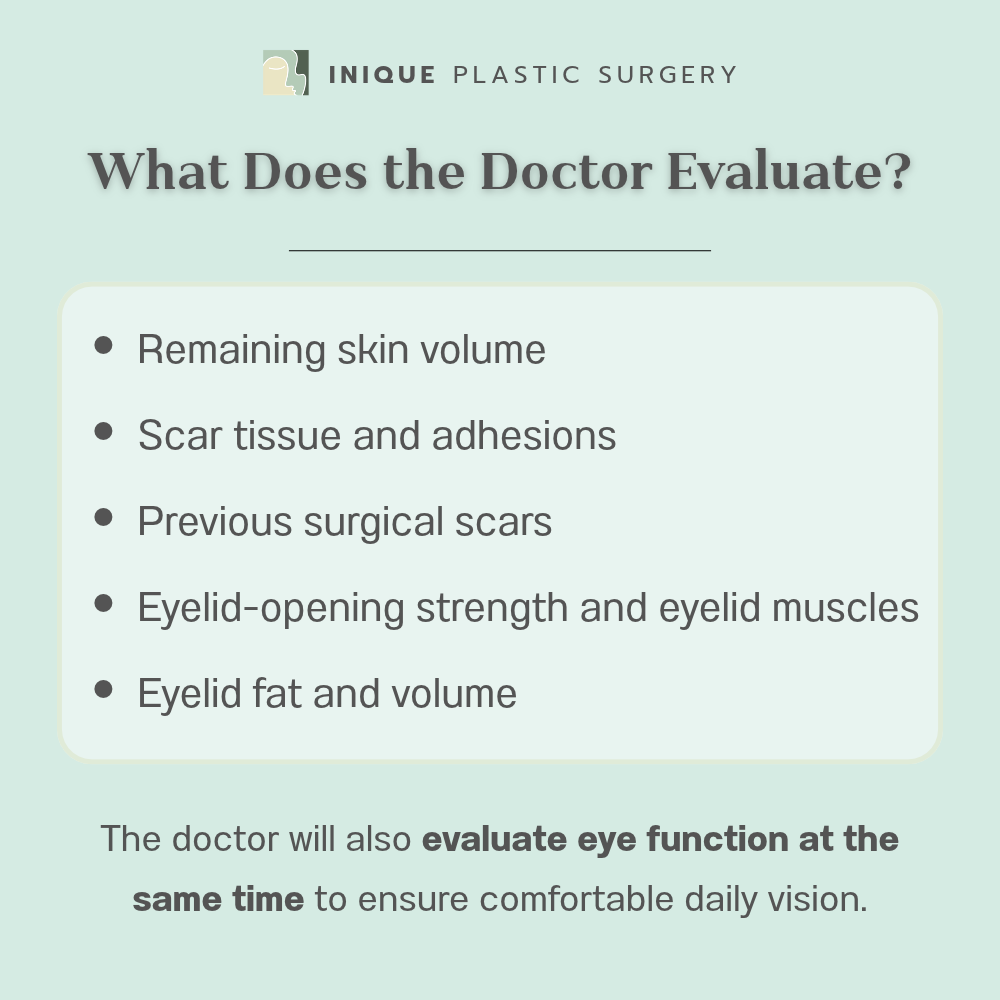
The feeling that the “eyes still do not look right” can have a different underlying cause for each person. Before planning revision double eyelid surgery, the plastic surgeon must identify exactly where the problem originates. The main factors evaluated during a revision eyelid surgery consultation include the following:
- Amount of Remaining Eyelid Skin
If too much skin was removed during previous eyelid surgeries, lowering an excessively high double eyelid crease may be limited. Enough eyelid skin must remain to allow complete eye closure and reduce the risk of dry eyes, irritation, and functional eyelid problems.
- Scar Tissue and Internal Adhesions
Scar tissue from previous eyelid surgery may pull the crease inward, creating a deep or unnatural fold, or cause multiple eyelid creases to form. The surgeon must assess where the adhesions are located, how strongly they are attached, and whether they can be safely released during revision double eyelid surgery.
- Existing Eyelid Scars
The location, width, depth, and condition o f previous eyelid scars affect where a new incision can be placed and how the scar can be concealed. Careful scar assessment and incision planning are essential for achieving a smoother, more natural-looking result after revision eyelid surgery and full healing.
- Eyelid-Opening Strength and Levator Muscle Function
In many cases, sleepy-looking eyes, an excessively high double eyelid crease, or eyelid asymmetry may be related to reduced levator muscle function or eyelid-opening strength, rather than the crease design alone. A thorough functional assessment is therefore essential before planning revision eyelid surgery or ptosis correction.
- Upper Eyelid Fat and Volume
If too much upper-eyelid fat was removed during previous procedures, the eyes may appear hollow or sunken, making the double eyelid crease look thicker, deeper, or more rigid than intended. Evaluating upper eyelid volume loss is therefore an important part of planning revision eyelid surgery.In addition to eyelid shape and crease design, the surgeon must also evaluate eye function, including whether the eyes close completely and whether there are symptoms of dry eyes, irritation, or discomfort. Successful revision eyelid surgery should improve the appearance of the eyes while preserving comfortable daily function, proper eyelid closure, and long-term eye safety.
Inique’s Approach to Third-Time Revision Eyelid Surgery and Complex Eyelid Revision Cases
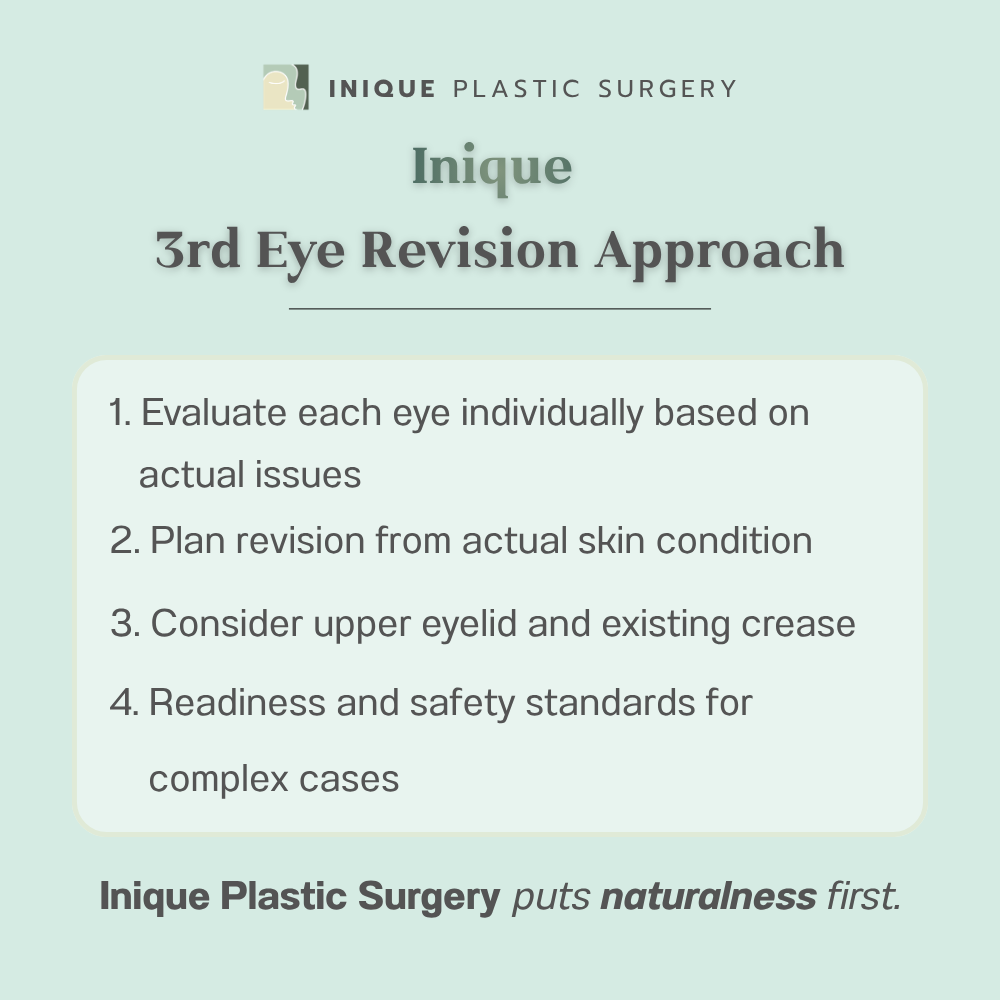
At Inique Plastic Surgery, achieving natural-looking revision eyelid surgery results is the top priority—especially when correcting eyelids that appear overly deep, high, harsh, or unnatural. For complex cases involving multiple previous eyelid surgeries, the surgeon develops a detailed, customized treatment plan based on four key principles:
1. Evaluate Each Eyelid Individually Based on Its Actual Condition
Even when both eyes were operated on at the same time, each eyelid may develop a different amount of scar tissue and internal adhesion. Revision eyelid surgery should therefore not follow the same standardized method for every case. The surgeon must evaluate the eyelid thickness, scar tissue, adhesions, and remaining fat volume in each eye before selecting the most appropriate customized correction technique.
2. Plan Revision Eyelid Surgery Based on the Actual Condition of the Eyelid Tissue
When Sufficient Eyelid Skin Remains: If the existing double eyelid crease is too high but enough upper eyelid skin remains, the crease may be lowered by removing the skin between the original high crease and the newly designed lower eyelid crease.
When Limited Eyelid Skin Remains: If too much upper eyelid skin was removed during previous procedures, the surgeon must preserve the remaining tissue. The existing double eyelid crease and internal scar adhesions are then carefully released before a new, more natural-looking crease is created. This is a highly delicate and complex revision blepharoplasty technique requiring extensive surgical experience.
3. Correct Eyelid-Opening Strength Along with the Double Eyelid Crease
If the examination reveals weak or underperforming eyelid-lifting muscles (ptosis), combining levator muscle correction or ptosis correction with revision double eyelid surgery may create brighter, more naturally open-looking eyes than correcting the double eyelid crease alone.
4. Advanced Surgical Expertise and Safety Standards for Complex Revision Eyelid Surgery Cases
At Inique Plastic Surgery, complex revision eyelid surgery is supported by an on-site anesthesiologist, overnight recovery facilities, an emergency response system, and structured postoperative care. These comprehensive medical safety standards help ensure that highly detailed procedures, including third-time revision double eyelid surgery, are performed with greater safety, comfort, and peace of mind.
Realistic Results and Limitations of Revision Eyelid Surgery
In revision eyelid surgery, the surgeon may plan to lower an excessively high double eyelid crease, release scar tissue and adhesions causing a deep or multiple eyelid fold, improve left-to-right eyelid symmetry, and adjust eyelid-opening strength when weak levator muscle function or ptosis is also present.
However, some concerns may not be completely correctable, depending on each person’s current eyelid anatomy, tissue condition, and surgical history. These limitations may include:
- Existing Eyelid Scars
The surgeon may reposition the incision and refine the existing scar to make it less noticeable. However, revision eyelid surgery cannot completely erase previous scars or make the skin identical to eyelids that have never undergone surgery.
- Double Eyelid Crease Height
If a significant amount of upper eyelid skin was removed during previous procedures, the high eyelid crease may only be lowered as much as the remaining tissue safely allows. Preserving enough skin for complete eyelid closure is essential.
- Symmetry Between Both Eyes
The surgeon can improve eyelid asymmetry and make both eyes appear as balanced as possible. However, perfect 100% symmetry cannot be guaranteed because the natural anatomy, muscle function, scar tissue, and healing response of each eye may differ.In some cases, a detailed revision eyelid surgery assessment may show that the potential risks outweigh the expected benefits. The plastic surgeon may then recommend waiting for the eyelid tissues to recover or avoiding additional eyelid surgery for the time being. This does not mean your concerns are unimportant; it means prioritizing the safest option to protect your eye health and eyelid function over the long term.
When Can You Have Revision Eyelid Surgery, and How Should You Prepare?
After eyelid surgery, the tissues and scar adhesions gradually soften and stabilize over time. For this reason, revision eyelid surgery is generally considered only after the surgical site has fully settled—often around six months or longer after the most recent procedure. The appropriate timing may vary depending on healing progress, scar tissue, and the condition of the eyelids.
An exception may be made when a postoperative issue significantly affects daily life or eye function, such as incomplete eyelid closure (lagophthalmos). In these cases, the surgeon may consider earlier revision eyelid surgery. However, the safest timing must be determined through an in-person assessment of healing, scar tissue, eyelid function, and the condition of the surgical area.
However, if you develop unusual symptoms after eyelid surgery—such as severe pain, significant redness or inflammation, or changes in vision—do not wait for a revision consultation. Seek immediate medical attention.
When traveling for revision eyelid surgery in Korea, plan enough time for the in-person consultation, surgery day, postoperative checkups, and follow-up appointment before your return flight. The recommended length of stay varies according to the surgeon’s treatment plan and your healing needs, so submitting your photos and surgical history for a preliminary assessment before booking your trip is highly recommended.
STM Match — Find the Right Revision Eyelid Surgeon in Korea for You

When searching for a surgeon, many people begin by looking through reviews and choosing a doctor whose results and approach appeal to them. That can be a useful starting point.
However, if you want greater confidence that your case is being evaluated by a specialist whose experience and area of expertise truly match your needs, STMStyle can help support you through the doctor-matching process.
Rather than focusing on reviews alone, STMStyle helps connect you with Korean specialists based on the type of procedure, facial structure, treatment goals, and the specific concerns involved in your case.STMStyle begins by gathering essential background information, such as the number of previous surgeries, the concerns you would like to address, medication allergies, underlying medical conditions, and the length of your planned stay in Korea.
This information is then used to match your case with Korean surgeons in the STMStyle network whose specialized expertise aligns with your specific concerns and treatment needs.
The goal is to help connect you with an appropriate specialist who can review your case in detail and provide a more targeted medical assessment based on your individual circumstances.When it comes to deciding which areas should be treated, whether surgery is necessary, and which surgical techniques may be appropriate, STMStyle does not make medical decisions on behalf of the surgeon.
These clinical decisions are made directly by a qualified Korean surgeon whose expertise is appropriate for the individual case. The surgeon is responsible for conducting the medical assessment, reviewing the relevant structural and clinical information, and developing the most suitable treatment plan based on the person’s specific needs and condition.
FAQ: Frequently Asked Questions About Third-Time Revision Eyelid Surgery
Q. Can I Still Have Revision Eyelid Surgery After Multiple Previous Procedures?
The number of previous eyelid surgeries is only one factor. Whether another revision is possible—and how much improvement can realistically be achieved—depends on the current condition of the eyelid skin, scar tissue, internal adhesions, existing surgical scars, and eyelid-opening strength. A plastic surgeon must evaluate each case individually before confirming a revision eyelid surgery plan.
Q. I Don’t Remember Which Eyelid Surgery Technique Was Used Previously. Can the Surgeon Still Evaluate My Eyes?
Yes. The surgeon can assess your current eyelid anatomy, double eyelid crease, scar tissue, and eyelid function even if you do not remember the previous surgical technique. However, details such as the dates of earlier procedures and before-and-after photos from each eyelid surgery can help the surgeon better understand the changes and develop a more accurate revision eyelid surgery plan.
Q. Can the Surgeon Confirm Whether Revision Eyelid Surgery Is Possible from an Online Photo Assessment Alone?
Submitting current eyelid photos for an online revision eyelid surgery consultation allows the surgeon and medical team to conduct a preliminary assessment, determine whether correction may be possible, and recommend the next steps. However, an online photo review is not a definitive diagnosis. The surgeon must examine the amount of scar tissue and internal adhesions, eyelid skin thickness, and eyelid-opening strength in person before confirming the final surgical plan.
Q. Will Scarring Be More Visible After a Third Revision Eyelid Surgery?
Not necessarily. During revision eyelid surgery, the plastic surgeon carefully plans the new incision around the existing scar and natural double eyelid crease to make it as discreet as possible. However, the final appearance of the scar depends on the original skin condition, individual healing response, previous scar tissue, and proper postoperative wound care.
Start with an Accurate Eyelid Assessment Before Deciding on Your Next Revision Surgery
If you have undergone multiple eyelid surgeries and are considering revision eyelid surgery in Korea, you can send your current eyelid photos, previous surgical history, and travel dates to STM Style. The team can organize your information, help identify a suitable Korean revision eyelid surgeon, and coordinate a preliminary medical assessment before your trip.