



Hollow Eyes and Deep Upper Eyelid Hollows: Should You Choose Fat Grafting or Dermal Filler?
INIQUE Plastic Surgery Hospital
A deep groove above the double eyelid crease, sunken upper eyelids, or an eyelid fold that appears higher and thicker than before can make the face look tired and older—even after adequate rest. These concerns may result from natural facial anatomy, age-related volume loss, or postoperative changes following double eyelid surgery.A common question is: “For hollow eyes, should I choose upper eyelid fat grafting or dermal filler?” The answer depends on the individual. The most suitable treatment is determined by the cause of the upper eyelid hollow, current eyelid condition, facial anatomy, and previous eyelid surgery history. A detailed assessment is essential before choosing the best treatment for deep upper eyelid hollows.
This guide explains the common causes of hollow eyes and sunken upper eyelids, the differences between upper eyelid fat grafting and eye filler, and the key factors to consider before choosing the most suitable treatment for upper eyelid volume loss.
What Causes Hollow Eyes and Deep Upper Eyelid Hollows?
The upper eyelid contains a layer of fat that helps create a smooth, naturally full appearance. When this fat volume decreases, the skin above the double eyelid crease may sink into the eye socket, making the brow bone more prominent and the eyelid crease appear deeper and higher. Common causes of hollow eyes and deep upper eyelid hollows include:
- Age-Related Upper Eyelid Fat Loss
As we age, the tissues, collagen, and fat around the eyes gradually become thinner and lose volume. This can make the upper eyelids appear flatter, more sunken, and tired-looking.
- Natural Eye and Eyelid Anatomy
Some people naturally have deeper eye sockets or less upper eyelid fat. As a result, a noticeable hollow above the eyelid crease may be present from a young age, even with adequate rest.
- Upper Eyelid Hollowing After Eye Surgery
If too much upper eyelid fat was removed during previous double eyelid surgery, the eyelids may appear increasingly sunken once the surgical area has fully healed.This article focuses specifically on upper eyelid hollows and sunken upper eye sockets. These concerns are different from under-eye hollows, tear troughs, or under-eye bags, which occur in separate anatomical areas and require different treatment approaches.
Is Volume Restoration Alone Enough to Correct Hollow Eyes?
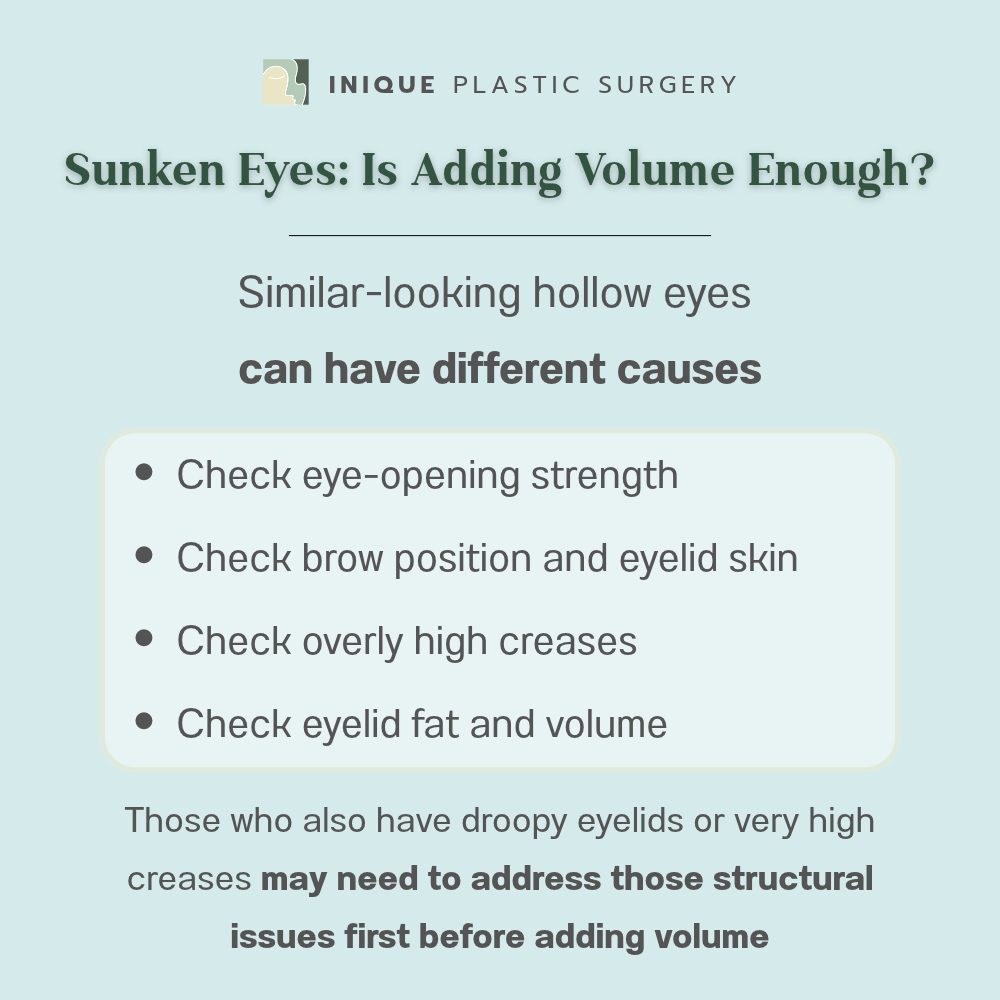
Many people assume that a hollow above the double eyelid crease can be corrected simply by adding volume. In reality, similar-looking upper eyelid hollows may have different underlying causes. Before recommending eye filler, upper eyelid fat grafting, or another eyelid treatment, the surgeon must assess several structural and functional factors together.
- Evaluate Eyelid-Opening Strength and Levator Muscle Function
If the eyelid-lifting muscle is weak or underperforming, the upper eyelid may retract inward and create a deeper-looking hollow. In this case, volume restoration alone may not address the underlying problem, and ptosis correction or eyelid-opening correction may also need to be considered.
- Assess Eyebrow Position and Upper Eyelid Skin
Drooping eyebrows or age-related upper eyelid skin laxity can create deeper shadows around the eye socket, making the eyes appear hollow or sunken.
- Check for an Excessively High Double Eyelid Crease
If previous double eyelid surgery created a crease that is too high, the upper eye socket may appear deeper. The surgeon may need to evaluate double eyelid revision surgery before deciding whether fat grafting or filler should also be included.
- Check Eyelid Closure and Dry-Eye Symptoms
The surgeon must confirm that the eyelids can close completely and assess any dry-eye symptoms. The goal of restoring upper eyelid volume is to create brighter, more refreshed-looking eyes without compromising normal eyelid function or daily comfort.Those with a normal eyelid position and mild, early-stage upper eyelid hollowness may benefit from volume restoration alone. However, if hollow eyes occur together with droopy eyelids, ptosis, or an excessively high double eyelid crease, structural correction may be required before or alongside upper eyelid filler or fat grafting to achieve a more balanced, natural-looking result.
What Is the Difference Between Upper Eyelid Fat Grafting and Dermal Filler?
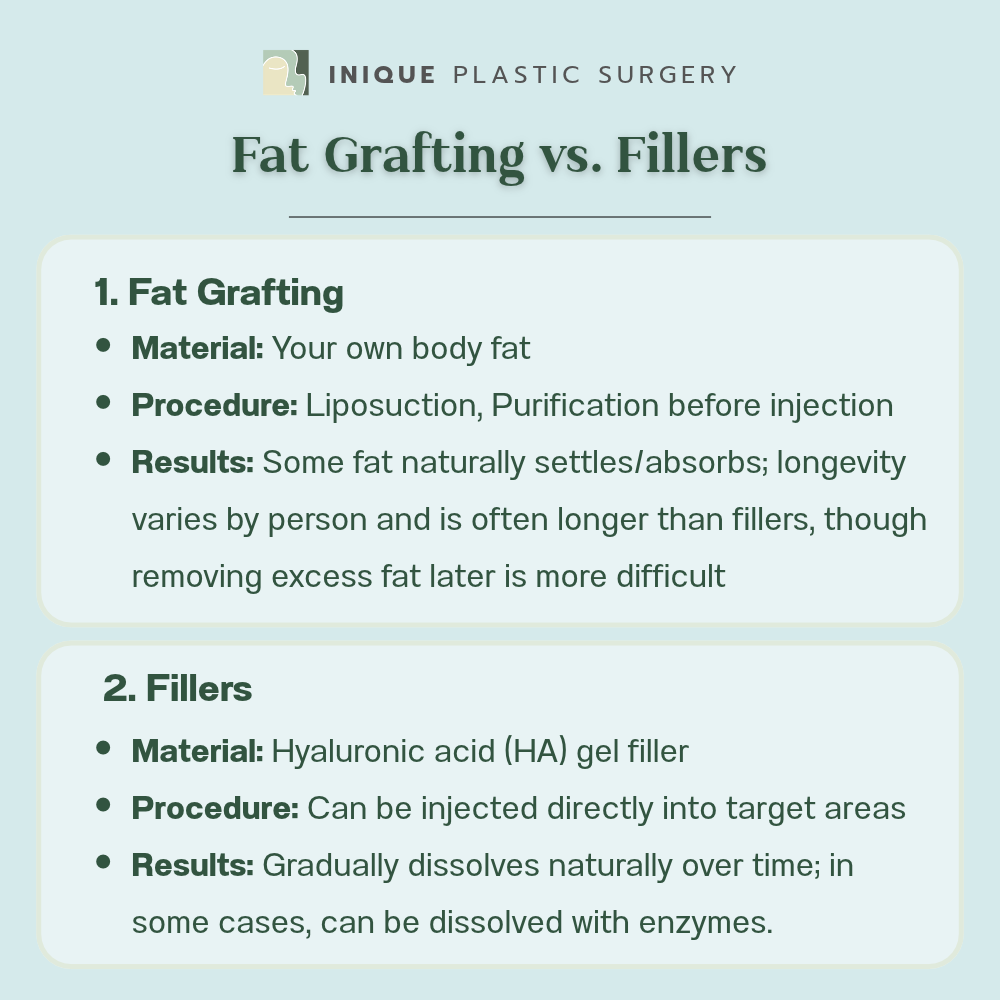
Both upper eyelid fat grafting and dermal filler injections restore lost volume and create a smoother, fuller-looking upper eyelid. However, they differ in the material used, treatment process, recovery, longevity, and potential limitations. The main differences can be compared as follows:
Autologous Fat Grafting Using Your Own Fat
- Material Used: Your own body fat, typically harvested from areas such as the abdomen or thighs.
- Procedure: Fat is first harvested through liposuction, then processed and purified before being carefully injected into the upper eyelid hollows to restore lost volume.
- Results: Some of the transferred fat is naturally reabsorbed after upper eyelid fat grafting, so the amount of fat that survives and remains long term varies from person to person.
- Additional Considerations: Once the transferred fat establishes a blood supply and stabilizes, it becomes part of your own tissue and may last longer than dermal filler. However, if the result is uneven or overfilled, removing excess fat is generally more difficult than dissolving hyaluronic acid filler. Upper eyelid fat grafting therefore requires a high level of surgical precision and experience.
Hyaluronic Acid (HA) Dermal Filler
- Material Used: A hyaluronic acid (HA) gel-based dermal filler.
- Procedure: The doctor can inject hyaluronic acid filler directly into the targeted upper eyelid hollow to restore volume.
- Results: The dermal filler gradually breaks down and is naturally absorbed by the body over time.
- Additional Considerations: Hyaluronic acid filler generally does not last as long as established autologous fat grafting. However, if correction is needed, hyaluronidase filler-dissolving injections may be considered in some cases to dissolve HA filler.
Prioritize Safety Around the Eyes
Whether you choose upper eyelid fat grafting or dermal filler, the first priority should be periorbital anatomy and eye-area safety. The upper eyelid contains a complex network of blood vessels located near vessels supplying the eye. For this reason, any treatment around the eyes should be performed only by an experienced doctor with an in-depth understanding of facial anatomy and vascular structures—not chosen solely based on price or convenience.
INIQUE Plastic Surgery’s Approach to Treating Hollow Eyes and Deep Upper Eyelid Hollows
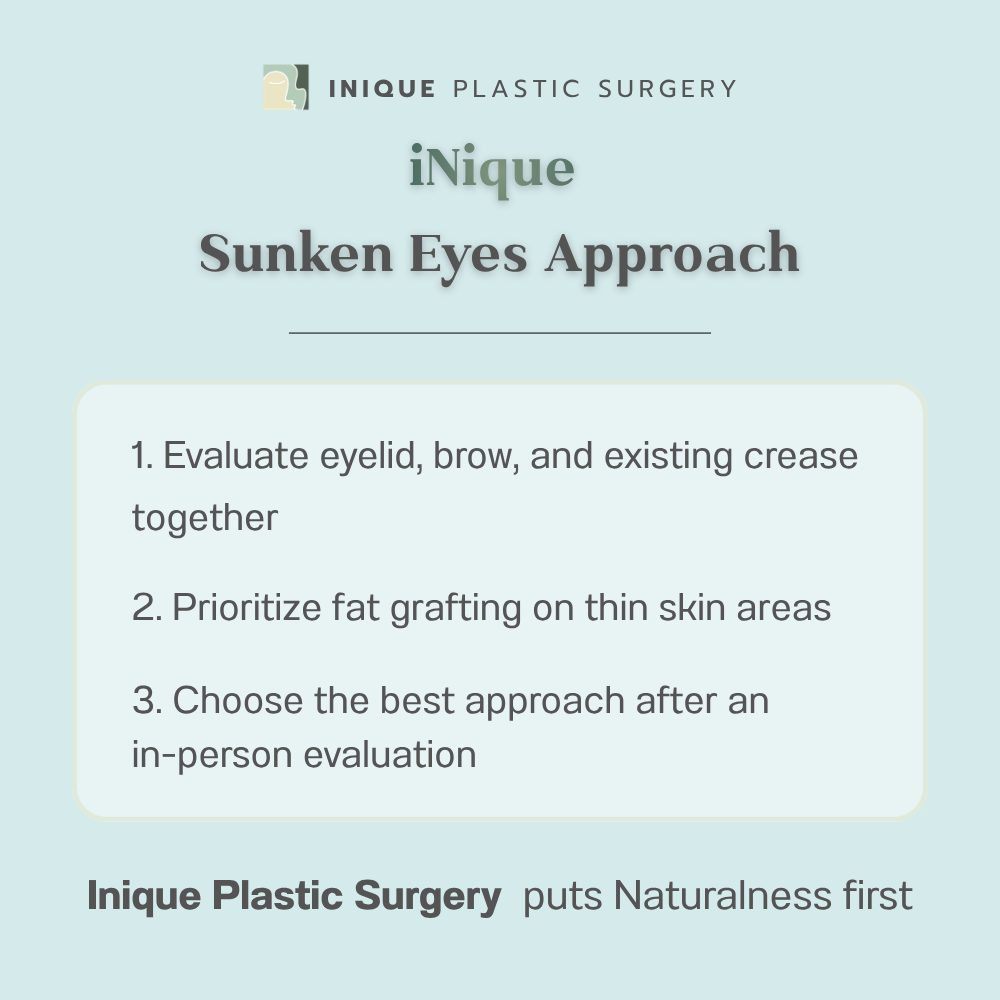
At INIQUE Plastic Surgery, hollow-eye treatment focuses on creating soft, natural-looking results that remain balanced with the overall facial structure—not simply filling the hollow until it appears full. Treatment for sunken upper eyelids and deep upper eyelid hollows is planned according to three key principles:
1. Evaluate the Upper Eyelids, Eyebrow Position, and Existing Double Eyelid Crease Together
Before choosing a volume-restoration treatment, the surgeon carefully evaluates eyelid-opening strength, levator muscle function, eyebrow position, and the existing double eyelid crease height. If another condition is present—such as ptosis, weak eyelid-lifting muscles, or an excessively high eyelid crease—combining structural correction with upper eyelid fat grafting or filler may create a more balanced and natural-looking result than volume restoration alone.
2. Prioritize Precision When Grafting Fat into Thin Upper Eyelid Skin
Because upper eyelid skin is extremely thin, even a small difference in volume can be noticeable. At INIQUE Plastic Surgery, the key principle is precise, conservative volume restoration using an appropriate amount of fat or filler. This helps create a smooth upper eyelid contour that blends naturally with the surrounding eye area and overall facial proportions.
3. Choose the Most Suitable Treatment After an In-Person Eyelid Assessment
Because skin quality and eyelid anatomy differ from person to person, some cases may be better suited to upper eyelid fat grafting, while others may require double eyelid crease correction or revision eyelid surgery first. The medical team explains the benefits, limitations, and expected outcomes of each option in detail, helping you understand the treatment plan and make an informed decision with confidence.
STM Match — Find the Right Doctor for You

When searching for a surgeon, many people begin by looking through reviews and choosing a doctor whose results and approach appeal to them. That can be a useful starting point.
However, if you want greater confidence that your case is being evaluated by a specialist whose experience and area of expertise truly match your needs, STMStyle can help support you through the doctor-matching process.
Rather than focusing on reviews alone, STMStyle helps connect you with Korean specialists based on the type of procedure, facial structure, treatment goals, and the specific concerns involved in your case.STMStyle begins by gathering essential background information, such as the number of previous surgeries, the concerns you would like to address, medication allergies, underlying medical conditions, and the length of your planned stay in Korea.
This information is then used to match your case with Korean surgeons in the STMStyle network whose specialized expertise aligns with your specific concerns and treatment needs.
The goal is to help connect you with an appropriate specialist who can review your case in detail and provide a more targeted medical assessment based on your individual circumstances.STM Style does not decide which procedure or surgical technique is appropriate on your behalf. A qualified Korean plastic surgeon with relevant expertise will personally evaluate your eyelid anatomy, identify the cause of the hollow eyes, and develop the treatment plan—whether that involves upper eyelid fat grafting, eye filler, double eyelid revision, ptosis correction, or another approach.
FAQ: Frequently Asked Questions About Fat Grafting and Dermal Filler for Hollow Eyes
Q. Will My Double Eyelid Crease Change After Treating Upper Eyelid Hollows?
When the hollow above the double eyelid crease is filled, an overly deep or high eyelid fold may appear lower, softer, and more natural. However, excessive volume can make the crease look narrower or cause the upper eyelids to feel heavy. The doctor must therefore calculate the amount of upper eyelid fat grafting or filler carefully to maintain balance with the existing double eyelid crease.
Q. Will I Need Additional Volume-Restoration Treatments in the Future?
Whether additional treatment is needed depends on the selected volume-restoration method and individual healing response. Hyaluronic acid filler gradually dissolves over time, while some transferred fat may be naturally reabsorbed after upper eyelid fat grafting. Additional filler or fat grafting may therefore be considered later, after the initial result has stabilized and the doctor has reassessed the area.
Q. Can I Have Upper Eyelid Fat Grafting If I Previously Received Filler Around the Eyes?
Additional upper eyelid filler or volume-restoration treatment may be possible, but a doctor must evaluate the area first. Share detailed information about the previous injection, including the treatment area, date, filler brand, and product line if known. Any remaining filler can affect treatment planning and volume calculations. In some cases, the doctor may recommend dissolving the existing hyaluronic acid filler with hyaluronidase before reinjection to improve accuracy and safety.
Q. Which Symptoms Require Immediate Medical Attention After Eye-Area Volume Restoration?
Seek immediate medical care if you experience unusually severe pain, blurred or reduced vision, or skin discoloration that appears pale, white, bluish, or dark purple after upper eyelid filler or fat grafting. Do not wait for these symptoms to improve on their own—contact the treating doctor or go to a hospital immediately.
Hollow Eyes Have Multiple Treatment Options—Start by Identifying the Underlying Cause
If you are concerned about hollow eyes or deep upper eyelid hollows and are considering upper eyelid fat grafting or eye filler in Korea, you can send your current eye photos, previous surgical and treatment history, and travel dates to STM Style. The team can organize your information and coordinate a preliminary assessment with a suitable Korean specialist before your trip.