



What Can You Eat After Jaw Surgery, and When Can You Start Chewing Again?
SEOULFACE21 Oral and Maxillofacial (OMFS) Hospital
After jaw surgery, two of the most common questions we hear are “What can I eat right now?” and “When can I go back to eating normally?” In the early stages of recovery, both eating and speaking can feel more difficult than usual.
Many people assume that getting through a few weeks on a liquid diet is all it takes. Recovering from jaw surgery calls for active self-care, and nutrition plays a major role in healing. Your body needs enough nutrients to repair cells and rebuild tissue.
This guide explains the different types of food you can eat after jaw surgery, what your surgeon checks before clearing you to move on to the next stage of your diet, and how to plan your meals during your hospital stay and after you return to your accommodation.
Why Should You Change Your Diet Gradually After Jaw Surgery?
During jaw surgery, the surgeon repositions the upper jaw, lower jaw, or both and secures the bones in place. After surgery, the bones need time to heal in their new position. Putting pressure on your jaw by chewing too soon can interfere with that healing process.
While the jawbones are regaining strength, other factors can also make eating difficult in the early stages of recovery, including the following.
- Swelling can make it harder to move your mouth.
- Limited mouth opening can occur as your muscles and nerves adjust after surgery.
- Temporary numbness in the lips or chin can make it harder to tell where food is in your mouth and make chewing more difficult.
Gradually progressing through the stages of your diet after jaw surgery helps you get the nutrients you need while protecting your jawbones as they heal in their new position.
The 3 Stages of Your Diet After Jaw Surgery
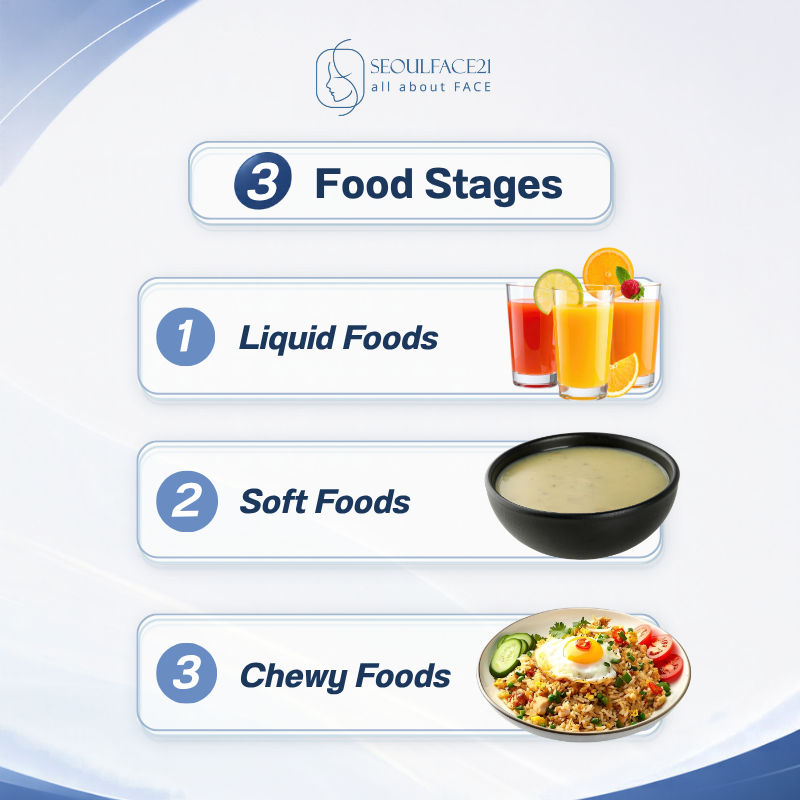
After jaw surgery, you typically start with foods that require no chewing, then gradually move on to foods that require more chewing as your jaw heals.
1. Liquid Diet
A liquid diet includes foods and drinks you can swallow without chewing, such as milk, pulp-free juice, clear broth, and foods blended until completely smooth. Liquids are usually easiest to manage in the first stage of recovery after jaw surgery, when moving your mouth is still difficult. Let hot drinks cool to a lukewarm temperature before drinking them.
2. Soft Food Diet
Soft foods break apart easily with gentle pressure from a fork and require very little chewing. Examples include smooth rice porridge, rice soup cooked until the grains are very soft, steamed egg custard, and silken tofu. A soft food diet can give you a wider variety of nutrients and help you feel fuller than a liquid diet.
3. Foods That Require Chewing
Cooked rice, noodles, chewy cuts of meat, and crunchy foods are reintroduced in the final stage of your diet after jaw surgery. Wait until your surgeon examines you and confirms that your jaw can handle the pressure of chewing before you start eating these foods again.
When Can You Move to the Next Stage of Your Diet After Jaw Surgery?
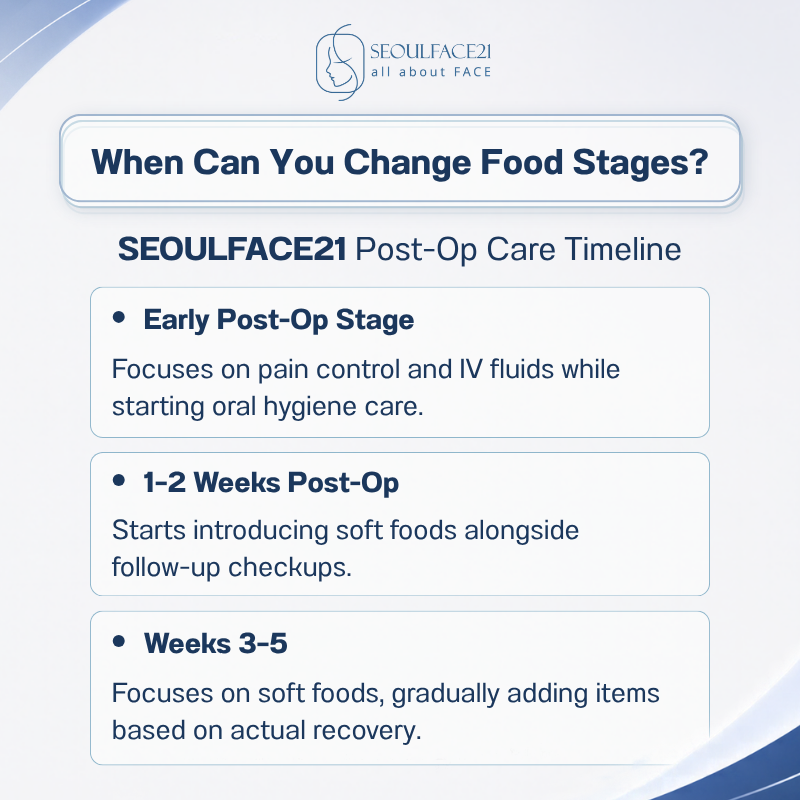
Hospitals follow different timelines for advancing your diet after jaw surgery. Some recommend a soft food diet for about six weeks or longer, while others recommend a liquid diet for one to two months. Your timeline depends on the surgical technique, how far the jawbones were moved, and how quickly you heal. Your surgeon will assess your individual recovery before clearing you to move on to the next stage of your diet. Here’s what they look for.
- Whether the jawbones remain in the planned position
- Whether the upper and lower teeth come together in a stable, balanced bite
- The extent of surgery, including whether it involved one jaw, both jaws, or additional facial contouring
- How wide you can open your mouth and how well the tissues are healing
At SEOULFACE21, post-operative care after jaw surgery follows a step-by-step plan based on each stage of recovery.
- Immediately After Surgery
The care team focuses on managing pain and giving intravenous (IV) fluids while beginning oral hygiene care.
- 1–2 Weeks After Surgery
You begin eating soft foods and attend your scheduled follow-up appointments.
- Weeks 3–5 After Surgery
Stick mainly to soft foods and gradually introduce a wider variety of foods as your recovery progresses.During recovery from jaw surgery, some people may need to wear a surgical wafer or splint to help keep their bite aligned while the jawbones heal. It can take some getting used to at first, but it’s important to wear it consistently as directed by your surgeon.
Dietary Guidelines After Jaw Surgery
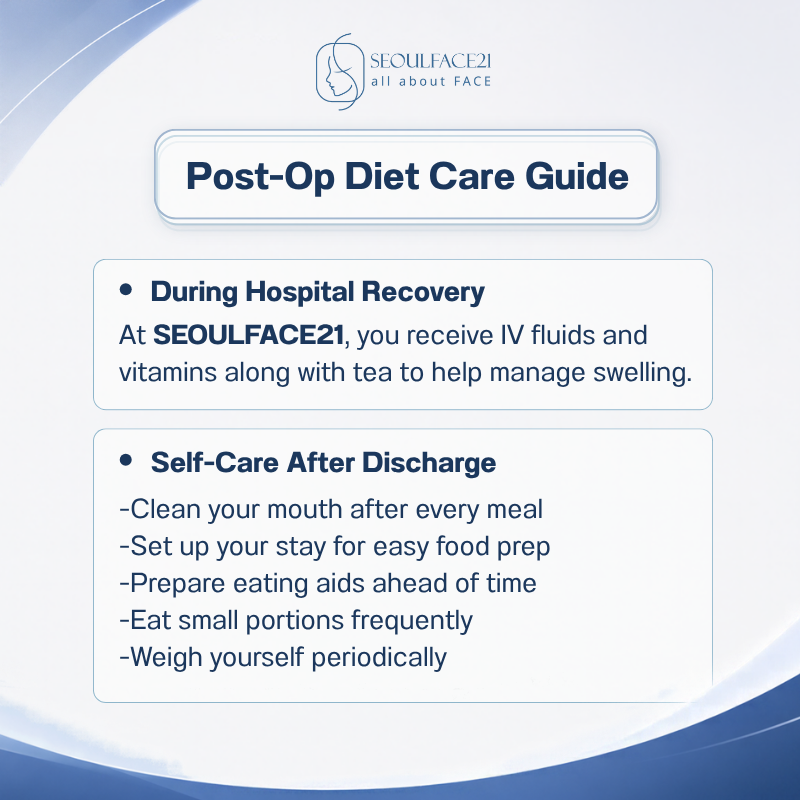
During Your Hospital Stay After Jaw Surgery
Post-operative care varies from one hospital to another. At SEOULFACE21, you recover in a private room and receive intravenous (IV) fluids and vitamins based on your individual needs. The hospital also provides tea as part of its swelling care. These measures help support you during the first few days after jaw surgery, when eating and drinking can still be difficult.
Caring for Yourself After Leaving the Hospital
After leaving the hospital, follow these dietary guidelines as you recover from jaw surgery, whether you’re staying at a nearby hotel or returning home.
- Keep Your Mouth Clean After Meals
In the early stages of recovery, rinse with the medicated mouthwash recommended by your care team. Then, start using a soft-bristled toothbrush to gently brush only the surfaces of your teeth. Gradually expand the area you brush.
- Choose Accommodation That Makes Meal Prep Easier
Look for a room with a refrigerator to store food and a microwave to reheat meals, or stay somewhere with restaurants nearby that serve soft foods.
- Have Easy-to-Use Utensils and Cups Ready
A small spoon for bite-sized portions, a drinking cup, and easy-to-hold bowls or containers can make it easier to eat and drink without opening your mouth wide.
- Eat Small, Frequent Meals
Large meals can be difficult to manage while recovering from jaw surgery. Eating smaller portions more often throughout the day can help you get enough calories.
- Check Your Weight Regularly
If you notice that you’re continuing to lose more weight than expected, it may be a sign that you’re getting too little protein or other nutrients. Let your surgeon know so they can assess your nutritional intake.
Follow your surgeon’s dietary instructions closely until your recovery is assessed at your next follow-up appointment. If you arranged your jaw surgery through STM Style and have questions about what you can eat during recovery, you can message our team anytime. We’ll check with your hospital in Korea and translate their response into your language for you.
Tips for Transitioning Between Diet Stages After Jaw Surgery
When you move from liquids to soft foods after jaw surgery, you may worry about how wide you can open your mouth or notice numbness and tightness around your cheeks or lips. A few small changes to how you eat can make this transition easier.
- Monitor Your Bite and Follow Your Surgeon’s Instructions for the Surgical Wafer
Follow your surgeon’s instructions on whether to wear or remove the surgical wafer during meals. Contact your surgeon right away if you notice a change in how your teeth fit together, have trouble swallowing, or lose a significant amount of weight.
- Cut Food Into Small, Bite-Sized Pieces
Smaller bites make it easier to eat without opening your mouth too wide while your jaw muscles are still tight.
- Choose Foods That Are Soft Enough to Break Apart Easily
Even if the pain has gone away, wait until your surgeon confirms it’s safe before you start chewing hard foods.
STM Style Helps You Find the Right Doctor for You

When looking for a surgeon, many people start by reading reviews and shortlisting doctors they feel comfortable with. That’s a good first step. STM Style can help you find a specialist with experience that matches your specific needs, so you can feel more confident about your choice.
STMStyle begins by gathering essential background information, such as the number of previous surgeries, the concerns you would like to address, medication allergies, underlying medical conditions, and the length of your planned stay in Korea. This information is then used to match your case with Korean surgeons in the STMStyle network whose specialized expertise aligns with your specific concerns and treatment needs. The goal is to help connect you with an appropriate specialist who can review your case in detail and provide a more targeted medical assessment based on your individual circumstances.
A qualified surgeon in Korea with expertise relevant to your case will examine you, make a diagnosis, and develop your treatment plan. The surgeon will explain which areas may benefit from surgery and discuss the techniques appropriate for you. STM Style helps match you with the specialist who will guide you through those decisions.
Frequently Asked Questions About Eating After Jaw Surgery
Q. When Can I Start Eating Rice, Noodles, and Meat Again After Jaw Surgery?
The timing depends on how your jaw is healing. Rice, noodles, and meat all require chewing, especially tougher cuts of meat. Wait until your surgeon assesses your recovery at a follow-up appointment and confirms you’re ready to eat these foods again, even if you no longer feel any pain.
Q. Is It Normal to Still Have Trouble Opening My Mouth Wide Several Weeks After Jaw Surgery?
You may still have trouble opening your mouth wide after jaw surgery as your muscles and nerves adjust. Your range of motion usually improves gradually as you recover. Avoid forcing your mouth open, do the gentle jaw exercises your surgeon recommends, and let them know how much you can open your mouth at your next follow-up appointment.
Q. What Should I Do If I’m Eating Less and Losing Weight After Jaw Surgery?
You may lose some weight during recovery because you can only eat small amounts. Try eating smaller, more frequent meals and choose liquids or soft foods that provide enough calories and protein. Check your weight regularly. If you continue to lose weight or feel very tired or weak, contact your surgeon so they can assess how you’re doing.
Q. When Can I Eat Hot or Spicy Food After Jaw Surgery?
Early in recovery, avoid very hot foods and drinks. Ask your surgeon before eating spicy or strongly seasoned foods, as the incisions inside your mouth may still be healing. Once your surgeon says it’s okay, start with mildly seasoned dishes and gradually work your way back to stronger flavors.
After jaw surgery, gradually move from liquids to soft foods and then to foods that require chewing, following your surgeon’s guidance based on how well you’re healing. Getting enough nutrients at each stage can help support a smoother recovery.
If you’re considering jaw surgery in Korea, a consultation with the medical team at SEOULFACE21 can help you understand your surgical plan, what to expect during recovery, and how to manage your diet based on your individual needs.
To arrange a preliminary assessment before you travel, send STM Style your photos, the procedure you’re interested in, details of any previous treatment, and your planned travel dates. The team can organize your information and coordinate the assessment with the surgeon.