



Will My Face Sag If I Don’t Wear a Compression Band After Facial Contouring Surgery?
By NJH Plastic Surgery
After facial contouring surgery, whether it’s cheekbone reduction, jaw reduction, or chin reshaping, many people are given a facial compression band that wraps around the face and under the chin. After wearing it for a while, the band can start to feel tight, warm, or itchy. That often leads to one question: “Will my face sag if I take the band off earlier than recommended or skip wearing it altogether?”
This is a common question, especially for people returning to Home country to recover in a hot, humid climate. A facial compression band plays an important role in early recovery. Skin sagging depends on several factors, and recommendations for wearing the band vary from person to person.
In this article, we’ll explain what a facial compression band does after facial contouring surgery, why wearing instructions vary from person to person, and how you can prepare for a smooth, safe recovery.
Does Skipping the Facial Compression Band Really Cause Sagging?
After facial contouring surgery, small spaces can remain beneath the skin where the surgeon made incisions and reshaped the bone. Blood and other fluids can collect in these spaces, particularly during the first few days after surgery. A facial compression band applies pressure to keep the tissues in close contact, helping reduce the risk of blood pooling (a hematoma) and manage early swelling.
Long-term facial sagging after facial contouring surgery depends on several factors. These include how the surgeon cuts and secures the bone, how much soft tissue is lifted away from the bone during surgery, and each person’s skin elasticity and natural cheek volume. Wearing a facial compression band is only one part of the picture.
Wearing the facial compression band longer or tighter than your surgeon recommends does not necessarily make your face slimmer or firmer. Keep wearing it for as long as your surgeon advises. Taking it off too soon may reduce its benefits in helping prevent blood from pooling and control swelling during the most critical stage of early recovery.
The benefits of wearing a compression band or garment after surgery vary depending on the procedure, and each hospital has its own guidelines. For your recovery, follow the instructions given by the surgeon who performed your procedure.
Why Do Recommendations for Wearing a Facial Compression Band Vary?
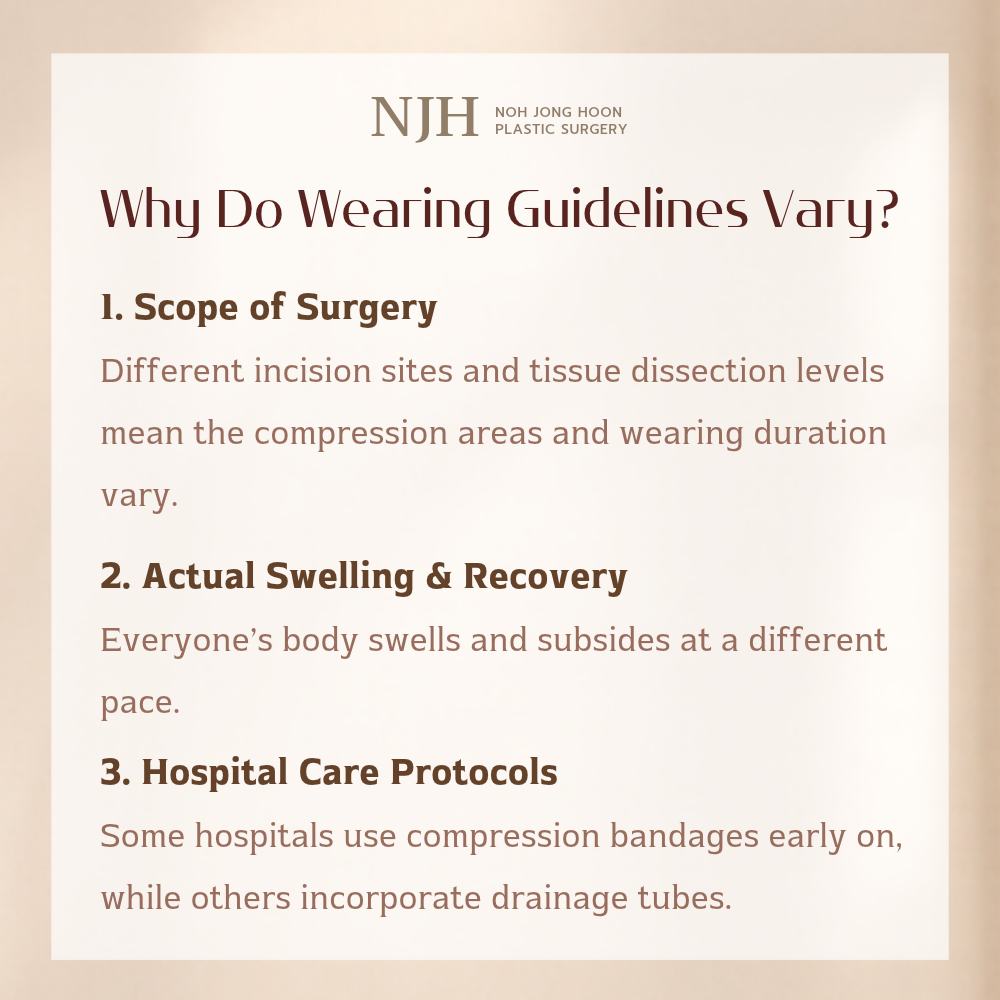
When you compare your recovery with someone else’s experience, you might wonder why a friend wore a facial compression band for only a few days while your surgeon recommended wearing it longer. Surgeons consider three main factors when making these recommendations.
1. Extent of Surgery
Cheekbone reduction, jaw reduction, chin reshaping, and three-point facial contouring (all three procedures performed together) differ in where incisions are made and how much soft tissue is separated from the bone. These differences affect where compression is needed and how long you should wear the band. If you also had liposuction under the chin, that area may need extra care.
2. Swelling and Recovery Progress
The amount of swelling and how quickly it subsides vary from person to person. At your follow-up appointment, your surgeon will check how well the tissues are settling and adjust your instructions based on your stage of recovery.
3. Postoperative Care Protocols at Each Hospital
Some hospitals use a pressure dressing immediately after surgery and then switch to a facial compression band. Others may also use a surgical drain for a short time to remove blood that collects at the surgical site. These differences are one reason someone else’s schedule for wearing a facial compression band may not suit your recovery.
Other people’s experiences can give you a general idea of what to expect. For your own recovery, follow your surgeon’s instructions.
Postoperative Care After Facial Contouring Surgery at NJH Plastic Surgery
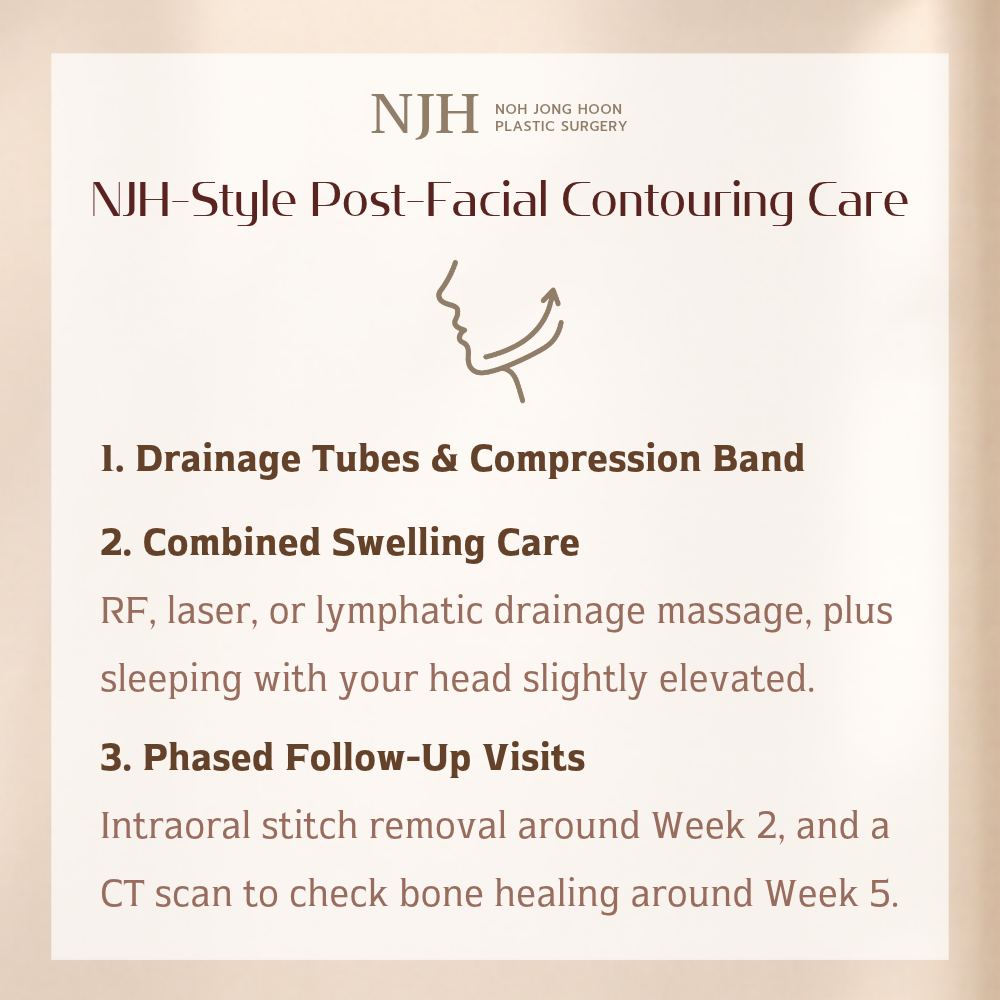
At NJH Plastic Surgery, wearing a facial compression band is one part of postoperative care after facial contouring surgery. The medical team provides ongoing care throughout recovery, following the steps below.
1. Using a Surgical Drain and a Facial Compression Band
After facial contouring surgery, a surgical drain allows blood to flow out so it doesn’t collect beneath the skin. The medical team monitors the drain and removes it before you leave the hospital. You’ll then wear a facial compression band to help reduce the risk of blood pooling and manage swelling.
The first few days after surgery are the most critical. During this time, follow your surgeon’s instructions closely on how to wear the band.2. Managing Postoperative Swelling Alongside Compression
Alongside wearing a facial compression band, NJH Plastic Surgery offers care to help reduce postoperative swelling, such as radiofrequency (RF) therapy, laser therapy, or lymphatic drainage massage. The care team also recommends sleeping with your head slightly elevated to help limit fluid buildup in the face.
3. Scheduled Follow-Up Appointments
About two weeks after facial contouring surgery, you’ll have a follow-up appointment to remove the stitches inside your mouth. Around week five, a CT scan is used to check how the bones are healing. At these visits, your surgeon will assess whether you still need to wear the facial compression band and whether to adjust how you wear it.
A facial compression band works alongside swelling management and regular follow-up visits. Following the full postoperative care plan supports recovery after facial contouring surgery. Wear the band at the level of tightness and for the length of time your surgeon recommends.
How to Wear a Facial Compression Band Correctly and Safely
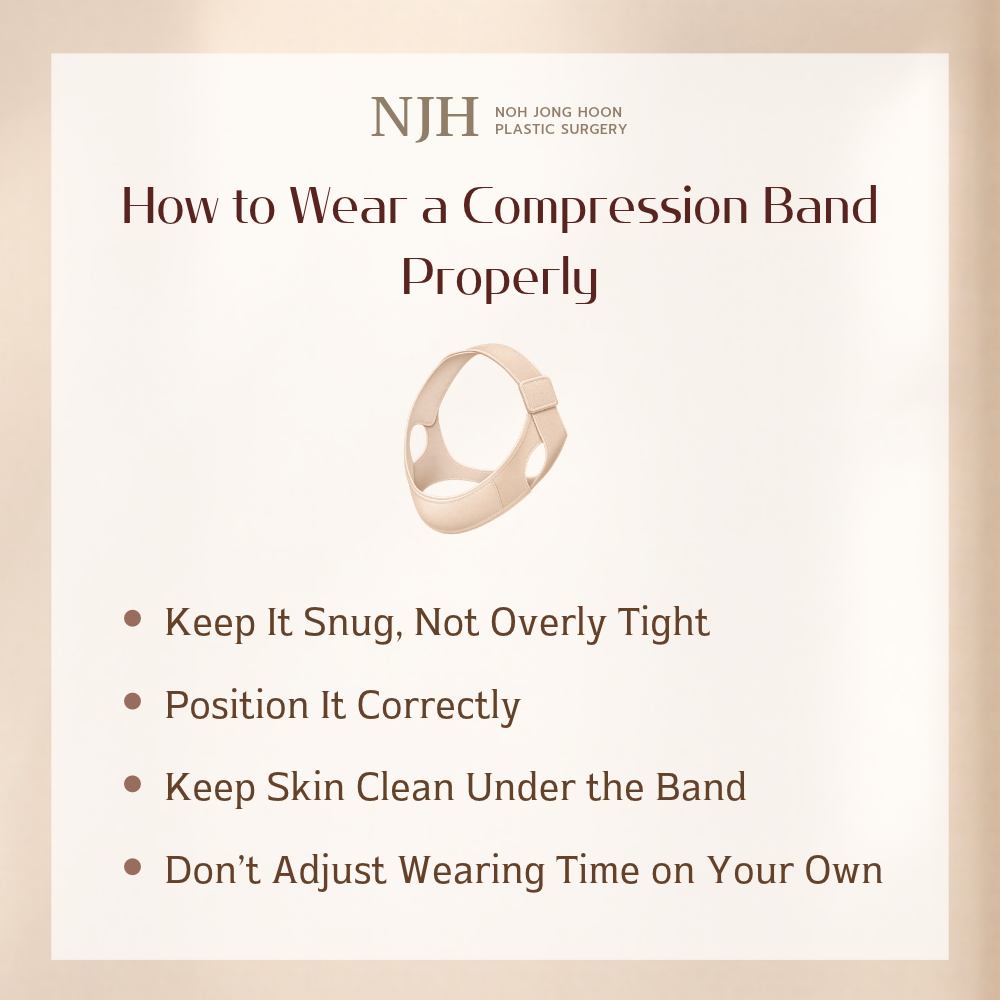
How you wear your facial compression band matters just as much as how long your surgeon recommends wearing it. Use the checklist below to make sure you’re wearing it correctly.
- Aim for a snug, comfortable fit. A facial compression band that’s too tight can put excessive pressure on the tissues and cause pain, numbness, bruising, or difficulty swallowing. A band that’s too loose may provide less effective compression.
- Keep the band in the correct position. Wear the facial compression band where your surgeon or nurse originally positioned it. Make sure it lies flat, stays in place, and distributes pressure evenly to avoid redness in any one spot.
- Keep the skin under the band clean. In a hot, humid climate like Thailand’s, the skin under a facial compression band can quickly feel hot and damp. Ask your care team in advance when you can remove the band to clean your face and wash the band, and whether you should have a spare to wear while the other one is being washed.
- Follow the wearing schedule your surgeon recommends. If the facial compression band feels too uncomfortable to tolerate, contact your care team before changing how you wear it, adjusting how long you wear it, or taking it off.
What Symptoms Should You Watch for While Wearing a Facial Compression Band?
After having surgery in Korea, many people fly back to Thailand to continue their recovery while they still need to wear a facial compression band. During this time, it’s important to know which symptoms are a normal part of recovery and which are warning signs that you should contact your hospital immediately.
Warning Signs That Mean You Should Contact Your Hospital Right Away
- Severe pain or pain that continues to worsen instead of gradually improving.
- Unusually severe swelling, swelling that feels firm and tight, or swelling that increases rapidly, especially on only one side of the face.
- Increased numbness or sharp, stabbing pain after putting on the facial compression band that persists even after loosening it as directed.
- A high fever, chills, or an unusual odor or pus draining from an incision inside the mouth.
If you notice any of these symptoms, do not tighten the facial compression band yourself. Take a photo and send it to the hospital right away, along with a description of your symptoms. Your surgeon can then determine whether you need to come in for an examination.
Plan Facial Contouring Surgery Around Your Concerns With STM MATCH

When searching for a plastic surgeon, many people begin by looking through reviews and choosing a doctor whose aesthetic style matches the results they like. That can be a good starting point.
However, if you want greater confidence that your case is being handled by a doctor with expertise that closely matches your specific concerns and surgical needs, Plan Facial Contouring Surgery Around Your Concerns With STM MATCH can help with the matching process.
Through STM MATCH, we help connect each case with a Korean plastic surgeon whose experience and specialty are more closely aligned with the actual problem that needs correction, rather than choosing based on visual preference alone.STMStyle first gathers key background information, such as how many previous surgeries you have had, which materials were used, the areas you would like to improve, medication allergies, underlying medical conditions, and your planned length of stay in Korea. This information is then used as part of the STM MATCH process to connect your case with a Korean plastic surgeon in our network whose expertise is closely aligned with your specific nasal concerns and surgical needs. By organizing these details in advance, the doctor can review the case more accurately and provide a more focused rhinoplasty assessment and personalized treatment plan based on your actual surgical history, nasal structure, and goals.
With STM MATCH, STM Style helps connect you with a certified Korean plastic surgeon suited to your case. Your surgeon will assess your facial features, determine which areas, if any, may benefit from surgery, and develop a care plan tailored to you.
Facial Compression Band FAQ
Q. Do I Need to Wear a Facial Compression Band While Sleeping?
It depends on your surgeon’s instructions for each stage of recovery. Before you leave the hospital, ask whether you need to wear the band overnight and how long you should continue doing so. Sleeping with your head slightly elevated can also help limit fluid buildup in the face.
Q. What Should I Do If the Compression Band Causes Pain or Numbness?
After facial contouring surgery, swelling around the nerves can cause numbness or unusual sensations that may gradually improve. If pain or numbness increases after you put on the band, or if either symptom keeps getting worse, contact your hospital immediately. Your surgeon can assess whether the band or another issue is causing the symptoms and advise you on how to adjust the fit or wearing schedule.
Q. Will Taking the Compression Band Off Early Affect How Slim My Face Looks?
The main role of a facial compression band is to support the tissues during early recovery, when swelling and blood pooling are a concern. Taking it off early can reduce that support during an important stage of healing. The shape of your face depends on the surgery and how your tissues heal. Check with your care team before shortening your wearing time or stopping use.
A facial compression band helps support a safe early recovery. Long-term facial sagging and how slim your face looks depend on several factors. Follow your surgeon’s instructions on how to wear the band and for how long, and know which symptoms should prompt you to contact the hospital.
If you’re planning facial contouring surgery in Korea and have concerns about recovering after you return to Thailand, send STM Style your photos, the areas you’re concerned about, and how many days you plan to stay in Korea. Our team can help organize your information, match you with a Korean plastic surgeon suited to your needs, and coordinate a preliminary assessment with the surgeon before you travel.
#FacialCompressionBand #PostSurgeryCompressionBand #WearingAFacialCompressionBand #SkippingTheFacialCompressionBand #JawReductionCompressionBand #AfterFacialContouring #FacialContouringRecovery #PostoperativeCare #FacialSaggingAfterSurgery #JawReduction #JawReductionInKorea #CheekboneReduction #CheekboneReductionInKorea #ChinSurgery #FacialContouring #FacialContouringInKorea #FacialContouringSurgery #FacialContouringSurgeryInKorea #ThreePointFacialContouring #SlimmerFace #KoreanAestheticClinic #KoreanClinic #KoreanPlasticSurgeon #KoreanPlasticSurgeryReviews #KoreaMedicalTourismAgency #KBeauty #KoreanPlasticSurgery #KoreanPlasticSurgeryHospital #NJHPlasticSurgery #NohJongHoonPlasticSurgery