



Prominent Cheekbones When Smiling: Do You Need Cheekbone Reduction Surgery?
By NJH Plastic Surgery
Your cheeks may look the way you’re used to seeing them in the mirror when your face is relaxed. But in photos of yourself laughing or smiling widely, your cheekbones may appear to rise and form a noticeable bump. Some people feel self-conscious enough to hold back their smile in photos and start to wonder, “Do I need cheekbone reduction surgery if my cheekbones only look prominent when I smile?”
Cheeks naturally lift and become fuller when you smile. If your cheekbones look more prominent when you smile, that alone doesn’t mean you need cheekbone reduction surgery. The shape of your cheekbones plays a role, and so does the movement of your facial muscles and the soft tissue in your cheeks as your expression changes.
The first step is to determine whether prominent cheekbones when smiling are due to the underlying cheekbone structure or the way soft tissue in the cheeks moves with facial expressions. That distinction helps guide the next step, whether it’s cheekbone reduction surgery, a non-surgical treatment, or no treatment at all.
What Are the Different Types of Cheekbone Prominence?
When you smile, the facial muscles that lift the corners of your mouth contract. These muscles attach to the cheekbones and pull the corners of your mouth upward and outward. As the soft tissue in the front of your cheeks shifts upward beneath your eyes, your cheeks look fuller and more prominent than they do when your face is relaxed. This is a natural part of smiling.
A little fullness in the front of your cheeks when you smile can give your face a brighter, more youthful appearance. If you’re considering cheekbone reduction surgery or another facial contouring procedure, start by using the points below to compare how your cheeks look when your face is relaxed and when you smile.
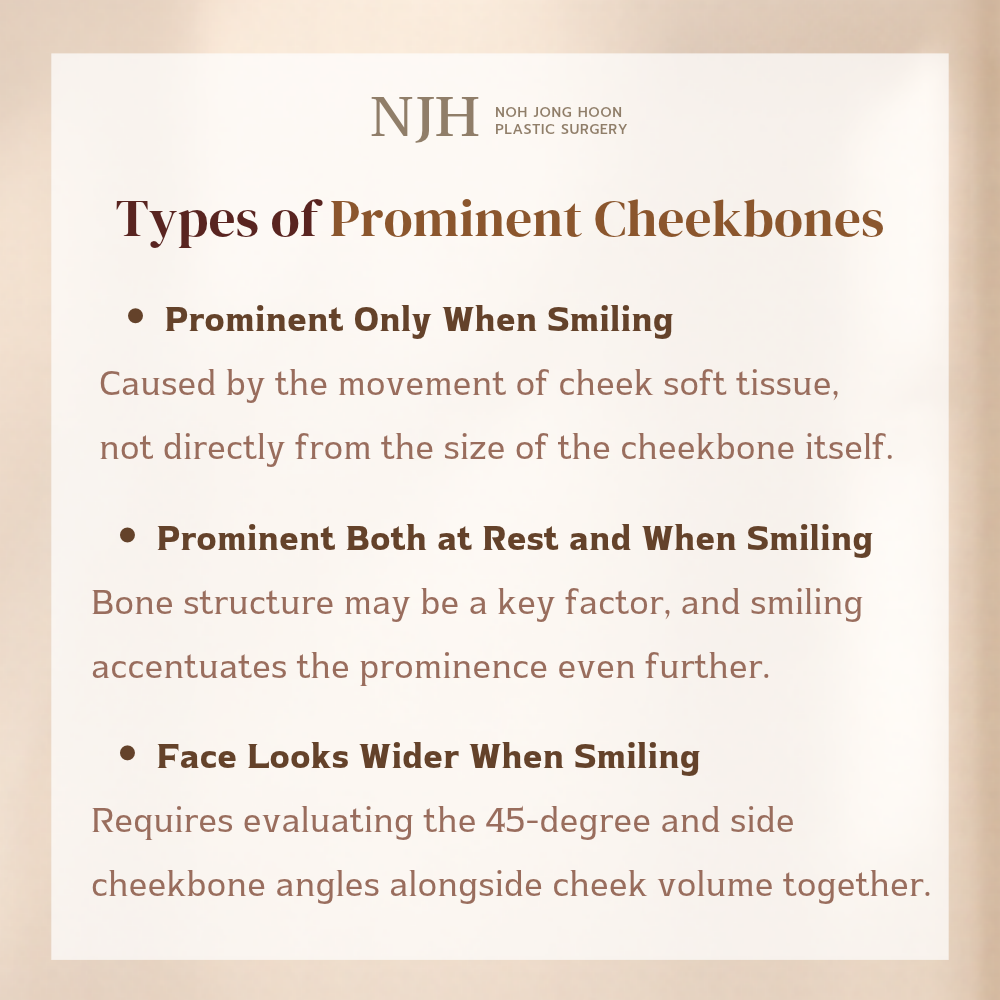
- Cheekbones Look Prominent Only When You Smile
If your cheekbones stand out when you smile and look less prominent when your face is relaxed, the fullness often comes mainly from the soft tissue in your cheeks shifting upward. When soft tissue movement is the main cause, cheekbone reduction surgery may have little effect on how your cheeks look when you smile.
- Cheekbones Look Prominent Both at Rest and When You Smile
If your cheekbones visibly project from the front or at an oblique angle, even when your face is relaxed, the underlying cheekbone structure may play a significant role. Smiling can make that prominence even more noticeable.
- Your Face Looks Wider When You Smile
For some people, the main concern is how much wider the midface looks from side to side when they smile. To assess what contributes to this width, a doctor evaluates cheekbone projection from both 45-degree and side views and considers the amount of soft tissue in the cheeks.These initial observations can help you better understand your facial shape. A clinical assessment by a doctor is still needed to determine what’s behind cheekbone prominence when smiling. Appearance alone can’t reliably tell you whether the fullness comes from the underlying cheekbone structure or the soft tissue in your cheeks.
How to Choose the Right Cheekbone Reduction Approach
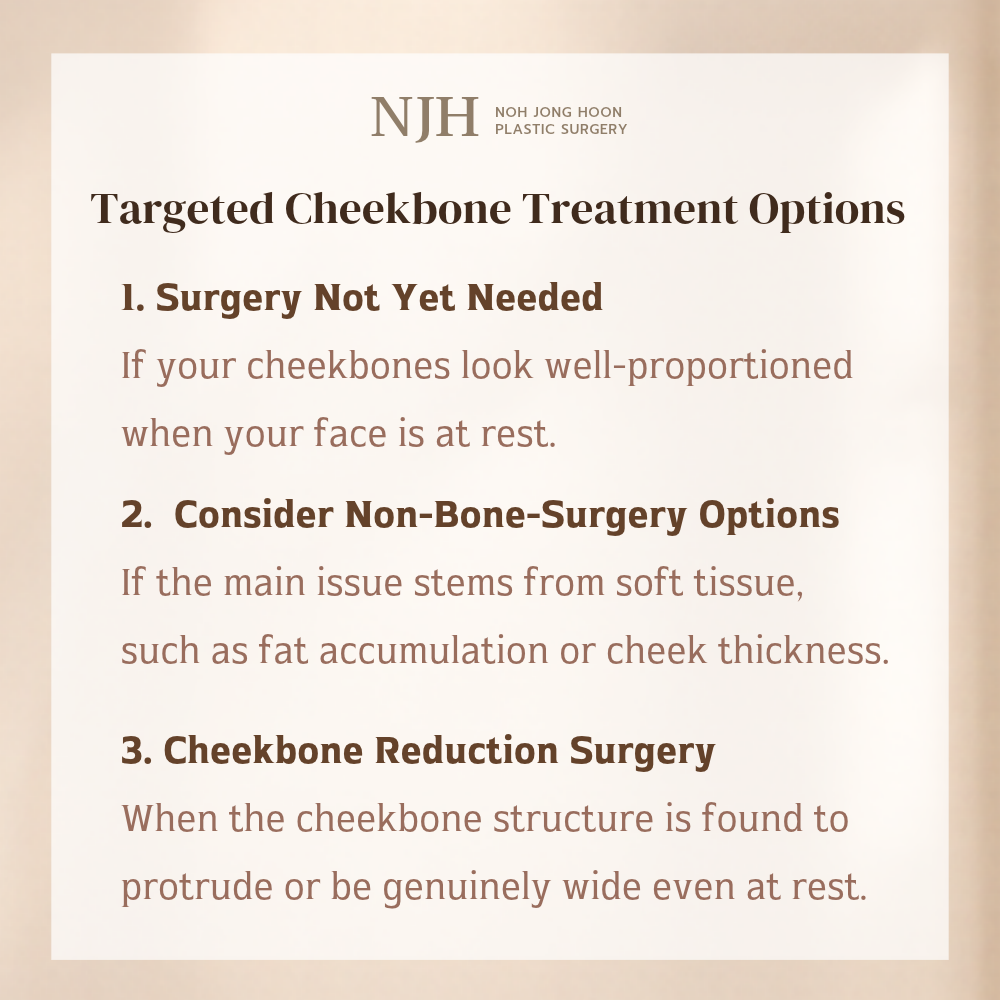
Prominent cheekbones when smiling can have different causes, from the shape of the cheekbones to the way the soft tissue in your cheeks moves. There are three broad approaches, including cheekbone reduction surgery and non-surgical options. A doctor should assess the cause before you decide which approach, if any, is right for you.
1. Cheekbone Reduction Surgery May Be Unnecessary
If your cheekbones look proportionate when your face is relaxed and the fullness appears only when you smile as the soft tissue at the front of your cheeks shifts upward, your doctor may advise that cheekbone reduction surgery is unnecessary. Reducing the cheekbone in this situation may do little to address the fullness you notice when smiling and could leave your face looking flatter or less vibrant.
2. Consider Options That Don’t Involve Cheekbone Surgery
If cheek fullness is mainly due to soft tissue, such as fat buildup or thicker cheek tissue, your doctor may consider an option that addresses the cause more directly, such as fat reduction in the cheekbone area. Your doctor will assess your skin and underlying facial structure to determine whether the procedure is suitable for you and what results you can expect.
3. Cheekbone Reduction Surgery
If a clinical assessment confirms that your cheekbones project outward or make your midface look wide even when your face is relaxed, cheekbone reduction surgery may be the most direct way to address the underlying bone structure. The surgeon carefully plans how to reposition the cheekbones, taking into account the contours of your lower face and how your cheek muscles move when you smile.
How Do Surgeons Assess You for Cheekbone Reduction Surgery?Cheekbone Reduction AssessmentHow NJH Assesses Cheekbone Reduction Surgery Candidates
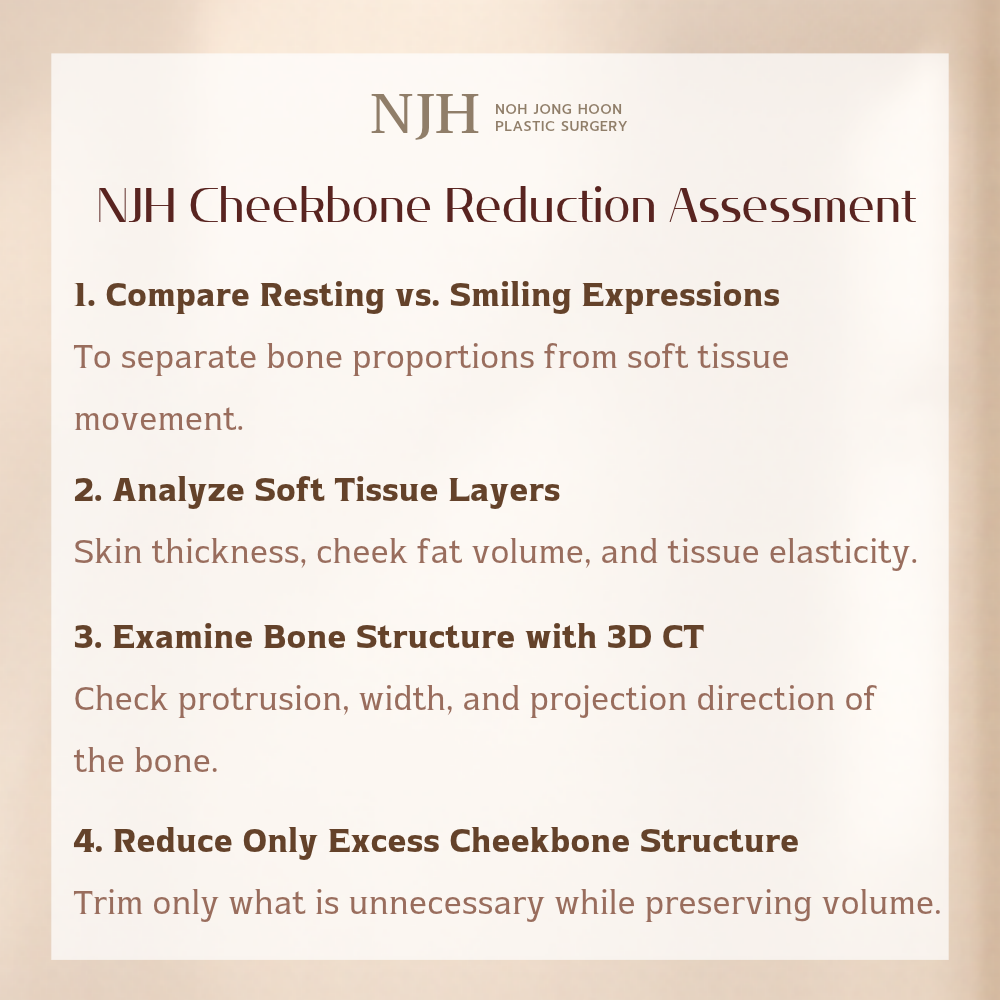
Prominent cheekbones when smiling can involve several layers of facial anatomy. Before planning cheekbone reduction surgery, the team at NJH Plastic Surgery assesses which areas contribute excess width or projection and which contours help give the face its natural dimension. The assessment focuses on four main areas.
1. Compare Cheekbone Prominence at Rest and When Smiling
Cheekbones that look equally prominent at rest and when smiling often reflect the shape of the underlying bone. Fullness that becomes noticeable only when you smile is more often due to the movement of your cheek muscles and soft tissue. By comparing your face at rest and while smiling, the surgeon can better assess how much the bone structure and soft tissue each contribute to cheekbone prominence.
2. Assess the Soft Tissue in the Cheeks
Skin thickness, the amount of cheek fat, and soft tissue elasticity all influence how your cheeks look when you smile. If the soft tissue at the front of your cheeks is relatively thick, it can form a noticeable bulge when you smile, even if your cheekbones are modest in size. Assessing how the soft tissue moves with your smile is an essential step in planning facial contouring surgery.
3. Evaluate Cheekbone Structure With a 3D CT Scan
A 3D CT scan gives the surgeon a detailed view of the shape, width, and direction of projection of each cheekbone. External observation alone cannot show these details. By reviewing the scan alongside how your cheeks move when you smile, the surgeon can better determine which areas to reduce and which contours to preserve for natural facial definition.
4. Target Only Excess Cheekbone Projection With Cheekbone Reduction Surgery
The goal of cheekbone reduction surgery is to reduce excess cheekbone projection while preserving balanced volume around the cheekbones. This helps maintain softly defined facial contours and natural dimension when you smile.
The cheekbone is naturally relatively thin, so shaving its surface can only change its shape to a limited extent. In many cases, cheekbone reduction surgery involves cutting and repositioning the cheekbone inward. The surgeon then secures it at both the front and back to keep it stable and help the bone heal during recovery.
Cheekbone Reduction Surgery Aftercare: What to Do During Recovery
How long does it take for your smile to look natural again after cheekbone reduction surgery? It’s a common question for people preparing for the procedure. Understanding the cheekbone reduction recovery timeline can help you know what to expect as you heal.
- How Your Smile May Look After Cheekbone Reduction Surgery
Your smile may look stiff early in recovery. The incisions are made inside the mouth, and swelling in the lips and around the mouth can temporarily limit facial movement, making it harder to smile fully. Your smile usually starts to look more natural as the incisions heal and the swelling subsides.
- Swelling After Cheekbone Reduction Surgery
Swelling can still be noticeable during the first three months after cheekbone reduction surgery, and for some people it may take around six months to subside. Give the swelling time to settle before judging your results from photos taken in the first few weeks.
- Early Recovery Precautions After Cheekbone Reduction Surgery
Avoid opening your mouth wide or chewing hard foods during early recovery. These movements put extra strain on the healing cheekbones. Bone healing generally takes about three months.How long you’ll need to stay in Korea after cheekbone reduction surgery depends on the extent and complexity of your procedure and your follow-up appointment schedule. If you notice rapidly increasing swelling on one side, severe pain, or a high fever during recovery, contact the hospital immediately.
Find the Right Approach to Cheekbone Reduction With STM MATCH

When searching for a plastic surgeon, many people begin by looking through reviews and choosing a doctor whose aesthetic style matches the results they like. That can be a good starting point.
However, if you want greater confidence that your case is being handled by a doctor with expertise that closely matches your specific concerns and surgical needs, STMStyle can help with the matching process.
Through STM MATCH, we help connect each case with a Korean plastic surgeon whose experience and specialty are more closely aligned with the actual problem that needs correction, rather than choosing based on visual preference alone.STMStyle first gathers key background information, such as how many previous surgeries you have had, which materials were used, the areas you would like to improve, medication allergies, underlying medical conditions, and your planned length of stay in Korea. This information is then used as part of the STM MATCH process to connect your case with a Korean plastic surgeon in our network whose expertise is closely aligned with your specific nasal concerns and surgical needs. By organizing these details in advance, the doctor can review the case more accurately and provide a more focused rhinoplasty assessment and personalized treatment plan based on your actual surgical history, nasal structure, and goals.
Whether cheekbone reduction surgery is right for you requires an individual assessment. STM Style helps connect you with a certified plastic surgeon in Korea whose expertise matches your needs. The surgeon will assess your facial structure, make a diagnosis, and develop a personalized care plan.
Cheekbone Reduction Surgery for Prominent Cheekbones: Frequently Asked Questions
Can Prominent Cheekbones When Smiling Be Treated Without Surgery?
It depends on what causes the prominence. If your cheeks look fuller mainly because the soft tissue shifts upward when you smile and your cheekbones look proportionate at rest, cheekbone reduction surgery may be unnecessary. If the cheekbones themselves are wide or project noticeably at rest, non-surgical treatments generally cannot change the shape of the bone. A plastic surgeon can assess what contributes to the prominence and recommend an approach based on your facial structure.
Can Cheekbone Reduction Surgery Cause Cheek Sagging?
Cheek sagging is one possible outcome. A change in cheek shape after surgery can also reflect how the soft tissue sits over the repositioned bone. Careful positioning and secure fixation of the cheekbones may help reduce the risk of sagging. Skin elasticity, cheek volume, age, and body weight can also influence the outcome. If your surgeon identifies a higher risk during the assessment, they may include measures to address it in your surgical plan.
Will My Cheeks Still Lift When I Smile After Cheekbone Reduction Surgery?
Yes. Your cheeks will still lift naturally when you smile. Cheekbone reduction surgery changes the position and projection of the bone, while the cheek muscles and soft tissue continue to move with your facial expressions. The goal is to reduce excess cheekbone projection while preserving natural cheek fullness and facial balance, both at rest and when smiling.
Cheeks can naturally look fuller when you smile. When considering cheekbone reduction surgery, it’s important to determine whether the prominence comes from the underlying cheekbone structure or the soft tissue in your cheeks. Addressing only the areas that need adjustment can help preserve your bright, natural smile.
If you’re concerned about prominent cheekbones when smiling and unsure whether cheekbone reduction surgery is right for you, send STM Style photos of your face at rest and while smiling, along with 45-degree views and a brief description of your concerns. STM Style can help organize your information, match you with a plastic surgeon in Korea whose expertise fits your needs, and coordinate an initial assessment with the surgeon before you travel.