


Can You Travel Alone to Korea for Jaw Surgery? What to Check Before You Fly
SEOULFACE21 Oral and Maxillofacial Surgery (OMFS) Hospital
Many people have already decided to have jaw surgery in South Korea, but once they start planning the trip, one question comes up: “Can I travel alone if no one is available to come with me?” For some, friends can’t take time off work. Others don’t want to ask family members to set aside several weeks, or simply prefer to make the arrangements themselves.
Jaw surgery involves operating on the facial bones under general anesthesia and requires a hospital stay for initial recovery. After discharge, you’ll still be limited in what you can eat and how wide you can open your mouth, and you’ll need to return for follow-up appointments. Whether you can travel alone for jaw surgery in South Korea depends on the complexity of your case and the arrangements you make in advance.
Here’s what to check before you decide to travel alone for jaw surgery in South Korea, so you can plan with confidence and know what to expect before you fly.
What Determines Whether You Can Travel Alone for Jaw Surgery in South Korea?
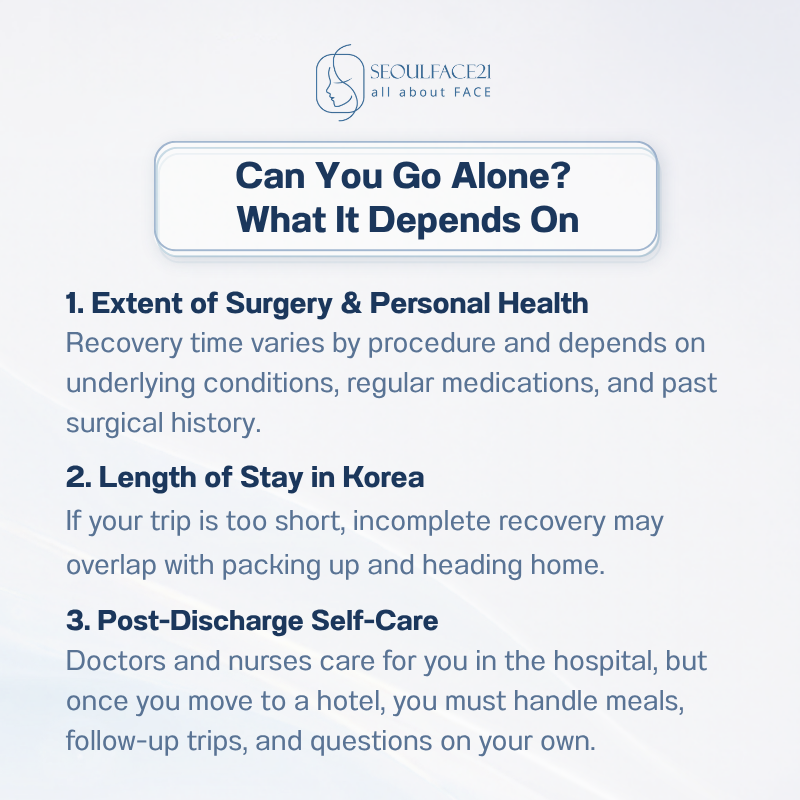
When deciding whether to travel alone for jaw surgery in South Korea, many people focus on whether they’re physically fit enough. But there are three key factors to consider together.
1. The Scope of Your Surgery and Your Overall Health
Recovery time varies depending on whether you’re having upper jaw surgery, lower jaw surgery, or double jaw surgery, and whether you’re having facial contouring at the same time. Any existing medical conditions, medications you take regularly, and previous surgeries can also affect the care you’ll need after surgery.
2. How Long You Can Stay in South Korea
If your stay in South Korea is too short, you may still be tired and recovering when it’s time to pack, get to the airport, and fly home on your own. This can be one of the most tiring parts of the trip, so plan your itinerary carefully and allow enough time to recover before your return flight.
3. Managing Your Recovery After Hospital Discharge
During your hospital stay, doctors and nurses will monitor your recovery closely. Once you move to a hotel, you’ll need to arrange your meals, get to follow-up appointments, and know whom to contact if you have questions. Make a plan for each of these before you travel.
Who Decides Whether You Need a Caregiver After Jaw Surgery?
Your surgeon and hospital team will assess whether you need someone to accompany you. They’ll consider your surgical plan, your overall health, and how you recover after jaw surgery.
Many hospitals recommend arranging for someone to take you back to your accommodation and stay with you during the first part of your recovery after discharge. To decide when you’re ready to leave, your doctor considers how long you’ve been in the hospital alongside your recovery. They’ll check whether you can get up and walk on your own, whether you have any unusual symptoms, and whether nausea and vomiting are under control.
If you’re planning to travel alone for jaw surgery in South Korea, tell your surgeon during your initial consultation. Ask directly, “Will I need someone to help me after surgery? If no one can come with me, what extra arrangements should I make?” This helps your surgeon give you guidance tailored to your health and surgical plan.
Surgery and Recovery Support at SEOULFACE21
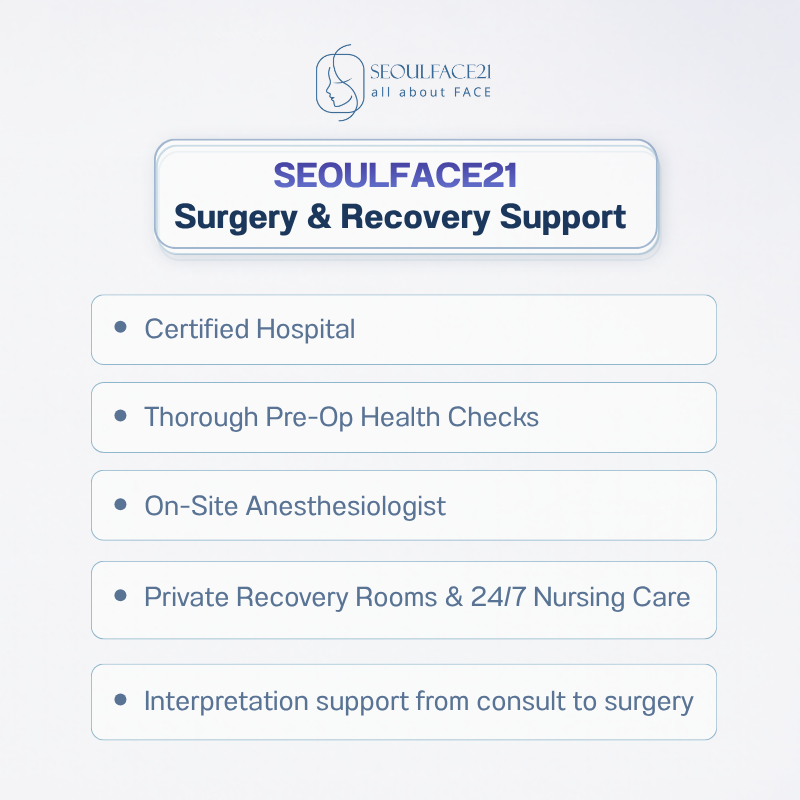
If you’re worried about recovering alone in a hospital abroad, here’s how SEOULFACE21 Oral and Maxillofacial Surgery Hospital supports you during jaw surgery and throughout your hospital stay.
- Officially Recognized as a Hospital
SEOULFACE21 has been officially recognized as a hospital by South Korea’s Ministry of Health and Welfare.
- Comprehensive Preoperative Health Assessment
Before surgery, SEOULFACE21 performs an electrocardiogram (ECG), a chest X-ray, and a urine test. An internal medicine specialist also helps assess whether you’re medically fit for surgery.
- On-Staff Anesthesiologist
An on-staff anesthesiologist administers general anesthesia and closely monitors you throughout surgery.
- Private Recovery Rooms and 24-Hour Nursing Care
After surgery, you’ll recover in a private room with round-the-clock nursing care. The nursing team tracks your vital signs through a central monitoring system.
- Interpreter Support From Consultation Through Surgery
An interpreter helps you and the medical team communicate clearly and accurately at key stages, from your initial consultation through the surgical process.Before you travel, you can also ask the SEOULFACE21 team how long you should plan to stay in South Korea after jaw surgery, as the recommended length of stay varies from person to person.
4 Things to Plan for During Jaw Surgery Recovery
1. Planning the Length of Your Stay in South Korea
SEOULFACE21 typically asks people traveling from abroad for jaw surgery to arrive in South Korea about seven days before surgery for a preoperative health assessment and consultation. After surgery, they usually spend about three days recovering in the hospital.
There are two ways to plan your stay after surgery:
Stay in South Korea for about two weeks, fly back to home country, then return to South Korea for a follow-up around the fifth week after surgery.
Stay in South Korea for about four weeks to complete the follow-up period before flying home.
Your surgeon will recommend a schedule based on your individual case.2. Choosing Where to Stay and Planning Transportation
Once you know where the hospital is, choose accommodation within easy walking distance or with a convenient route to your follow-up appointments. Staying nearby can help reduce fatigue on days when you need to get to the hospital on your own.
3. What to Eat During Jaw Surgery Recovery
In the early stages of recovery after jaw surgery, you may have difficulty opening your mouth fully and need to stick to liquids or soft foods for several weeks. Ask your surgical team what you can eat each week and when you can move from liquids to soft foods.
4. Who to Contact if You Have Questions During Recovery
While you’re in South Korea, you can contact the hospital directly using the contact details they provided if you have questions or need help. If you arranged your care through STM Style, you can message our team at any time. For medical questions, we’ll check with the hospital and translate their response into your language.
If you need urgent medical assistance, call 119, South Korea’s emergency number, immediately.
Pre-Flight Checklist for Traveling Alone to South Korea for Jaw Surgery
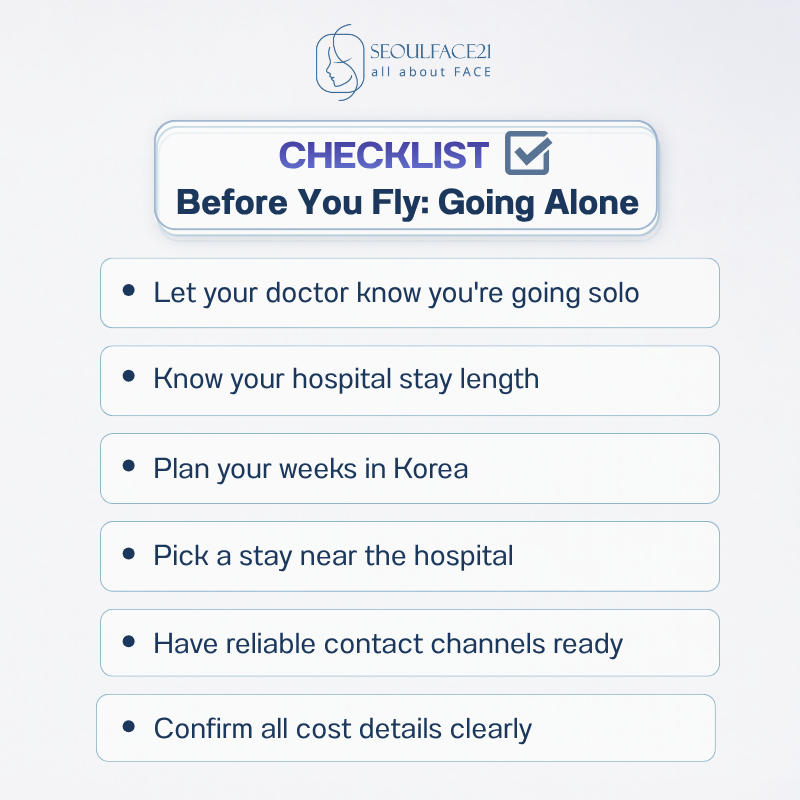
Before you book your flight, make sure you have answers to all six questions below.
- Have you told your surgeon that you’ll be traveling alone? Has your surgeon assessed whether you’ll need someone to help care for you during recovery?
- Do you know how many nights you’ll need to stay in the hospital and what criteria your surgeon will use to decide when you’re ready to be discharged?
- How many weeks are you planning to stay in South Korea? Have you confirmed the dates of all your post-surgery follow-up appointments?
- Have you booked accommodation with easy access to the hospital and planned what you’ll eat during recovery?
- Before you’re discharged, have you confirmed that you can reach both the STMstyle team via chat and the hospital through the contact channels it provided?
- Have you clarified the costs? Check what’s included in the package and which services may cost extra.
If anything on the checklist is still unclear, the safest approach is to ask for clarification and confirm the details before you travel.
STM Match — Find the Right Doctor for You

When searching for a surgeon, many people begin by looking through reviews and choosing a doctor whose results and approach appeal to them. That can be a useful starting point.
However, if you want greater confidence that your case is being evaluated by a specialist whose experience and area of expertise truly match your needs, STMStyle can help support you through the doctor-matching process.
Rather than focusing on reviews alone, STMStyle helps connect you with Korean specialists based on the type of procedure, facial structure, treatment goals, and the specific concerns involved in your case.STMStyle begins by gathering essential background information, such as the number of previous surgeries, the concerns you would like to address, medication allergies, underlying medical conditions, and the length of your planned stay in Korea. This information is then used to match your case with Korean surgeons in the STMStyle network whose specialized expertise aligns with your specific concerns and treatment needs. The goal is to help connect you with an appropriate specialist who can review your case in detail and provide a more targeted medical assessment based on your individual circumstances.
When it comes to deciding which areas should be treated, whether surgery is necessary, and which surgical techniques may be appropriate, STMStyle does not make medical decisions on behalf of the surgeon. These clinical decisions are made directly by a qualified Korean surgeon whose expertise is appropriate for the individual case. The surgeon is responsible for conducting the medical assessment, reviewing the relevant structural and clinical information, and developing the most suitable treatment plan based on the person’s specific needs and condition.
Frequently Asked Questions About Jaw Surgery in South Korea
Q. Is it enough to have a friend with me for just the first part of my trip?
It depends on your case and recovery plan. You’ll usually need the most help on the day you leave the hospital and during the first part of your recovery at the hotel. If your friend can only stay for part of the trip, let your surgeon know when you’re making your plans so they can advise you on when you should have someone with you.
Q. What costs should I ask about before traveling?
Ask what the quoted price covers and which expenses you’ll need to pay separately. Check whether it includes surgery, your hospital stay, medication, post-surgery checkups, accommodation, and transportation. Inclusions vary by package, so confirming these details in advance can help you budget more accurately.
Q. Can I stay alone at a hotel after I’m discharged from the hospital?
Many people stay at a hotel after leaving the hospital, but your surgeon should assess how well you’re recovering before deciding whether you can stay alone. If your surgeon says it’s okay, choose a hotel with easy access to the hospital, plan your meals in advance, and keep the hospital’s contact details handy.
It’s possible to travel alone to South Korea for jaw surgery. Before booking your flights, tell your surgeon that you’ll be traveling alone and make a clear plan for your hospital stay, accommodation, meals during recovery, and who to contact if you need help.
If you’re considering jaw surgery in South Korea, the surgical team at SEOULFACE21 can review your surgical plan, estimate how long you’ll need to recover, and advise you on any extra preparations for traveling alone.
To arrange a preliminary assessment before you travel, send STM Style your photos, the procedure you’re interested in, details of any previous treatment, and your planned travel dates. The team can organize your information and coordinate the assessment with the surgeon.