Secondary Rhinoplasty in Korea: What Should You Check Before Reshaping and Raising the Nasal Bridge? Urban Plastic Surgery Hospital
For a first-time rhinoplasty, many people may begin by saving reference photos of nose shapes they like, deciding how high they want the nasal bridge, or whether they want the nasal tip to look slightly more projected. However, when it comes to revision rhinoplasty, the planning process becomes much more complex. A previous surgery can change the nasal structure, scar tissue, implant position, cartilage condition, and overall balance of the nose, so there are many more details that need to be carefully assessed before reshaping the nose again.
Because a nose that has already undergone surgery involves more than just the external shape, revision rhinoplasty requires a careful assessment of the internal nasal structure as well. There may be existing implants or surgical materials, scar tissue, fibrosis, altered cartilage, and structural changes from the previous procedure. For this reason, when consulting for revision rhinoplasty in Korea, the process should not begin only with the question, “What nose shape do you want this time?” An important first step is to review the previous surgical history in detail—what procedures were performed, which materials were used, how the nose currently looks and functions, and which structural issue is actually causing the concern. Identifying the true cause of the problem helps the surgeon create a more precise and individualized revision rhinoplasty plan rather than simply changing the visible shape of the nose.
Today, we’ll take a closer look at the key factors that should be carefully assessed before planning revision rhinoplasty in Korea. This is especially important for people with concerns such as a short nose, bulbous nose, wide nasal tip, or a nose that still feels out of balance with the rest of the face after a previous rhinoplasty. A thorough evaluation of the existing nasal structure, previous surgical changes, current proportions, and the specific cause of each concern can help create a more precise and personalized Korean revision rhinoplasty plan.
Previous Surgical History: The First Thing to Assess Before Revision Rhinoplasty
When someone is dissatisfied with the current nose shape, the first concerns they usually notice are the visible external features—for example, the nasal bridge may still look too low, or the nasal tip may not appear as refined as desired. However, with revision rhinoplasty, the surgeon needs to look beyond the surface and carefully review the previous surgical history first. This helps identify what may be hidden beneath the skin, such as existing implants, cartilage changes, scar tissue, fibrosis, or structural alterations from the earlier procedure. Understanding these underlying factors is essential before deciding how the nose should be reshaped in a revision rhinoplasty plan.
Previous Surgical History
Review how many rhinoplasty procedures have been performed before and, as far as known, which implants, cartilage, or other surgical materials were used in each procedure.
History of Post-Surgical Complications
Review whether there has ever been inflammation, infection, or other complications after previous nose surgery, as well as whether any additional procedures or treatments around the nose have been performed before.
Current Condition of the Nose
Assess whether the skin and soft tissues have any limitations, tightness, scar-related contracture, or reduced flexibility, and identify which aspects of the current nasal shape and internal structure may require further evaluation before planning revision rhinoplasty.
All of this information can directly affect the new revision rhinoplasty plan. If the existing nasal structure, cartilage, skin, or soft tissue has certain limitations, simply trying to make the bridge higher may not resolve the original concern—and in some cases, it may create additional imbalance. For this reason, revision rhinoplasty should begin with a detailed assessment of the current nasal structure, including the condition of the tissues and changes from the previous surgery. Only after identifying these factors should the surgeon move on to discussing how the nose can be safely and appropriately reshaped in the next stage of treatment planning.
5 Nasal Features to Assess Before Planning Revision Rhinoplasty
Following the review of your previous surgical history, the next step is to assess whether the shape or condition of the nose has changed after surgery. If you notice any changes, it is important to have the nose carefully evaluated by a surgeon before deciding on any additional procedure. As an initial self-check, you can look for these 5 key signs or characteristics that may need further assessment before planning revision rhinoplasty in Korea.
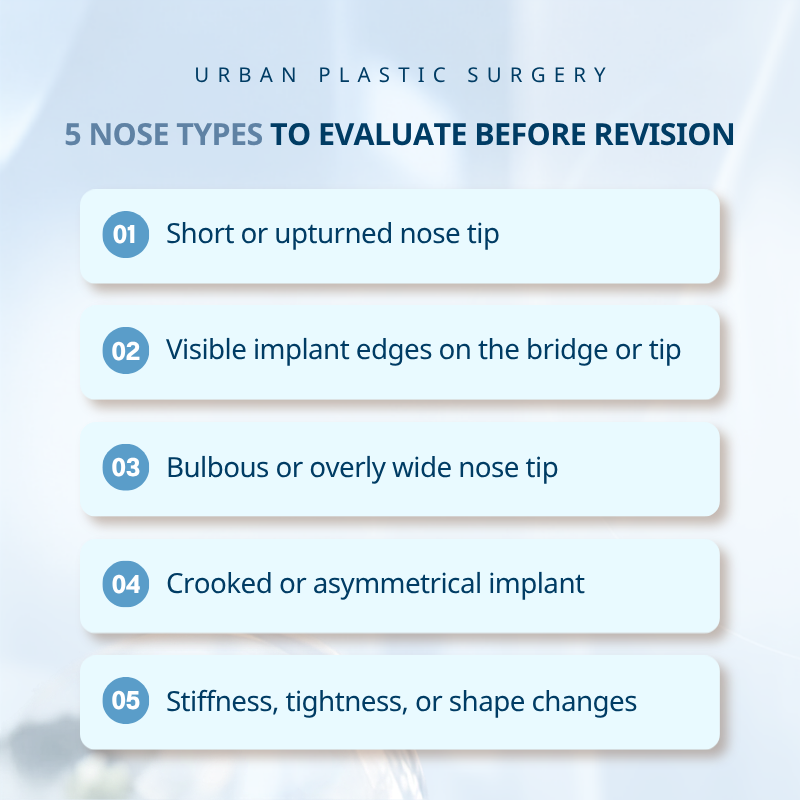
1. The Nose Looks Shorter or the Nasal Tip Appears More Upturned
The surgeon should assess whether the change is related to scar tissue from the previous surgery, tissue contracture, or structural changes that may be pulling the nasal tip upward. Identifying the underlying cause is important before deciding how to correct a short nose or upturned nasal tip during revision rhinoplasty.
2. The Implant Edges Become More Visible Along the Nasal Bridge or Tip
This can be a warning sign that requires careful evaluation of both skin and soft-tissue thickness and the position of the existing implant or surgical material. Before considering adding more height or replacing the implant, the surgeon should first assess whether the current tissues can safely support a new material and determine what is causing the implant outline to become more visible.
3. The Nasal Tip Still Looks Round or Wide (Bulbous Nose)
The assessment should consider the nasal length, tip shape, tip width, and overall facial proportions, rather than focusing only on increasing the height of the nasal bridge. For a bulbous or wide nasal tip, revision rhinoplasty planning should identify which structural factors are contributing to the shape and determine how the tip can be refined while maintaining balance with the rest of the face.
4. The Existing Implant Looks Crooked or the Nose Appears Asymmetrical
The surgeon should carefully assess the position and alignment of the existing implant or surgical material together with the underlying nasal framework and structural support. For cases involving a crooked implant or nasal asymmetry, revision rhinoplasty planning should identify whether the issue comes from the implant position, the original nasal structure, or changes caused by previous surgery before deciding how to correct it.
5. The Nose Feels Hard, Tight, or Has Changed Shape Since the Early Post-Surgery Period
It is important to tell the surgeon what changes you have noticed and when they first became noticeable. Symptoms such as nasal tightness, firmness, tissue contracture, or progressive changes in shape may need a closer assessment of scar tissue, soft-tissue condition, implant position, and the underlying nasal structure before planning revision rhinoplasty.
These concerns can vary greatly in complexity, which is why revision rhinoplasty requires a precise assessment of the current condition of the nose. A detailed evaluation helps the surgeon identify the true underlying cause and select the most appropriate revision rhinoplasty technique based on the specific structural, tissue, or implant-related issue involved.
What You See on the Outside May Not Tell the Whole Story: Get a Clearer Assessment with 3D CT at Urban Plastic Surgery
Once the consultation moves into the medical evaluation stage, revision rhinoplasty has an important limitation that differs from first-time nose surgery: the internal nasal structure cannot be fully assessed by looking at the external shape alone. At Urban Plastic Surgery, 3D CT imaging is used to scan and analyze the internal nasal structure in greater detail before surgery is planned. This helps the surgeon evaluate areas that may not be visible from the outside and develop a more precise revision rhinoplasty plan based on the actual structural condition of the nose.
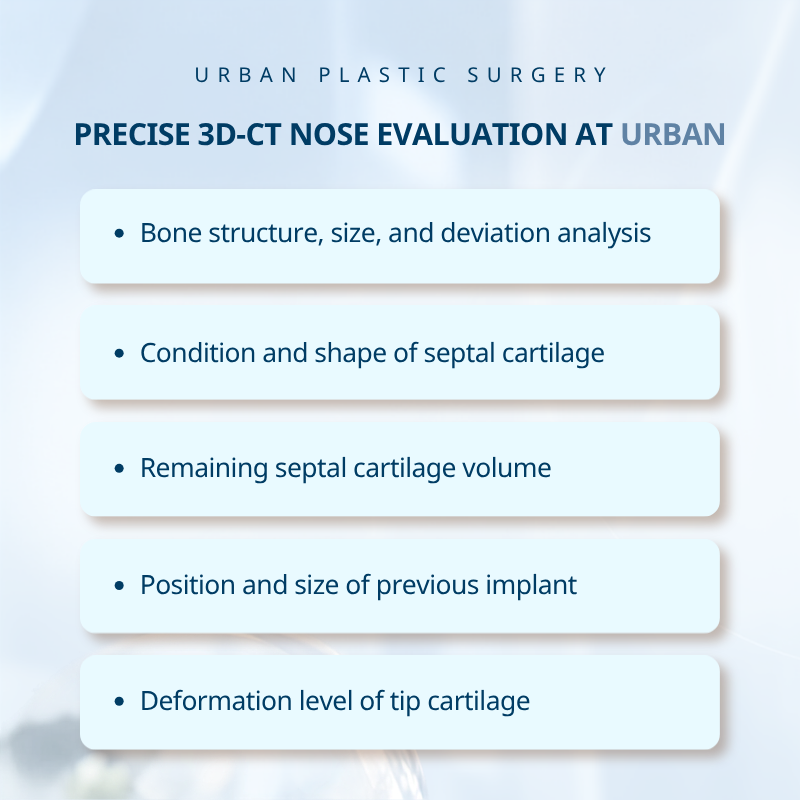
This 3D CT scan allows the surgeon to examine important internal details more clearly, including:
The shape, size, and degree of deviation or asymmetry of the nasal bone structure
The condition and shape of the existing nasal septal cartilage
The amount of septal cartilage remaining after the previous rhinoplasty
The position and size of the existing implant or surgical material from the previous rhinoplasty
The degree of cartilage deformity at the nasal tip and the condition of structures related to nasal breathing and airway function
This can be especially useful in revision rhinoplasty, where previous surgery may have altered the internal nasal structure. For example, if the surgeon is considering using septal cartilage for the new revision, it is important to understand how much may have been used during the previous procedure and what structural support remains. Planning should be based on the current anatomy rather than assumptions. A 3D CT evaluation, together with the surgeon’s clinical examination, can help identify the position of existing surgical materials and provide a clearer view of the remaining nasal framework. This allows each step of the revision rhinoplasty plan to be prepared more precisely before surgery.
Key factors that determine the safe height limit and how the new nasal structure can be rebuilt
In addition to 3D CT imaging, which helps reveal the nasal bone structure and existing surgical materials, Urban Plastic Surgery also places strong emphasis on evaluating the surrounding soft tissues before planning revision rhinoplasty. Two key areas are assessed in detail:
1. Assessing Skin Tension and Elasticity
Even if the internal nasal framework can technically be extended or reshaped, that does not mean the nasal bridge or tip can be raised without limitation. In revision cases—especially after multiple previous surgeries—the overlying skin and soft tissue may become thinner, tighter, firmer, or less elastic. The surgeon therefore needs to evaluate how much the existing tissue can safely accommodate a newly reconstructed nasal framework. If the nose is made higher than the soft tissue can reasonably support, it may increase the risk of skin thinning, excessive tension, implant visibility, or other long-term complications. For this reason, determining the safe structural and height limits is an important part of revision rhinoplasty planning.
2. Managing Fibrosis and Scar Tissue
After previous nose surgery, the deeper tissue layers may become adhered or restricted by existing fibrosis and scar tissue. Careful and gentle scar tissue dissection and tissue-plane separation are therefore important steps in revision rhinoplasty. The goal is to help restore tissue flexibility, minimize additional trauma, and create a more suitable space for rebuilding and positioning the new nasal structure evenly.
Revision rhinoplasty is therefore much more than simply “removing the old material and replacing it with something new.” It requires careful management of fibrosis and scar tissue, while also assessing the limitations of the skin and soft tissues at the same time. The goal of revision rhinoplasty is not to make the nose as high or projected as possible. Instead, it is about finding the right balance between the desired nose shape, what can realistically be reconstructed, the limitations of the skin and soft tissue, and the overall facial proportions. A well-planned approach aims to achieve a result that is aesthetically balanced, structurally appropriate, and designed with long-term safety in mind.
What Materials Are Used in Revision Rhinoplasty? How Does Each Material Differ?
Once the underlying nasal framework has been addressed and the existing fibrosis and scar tissue have been carefully managed, the next step is selecting the appropriate materials for reconstructing and reshaping the nose. In revision rhinoplasty, material selection is often more complex than simply choosing a silicone implant, as may be the case in some first-time procedures. The surgeon may need to consider several different goals, including reinforcing structural support, refining or projecting the nasal tip, rebuilding weakened areas, and adding soft-tissue coverage when the skin has become thin. For this reason, the choice of implant, cartilage, or graft material should be based on the current nasal structure, remaining tissue, previous surgical history, and the specific changes required in each area of the nose.
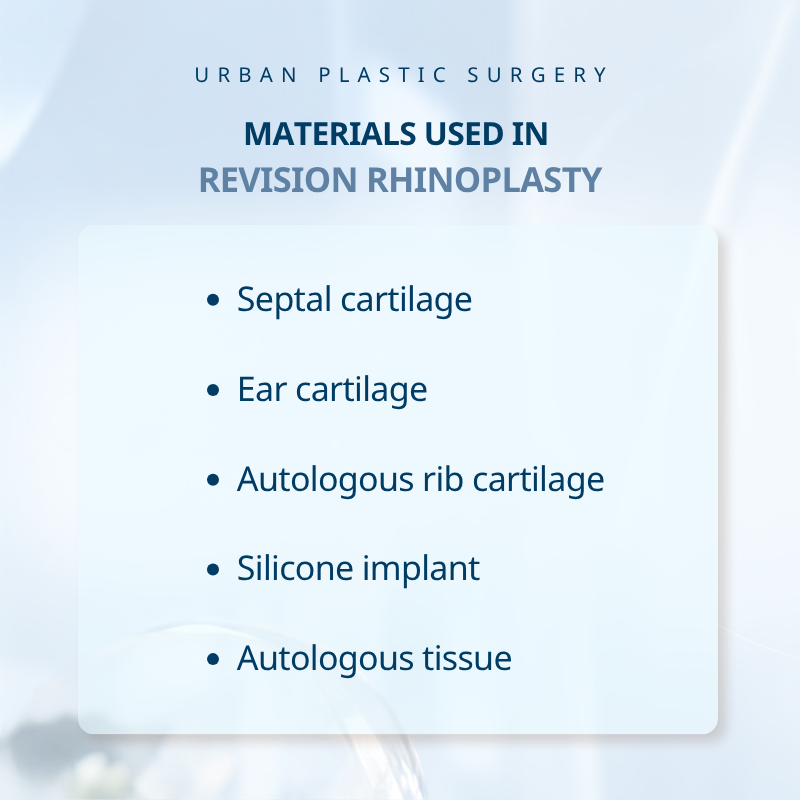
Septal Cartilage
Septal cartilage is the person’s own cartilage taken from the nasal septum. One of its advantages is that it is located within the same surgical area and can be used to help support, reinforce, or reshape the nasal structure. However, for anyone who has undergone previous rhinoplasty, the surgeon first needs to confirm whether enough septal cartilage remains available for reuse. At Urban Plastic Surgery, this can be assessed with 3D CT imaging as part of the revision rhinoplasty evaluation before surgery is planned.
Ear Cartilage
Ear cartilage has a natural curve and flexibility, making it suitable for refining, cushioning, or supporting the nasal tip. Its properties and structural role are different from rib cartilage, so the two materials are not interchangeable in every revision rhinoplasty case. The choice depends on the amount of support required, the condition of the existing nasal structure, and the specific area that needs to be reconstructed or refined.
Autologous Rib Cartilage
Autologous rib cartilage is commonly used in more complex revision rhinoplasty cases, particularly when the nose is significantly short or when there is not enough usable cartilage remaining from other donor sites. Because rib cartilage provides strong structural support, it can be especially useful for rebuilding the nasal framework and creating a more stable nasal tip support structure when greater strength and reinforcement are required.
Silicone Implant
Many people are already familiar with silicone implants as a material used to increase nasal bridge height. However, in revision rhinoplasty, the decision is not simply whether to replace the old implant with a new one. The surgeon must first evaluate the condition and position of the existing implant, the space where it was previously placed, and the condition of the skin and soft tissues covering the nasal bridge. These factors help determine whether silicone can be used safely again, whether the implant position needs to be adjusted, and what size or shape may be appropriate for the revised nasal structure.
Autologous Tissue
In some revision rhinoplasty cases, the person’s own tissue may be used to provide additional soft-tissue coverage and support, especially when the skin has become thin after previous surgery. Autologous tissue can help increase tissue thickness, reinforce soft-tissue coverage, and reduce concerns related to thin or fragile nasal skin. Whether it is needed depends on the condition of the skin, existing scar tissue, and the reconstructed nasal framework.
There is no single formula for choosing materials in revision rhinoplasty. The most suitable option should be selected based on the individual nasal structure, remaining cartilage and soft tissue, skin condition, and limitations created by previous surgery. The goal is to choose materials that match the actual condition of the nose rather than applying the same approach to every case.
STM MATCH — Because Revision Rhinoplasty Should Be Matched with the Right Specialist
When searching for a revision rhinoplasty surgeon, many people begin by looking through before-and-after reviews and choosing a doctor whose aesthetic style matches the nose shape they prefer. That can be a useful starting point. However, if you want greater confidence that your case is being handled by a doctor with the specific expertise required for revision rhinoplasty, STM Style can help with the matching process. Through STM MATCH, we help connect each case with a Korean surgeon whose experience and surgical focus are better aligned with the actual revision concerns involved—rather than choosing based on visual preference alone.
STMStyle will first gather key background information, such as how many previous nose surgeries you have had, which materials were used, any post-surgical complications, the areas you would like to revise, medication allergies, underlying medical conditions, and your planned length of stay in Korea. This information is then used as part of the STM MATCH process to connect your case with a Korean surgeon in our network whose experience and surgical expertise are closely aligned with your specific revision concerns. By organizing these details in advance, the surgeon can review the case more accurately and provide a more focused revision rhinoplasty assessment and treatment plan based on the actual surgical history, current nasal condition, and individual needs.
For more detailed surgical decisions—such as whether scar tissue or fibrosis needs to be released, whether the existing implant or material should be preserved or removed, which parts of the nasal structure need to be reconstructed, and which graft or implant material is most appropriate—STMStyle does not make these decisions on behalf of the surgeon. These assessments and treatment decisions should be made directly by a qualified Korean plastic surgeon whose expertise is appropriate for the individual revision case. The surgeon will examine the current nasal condition, review the previous surgical history, and create a personalized revision rhinoplasty plan based on the actual structural findings and medical evaluation.
FAQ: Common Questions About Revision Rhinoplasty
Q. If My Nose Feels Hard or Tight, or Looks Shorter After Surgery, Is Replacing the Silicone Implant Alone Enough?
Not necessarily. The decision should not be based on the external appearance or symptoms alone. The surgeon first needs to determine whether the change is related to the existing implant, scar tissue from previous surgery, tissue contracture, or other structural changes within the nose. Only after identifying the underlying cause can the surgeon decide whether simply replacing the silicone implant is sufficient or whether additional correction of the soft tissue, scar tissue, or nasal framework is also required as part of the revision rhinoplasty plan.
Q. Why Is Nasal Tip Support Important in Revision Rhinoplasty?
Because the overall nose shape is not determined by nasal bridge height alone. The length, shape, projection, and structural support of the nasal tip also play an important role in overall facial balance. This is especially relevant for people with a short nose, rounded nasal tip, or bulbous nose, where simply increasing the bridge height may not address the main concern. For this reason, the nasal bridge, tip structure, nasal length, and facial proportions should be evaluated together before planning revision rhinoplasty.
Q. How Can Scar Tissue and Fibrosis from a Previous Rhinoplasty Affect Revision Surgery?
Post-surgical tissue can vary significantly from one person to another. If scar tissue, fibrosis, or tissue adhesion has developed after a previous rhinoplasty, the surgeon needs to take these changes into account before planning any new structural correction. These tissue conditions can affect how the nose can be safely dissected, reshaped, and supported during revision surgery. This is one of the main reasons why revision rhinoplasty cannot follow the same standardized surgical plan for every case. A personalized approach should be based on the actual condition of the scar tissue, soft tissue, remaining cartilage, and nasal framework before deciding how the nose should be reconstructed.
Q. If I Want to Replace the Existing Material, Should I Choose the New Implant or Graft Material in Advance?
You can research the available implant and graft materials in advance, but it is best not to make a final decision based only on the material name or online reviews. The most suitable option should be selected in relation to the existing implant or graft, current skin and soft-tissue condition, structural issues that need correction, and the surgical plan developed after the surgeon examines the nose in person. In revision rhinoplasty, material selection should therefore be based on the actual nasal condition and reconstruction needs, rather than choosing a preferred material first and trying to fit the surgery around it.
Achieving a beautiful and safe result with revision rhinoplasty is not simply about making the nose higher or more projected than before. The key is to properly manage the existing nasal structure, scar tissue and fibrosis, skin and soft-tissue condition, and previously used implant or graft materials. A well-planned revision should focus on correcting the underlying structural issues while respecting the limits of the surrounding tissues, helping create a result that is balanced, natural-looking, and designed with long-term safety in mind.
If you are planning to travel to Korea for revision rhinoplasty, you can send photos of your nose, the areas you are concerned about, and your previous surgical or treatment history to STM Style. We can help organize the information needed for your case, identify Korean plastic surgeons with relevant revision rhinoplasty expertise, and coordinate a preliminary case assessment with the doctor before you travel to Korea. This can help you understand the possible treatment direction, prepare the necessary information in advance, and plan your revision rhinoplasty in Korea more efficiently.